Getting your first few web design clients can feel like a huge challenge, but here's the simple truth: businesses really need your skills. The trick is to build an online presence that works for you, learn how to reach out in a way that gets replies, and use a few smart shortcuts to find people ready to buy. This guide is your map to getting clients you'll love working with.
Why a Great Website Still Matters Most
With all the buzz around social media and new apps, you might wonder if a good old-fashioned website is still important. The answer is a huge "yes."
A business's website is its online store. It's the 24/7 salesperson that never sleeps and is often the very first impression a new customer gets. Most importantly, it's the one part of the internet a business actually owns and controls.
This is exactly why good web designers are in such high demand. Businesses know their website is tied directly to how much money they make. A clunky, old, or broken website doesn't just look bad—it pushes customers away and hurts sales.
The Power of First Impressions
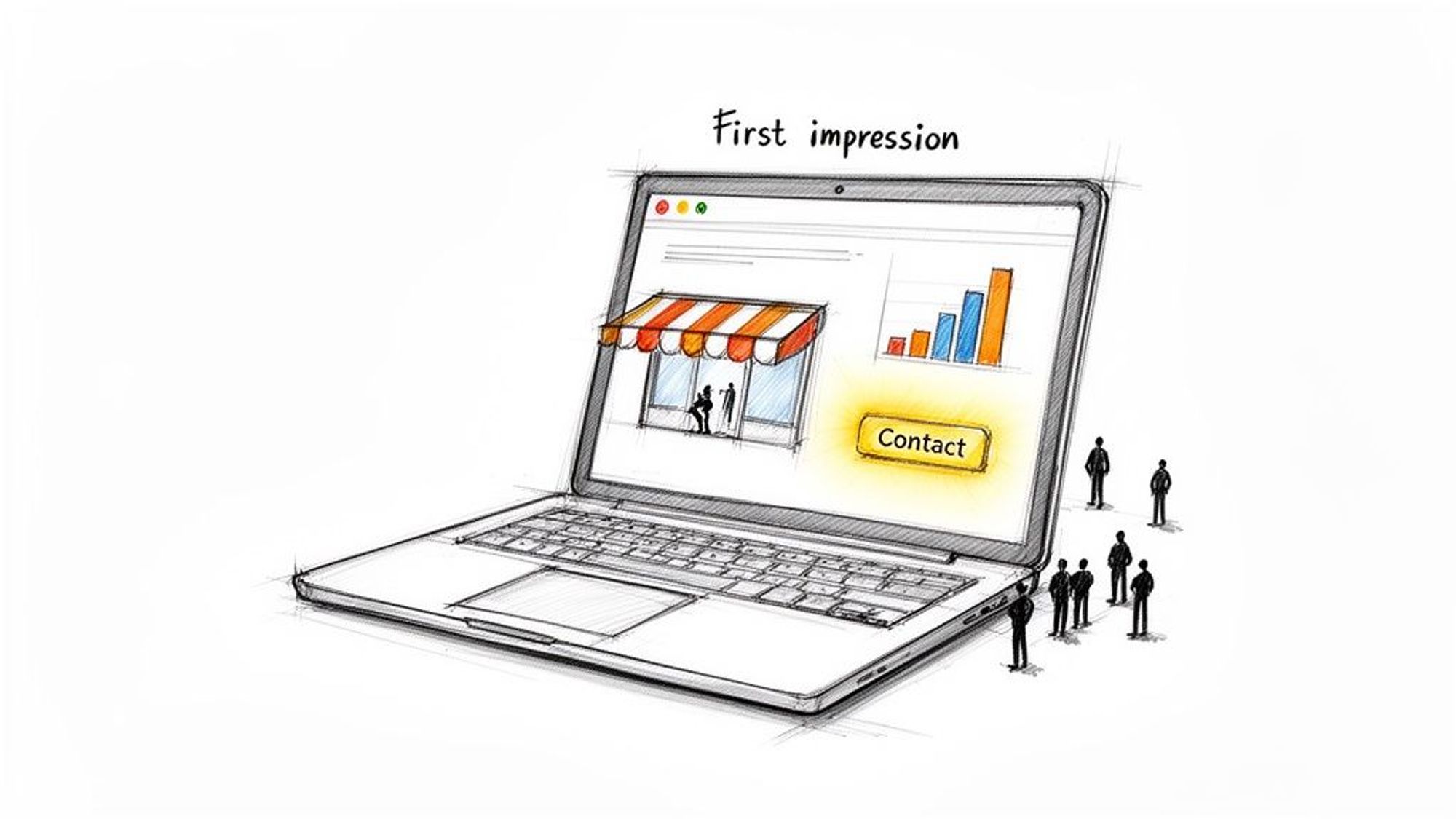
We make up our minds about things in a split second, and it's no different online. In fact, studies show that 94% of people's first feeling about a brand comes from its web design. A bad design is a top reason people leave a site before they even see what a company sells.
This is a huge opportunity for you. Every business with a bad website is a potential client who needs help. They aren't just looking for a prettier page; they need a real solution to:
- Build trust with their visitors.
- Get more leads through contact forms and phone calls.
- Increase sales on their online store.
- Clearly explain what they do and what makes them special.
Your job isn't just to make things look good. It's to build a tool that helps a business reach its goals. When you explain your services this way, you stop being a cost and become a smart investment.
A Plan You Can Use Again and Again
Finding clients shouldn't feel like winning the lottery. With a clear plan, you can create a system for attracting new business month after month.
This guide will walk you through a simple process, starting with the basics. We'll cover everything from building a portfolio that sells your services to reaching out to people in a way that gets a response.
A key part of a strong portfolio, for example, is showing you can create landing pages that get results. It's a good idea to look at some effective WordPress landing page templates to see what great designs look like and how they turn visitors into customers. With the right plan and tools, you can become the expert that businesses are excited to hire.
Setting Yourself Up to Attract Great Clients
Before you start reaching out to people, you need a solid foundation. It's like building a house—you can't put up walls before the concrete is dry. This first step is all about creating a professional presence that pulls the right clients to you, so you can spend less time chasing leads and more time working.
It all starts by answering one question: Who do you really want to work with? The answer turns you from someone who does a little bit of everything into a specialist. And specialists always get the best projects.
Pick Your Niche and Become the Go-To Expert
Trying to be the web designer for everyone usually means you’re the top choice for no one. When you specialize, you become the clear expert for a certain group. This makes your marketing easier, your sales calls smoother, and lets you charge more because you really understand your client's needs.
Instead of a general "I build websites," you can say, "I build online stores for clothing brands." See the difference? One is just a service; the other is a real solution.
Think about niches like these:
- By Industry: Websites for local coffee shops, dentists, or builders.
- By Technology: Specializing in Webflow for new tech companies or WordPress for bloggers.
- By Business Type: E-commerce sites for brands that sell directly to customers or membership sites for online coaches.
Picking a niche helps you focus your energy. You’ll know exactly which online groups to join, what to write about, and what problems your ideal clients are trying to solve. This is how you find clients who see you as a key partner, not just another person they hired.
Build a Portfolio That Sells for You
Your portfolio is your most important sales tool. But many designers get it wrong: they treat it like an art gallery—just a collection of pretty pictures. A strong portfolio needs to do more than just show off your work; it needs to prove the value you created.
Your portfolio shouldn't just say, "Here's what I made." It should shout, "Here are the results I got for my client." This simple change turns people who are just looking into serious buyers.
Treat every project like a short success story. For each website you show, focus on how it helped the business. Clients don't buy a new design; they buy a solution to their problems, like low website traffic or a lack of leads.
To do this well, make sure each project includes:
- The Problem: Briefly explain the challenge the client had before they hired you. Maybe their old site was slow and looked bad on phones, or their contact form wasn't working.
- Your Solution: Describe how your design and ideas directly fixed their problem. Did you make the site easier to use? Add a clear "Contact Us" button?
- The Results: This is the most important part. Show real, measurable results. Did you increase their online bookings by 30%? Or lower their bounce rate by 50%? Numbers are very convincing.
- A Client Testimonial: Add a quote from your happy client. Hearing a good review from another business owner builds trust right away.
This storytelling approach turns your work from a simple display into powerful proof that you deliver real business value.
Another great way to show your value is by building helpful tools on your website. For example, learning how to use calculators as leadmagnets can attract visitors and show off your problem-solving skills before you even talk to them.
Win Your Local Market with Smart SEO
One of the best ways to get web design clients is to become the go-to expert in your own area. While others are trying to find clients all over the world, you can build a strong business by focusing on local businesses that need your help.
This is where local Search Engine Optimization (SEO) comes in handy.
Local SEO is all about making sure you show up when people nearby search for services you offer. Think about a local plumber Googling "web designer in Chicago" or a new cafe owner searching for a "website builder near me." If you can be at the top of those results, you're putting yourself in front of good clients who are ready to hire.
This simple visual breaks down the main plan for building a solid web design business.
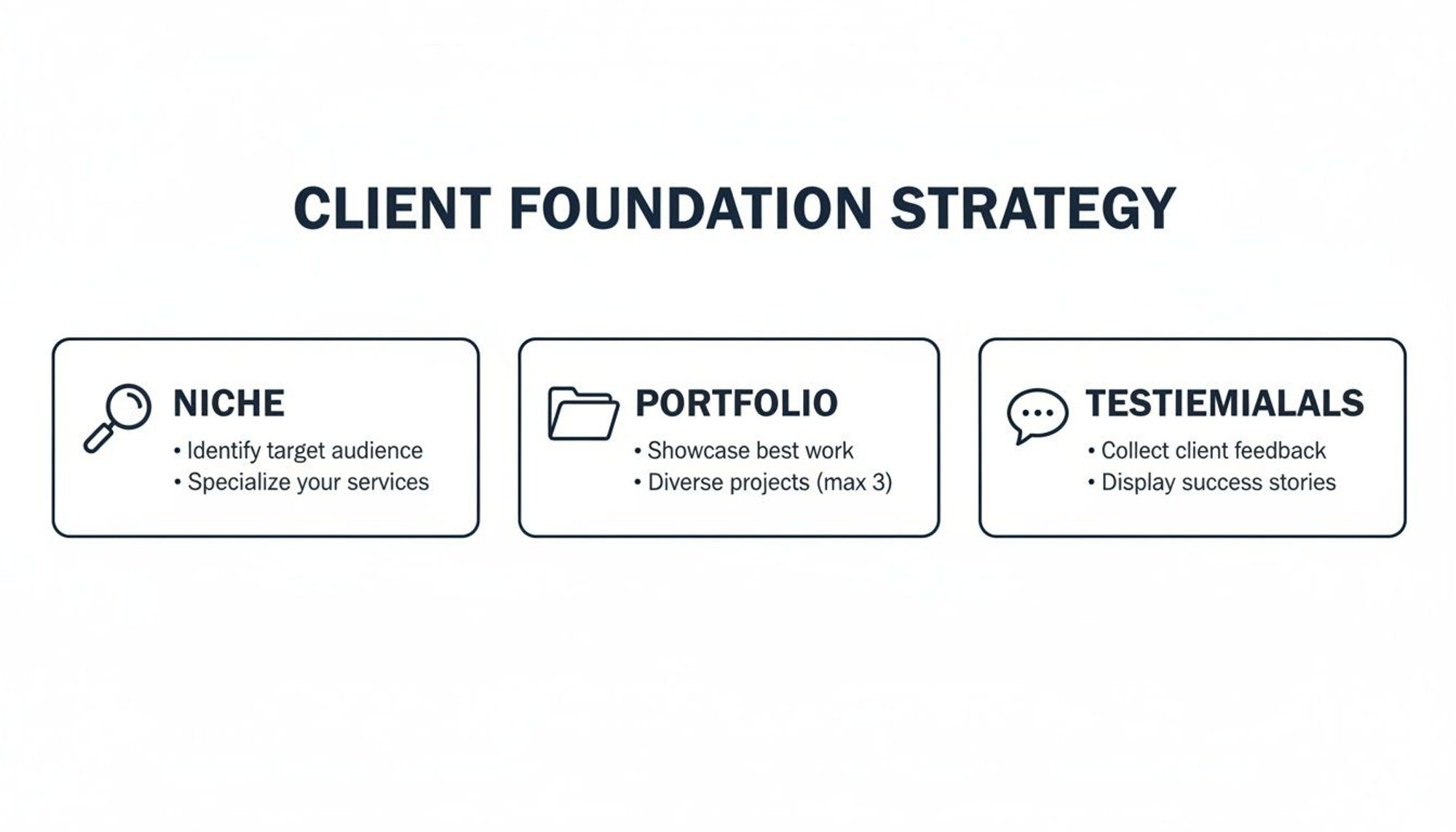
It shows how a clear niche, a portfolio that proves your results, and good testimonials are the pillars that support everything you do to get clients—including a great local SEO plan.
Create a Page for Every Town You Serve
The key to a strong local SEO plan is creating specific pages for each city, town, or neighborhood you want to work in. A general "services" page isn't enough. It will never rank for "web design in Naperville" as well as a page made just for that search.
A special page lets you talk about your work with other Naperville businesses, mention local spots, and fill it with content that feels very relevant to that community.
Now, imagine trying to do this by hand for a dozen—or even a hundred—nearby towns. It would be a nightmare. You'd spend endless hours copying, pasting, and changing text. The process is slow and hard to manage.
This is where automation can be a huge help. A tool like LPagery lets you build hundreds of unique, local landing pages from one template and a simple spreadsheet. You just list the towns, add some unique details for each one, and the tool creates all the pages for you instantly. This gives you a big advantage, letting you show up wherever local businesses are searching.
The Power of Creating Pages in Bulk
Let's look at why this automated method is so good for getting local web design clients. When you create many pages at once, you multiply your chances of getting found.
- Very Targeted Content: Each page can be changed with the city name, local pictures, and specific examples, making it feel custom-made for people searching in that area.
- Wider Reach: You can cover every single town in your service area, not just the big city. This lets you get leads from smaller, less competitive areas that others miss.
- Huge Time Savings: What would take you weeks of hard work can be done in minutes. This frees you up to focus on what actually makes you money: working with clients.
The goal isn't just to rank for your main city. It's to create an online footprint that covers your whole region, making you the most visible and best choice for any local business owner who needs a new website.
Putting It All Together for Local Success
When you combine a smart bulk page plan with other local SEO basics, your client list can start to grow on its own.
First, make sure your Google Business Profile is completely filled out with your services, hours, and photos. Then, start getting positive reviews from your happy clients. Those reviews build trust and help your rankings.
By focusing your energy on the local market, you stop competing with every designer on the internet and start building a name as a trusted local expert. For a deeper look into this topic, check out our guide on how to improve local SEO rankings.
This whole approach is a powerful, repeatable system for attracting a steady stream of web design clients right to you.
Smart Outreach That Actually Gets a Reply
Let’s be honest: reaching out to strangers gets a bad reputation because most of it is done poorly. We’ve all gotten those generic, copy-pasted emails that feel like they were sent to 1,000 other people. We're not doing that. Forget the spammy messages and focus on what really works: making a real, human connection.
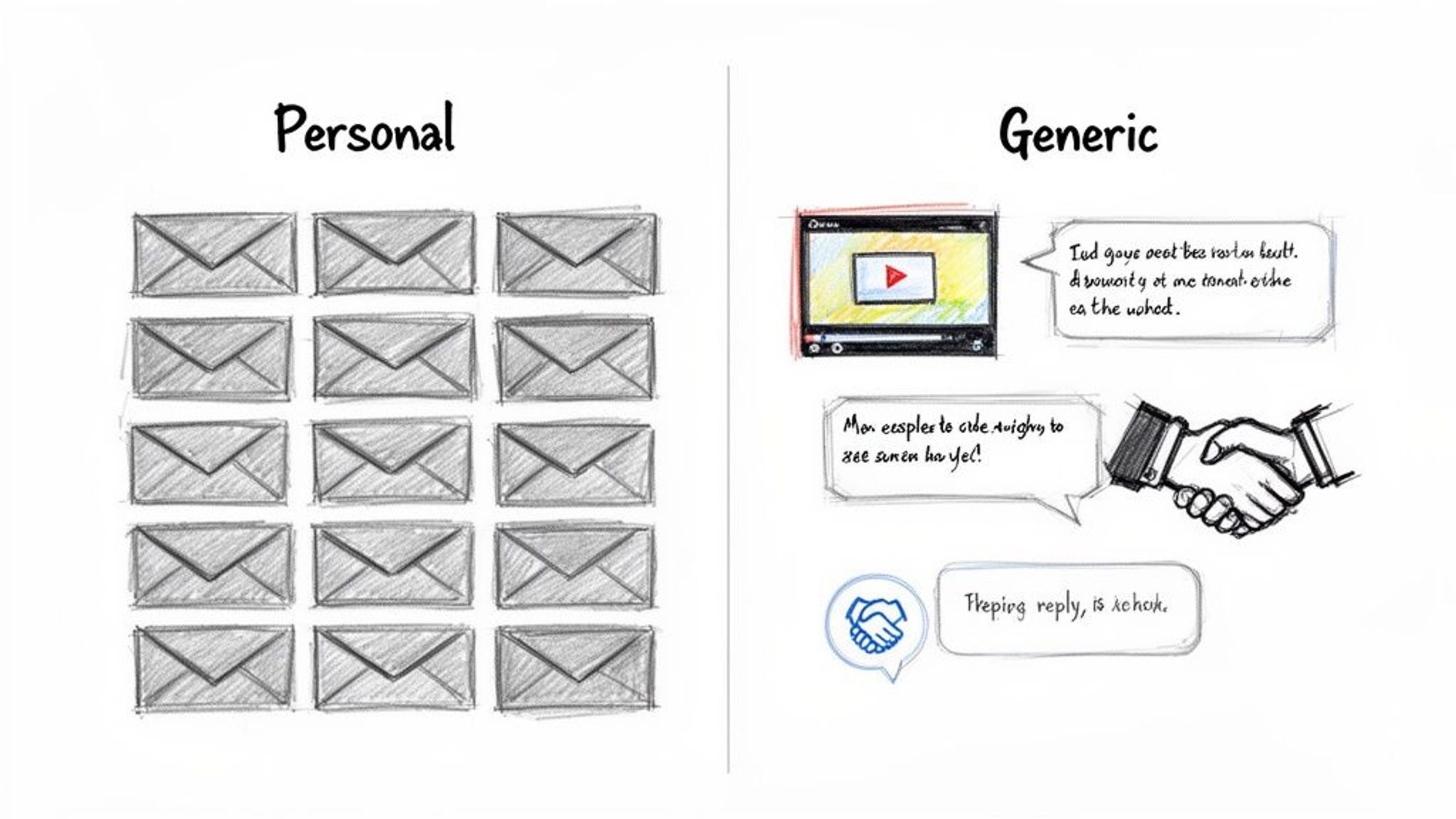
The golden rule here is quality over quantity. It's better to send ten thoughtful, personal messages than 1,000 generic ones. When you show a potential client you’ve actually looked at their business, they’re much more likely to listen.
We'll break this down into two main places where a personal touch makes a big difference: email and LinkedIn.
Personal Emails That Stand Out
The goal of a first email isn't to get a project right away; it's to start a conversation. The best way to do that is by giving some value first, with no strings attached. Instead of immediately asking for their business, offer a small piece of helpful, specific advice.
This simple change in approach makes you look like a problem-solver, not just another person selling something. It builds a little bit of trust from the very first message.
Here are a few simple ideas that work well:
- The Helpful Tip: Find one small, specific thing wrong with their website. Maybe their main button is hard to see on a phone, or their contact page is confusing. Send a quick, friendly email pointing it out and suggesting a simple fix.
- The Quick Video Review: Record a 60-second video of you looking at their site. Point out one thing they’re doing well (always start with a compliment!) and one thing that could be better. This is very personal and shows you’ve spent real time.
- The "I Noticed" Email: Did they just get mentioned in a local news story or win an award? Send them an email to say congrats and connect it to how a better website could help them get more attention.
A great first email feels like a warm introduction. It’s personal, relevant, and focuses on the other person’s business, not your own. Keep it short, make it about them, and offer help without asking for anything in return.
Using LinkedIn to Build Real Relationships
LinkedIn is much more than an online resume. It’s a great place to connect directly with the people who can hire you. But just like with email, sending generic connection requests is a quick way to be ignored. The real secret is to build a relationship first.
Start by finding the key people at companies in your chosen niche. This is usually the owner, founder, or marketing manager.
Once you’ve found them, don't hit "connect" right away. Instead, play the long game:
- Follow Them First: This is a simple way to get on their radar without asking for anything.
- Engage with Their Posts: Leave thoughtful comments on their posts. Don't just say "Great post!" Add to the conversation by asking a question or sharing a related thought.
- Send a Personal Request: After a week or two of real engagement, then send the connection request. Your message can be as simple as, "Hi [Name], I've really been enjoying your posts on [topic]. I'd love to connect and follow your work."
This slow-and-steady approach turns you from a random stranger into a familiar, friendly face. By the time you decide to send a direct message about their website, you’ve already set the stage for a good conversation.
The Best Goal: Referrals from Happy Clients
While smart outreach is a great way to start, the best long-term plan for getting clients is your own great work. Happy clients become your best sales team. In fact, a study from Clutch.co found that 80% of small agencies get most of their business from referrals. This explains why finding new clients can feel so hard for many freelancers.
Every single project you finish is a chance to get the next one. When you deliver an amazing website and a great client experience, people will naturally want to talk about it. This word-of-mouth marketing is the strongest and most lasting way to grow your business.
For a different idea on how to find clients, our guide on where to find web design leads for sale might give you some fresh ideas.
Creative Ways to Find Your Next Great Client
Good outreach and SEO will definitely keep you busy in the long run. But sometimes, you need a client now, not in a few months.
Instead of waiting for them to find your blog, a few more direct methods can put you right in front of businesses that are ready to hire. Let's look at a few creative, and faster, ways to get your next web design project.
Use Freelance Marketplaces to Your Advantage
I know what you're thinking. Websites like Upwork and Fiverr have a bad reputation. But think of them as huge search engines for finding work. Millions of businesses are on there every month, actively looking to pay someone for a new website.
The trick is to treat your profile like a sales page, not a resume. A great profile will attract serious clients, not just people looking for a cheap deal.
Here's how to make yours stand out:
- Be Very Specific. Don't just be a "Web Designer." Be a "Webflow Expert for Tech Companies" or a "Shopify Developer for Skincare Brands." Being specific is your best friend in a crowded place.
- Talk About Results, Not Just Skills. Your profile is like another portfolio. Show short case studies. Don't just say you build websites; talk about the business problems you solved and the results you delivered for past clients.
- Write a Great First Sentence. Your opening line is everything. Make it about them, not you. Try something like, "I help online stores increase their sales with clean, fast Shopify sites."
This simple change turns you from a general worker into a wanted specialist. That’s how you can charge higher prices and attract clients who value your skills.
The Hidden Power of Local Networking
Never forget the power of a simple handshake. Going to local business meetups or events puts you in a room filled with your ideal clients. These aren't just names on a list; they're fellow business owners in your own community.
Your goal isn't to walk in and hand out business cards to everyone. It's to listen. Ask people about their business. What are they struggling with? What are their big goals for the year? You'd be surprised how many conversations about marketing or growth will naturally lead to their old or poorly performing website.
People do business with people they know, like, and trust. A 10-minute in-person conversation can build more trust than a dozen emails ever could.
This is all about planting seeds. You might not leave every event with a new project, but you'll leave with new relationships. And those relationships are what lead to work and referrals later on.
The Smart Shortcut: Buying Web Design Leads
What if you could skip the search for clients altogether? While building your brand and networking are great long-term plans, sometimes you just need to talk to a qualified buyer today. This is where buying exclusive web design leads is a good way to find new work.
This method connects you directly with businesses that have already said, "I need a new website." They are actively looking. That means you get to jump straight into a sales talk instead of spending weeks trying to get their attention. It’s the fastest way to get a real conversation started.
Our service which lets agencies and freelancers easily configure your ideal lead profile can bypass the client hunt. You tell us your ideal client—based on industry, company size, and budget—and this service generates them for you. You save many hours of searching and can focus on what you're good at: designing and building great websites.
Of course, this direct approach isn't the only way to get noticed. As your brand grows, you'll want to explore other options, like figuring out how to appear in ChatGPT answers to get visitors from new sources. But for quick results, getting a direct line to ready buyers is hard to beat.
Frequently Asked Questions About Finding Clients
When you're first starting in web design, a few questions always come up. Everyone wonders about them, so let's answer them directly. Here are the clear, simple answers I wish I had when I was starting.
How Many Web Design Clients Do I Really Need?
This is a bit of a trick question. The real answer is not a magic number. It's all about your income goals. You have to work backward.
First, decide how much you need to make each month. Is it $5,000? $8,000? Pick a real number.
Once you have your target, you can see how different project sizes get you there. If your goal is $6,000 a month, that could look like:
- One big project at $6,000.
- Two solid projects at $3,000 each.
- Six smaller starter sites at $1,000 each.
See? The "right" number of clients depends completely on your prices.
When you're new, I suggest aiming for two or three smaller projects. It’s a great way to build your portfolio, get some good reviews, and learn how to manage projects without feeling overwhelmed. That early success helps you get bigger projects later.
What Is The Fastest Way To Get My First Client?
Forget about fancy marketing for a minute. The absolute fastest way to get that first client is to use your existing network. It’s not flashy, but it works very well.
Tell everyone you know what you’re doing. Friends, family, old coworkers—everyone. Put up a simple, professional post on your personal LinkedIn and Facebook. You’d be surprised who in your circle needs a website or knows someone who does. The trust is already there, which makes things much easier.
The next-fastest way? Skip the hunt. Instead of sending emails for weeks or hoping your site ranks on Google, you can get a direct line to people who are already looking for help. A smart way to do this is by buying exclusive web design leads. This puts you right into a conversation with a business that is ready to talk.
If you want to jump straight to conversations with qualified prospects, you can easily configure your ideal lead profile and have this service generate them for you. It's a smart shortcut that saves countless hours.
Should I Do Free or Discounted Work for a Portfolio?
Working for free is a risky idea. It can make your work seem less valuable from the start. However, offering a special, one-time "portfolio-builder" discount for your very first client or two can be a smart move. It’s not free work—it’s a calculated trade.
In exchange for a lower price, you get three things you really need:
- A real-world example for your portfolio.
- A great review from a happy client.
- Real experience managing a project from start to finish.
Another great idea is to find a local non-profit you care about and offer to do a project for them. You get a portfolio piece you can be proud of, and you get to help a good cause.
Once you have two or three projects in your portfolio, stop giving discounts. It’s time to start charging based on the real value you provide.
How Should I Price My Web Design Services?
The biggest mistake I see new designers make is charging by the hour. It feels safe, but it actually hurts you as you get better and faster at your job. Don't do it. Instead, you should charge based on the project or the value you provide.
Start by doing some research. See what other designers in your niche are charging to get an idea of the market.
It's also a great idea to offer different packages—like "Starter," "Business," and "E-commerce." Each package should have a clear list of what's included. Clients love clarity.
For example, a standard 5-page website for a local plumber might cost between $2,000 and $5,000. A more complex online store with all the extra features could easily start at $7,000 or more.
Always connect your price to the business results you’re creating for them, whether it’s getting more leads or increasing their sales. It’s not about the hours you work; it's about the value you deliver.

I’m an experienced SEO professional with over a decade of helping over 100 businesses rank higher online, especially local businesses, e-commerce stores and SaaS. As the co-founder of LPagery, I specialize in practical, proven strategies for regular SEO and Local SEO success.
This post may contain affiliate links which we earn a commission on when purchasing a given product.
I’m an experienced SEO professional with over a decade of helping over 100 businesses rank higher online, especially local businesses, e-commerce stores and SaaS. As the co-founder of LPagery, I specialize in practical, proven strategies for regular SEO and Local SEO success.