
More and more people are now using ChatGPT to search for answers instead of Google. This shift means if an AI like ChatGPT doesn't mention your business when a potential customer asks for a recommendation, you're missing out.
A solid ChatGPT content visibility guide is your roadmap to figuring out why your business might be invisible in AI search, and how to fix it. But here’s the good news: the basic principles of SEO and local SEO that you may already know are still the most important tools you have. This guide will show you how to use them to get noticed by AI.
Why Your Business Is Invisible in AI Search
Ever wonder why your competitor gets a shout-out from ChatGPT for a local service query while your business is nowhere to be found? You're not alone. We're in the middle of a huge shift where many people are turning to AI chatbots for recommendations instead of just Googling. If your business isn't mentioned in those conversations, you're missing out on customers who are ready to buy.
This isn't just a small trend, either. A recent Adobe study found that 77% of ChatGPT users in the United States now use it as a primary search tool. Even more telling, about 36% of users have discovered new products through the platform, which shows its direct impact on how people shop. Gen Z is really leading the charge here, with 28% turning to ChatGPT first for their online searches.
The New Rules of Getting Noticed
Traditional SEO is still very important, but it's no longer the only game in town. AI models don't just look for keywords; they're looking for clear, direct information to answer very specific questions. If your website doesn't state your service areas, business hours, or unique selling points in an easy-to-read format, the AI will probably skip right over you and recommend a competitor who does. To really get a handle on this, it's helpful to understand the evolving OpenAI's ChatGPT's competitive landscape and how these platforms are creating their own space.
The main problem is that most websites are built for human eyes and old-school search engines, not for the literal, fact-finding brain of an AI. It's a common issue, and if you find your content doesn't appear in ChatGPT, there are definitely steps you can take.
The infographic below really shows how people are now using AI for search and discovery.
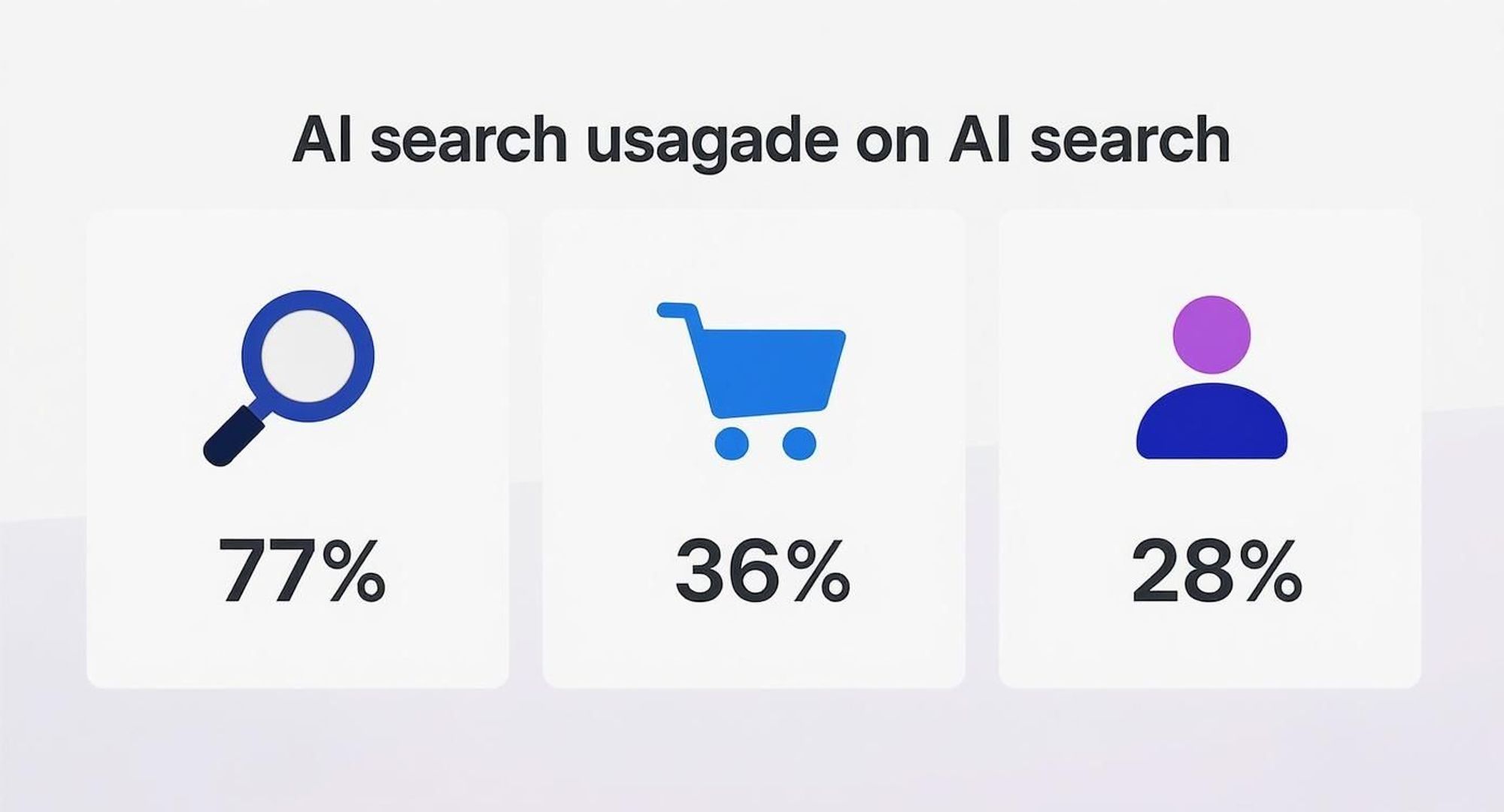
This data paints a clear picture: people are using AI not just to find information, but to make buying decisions and discover new brands. Being visible in these AI-driven conversations is no longer optional, it's essential for growth.
Laying the Groundwork for AI Visibility
More and more people are turning to ChatGPT for answers instead of just Googling. When someone asks an AI for a recommendation, you want your business to be the one it suggests. This might feel like a whole new ballgame, but here's the good news: the core principles of solid SEO are still your most powerful tools.
Think of your website as the primary source of truth for these AI models. The clearer and more direct you are with your information, the more likely ChatGPT is to trust your site and send people your way.
This shift means your website needs to be crystal clear about who you are, what you do, and where you operate. If that information is buried in dense paragraphs or is a pain to find, AI models will just move on. They're looking for facts, and they need them laid out in a simple, structured way.
Stick to the SEO Fundamentals
Before you get into any complex strategies, you have to nail the basics of local SEO. This is the foundation everything else is built on. AI, much like Google, rewards websites that are genuinely helpful and easy for a user (or a bot) to understand.
Your immediate priorities should be:
- Business Details: Is your name, address, phone number, and business hours impossible to miss on your homepage and contact page?
- Service Areas: Do you clearly list every single neighborhood, city, or region you serve? Sometimes, a simple list is all it takes.
- Specific Services: Don't just say you're a "plumber." You need pages or at least dedicated sections for "emergency leak repair," "drain cleaning," and "water heater installation."
These details are the raw data AI models crave to make a confident recommendation. When a user asks, "Who can fix a leaky pipe in downtown Austin?" the AI scans for websites that specifically mention that service and that location. Getting these details right is a must. For a deeper dive, you can learn more about the specific ChatGPT ranking factors that play a role here.
The heart of AI visibility isn't about gaming a new algorithm. It’s about providing clear, structured, and helpful information. If a human can easily understand what you offer and where, an AI can, too.
To keep things organized and efficient when creating all this content, platforms like the Shortgenius platform can be a huge help. Tools like this are designed to help you generate the kind of straightforward, concise content that both users and AI models love.
The key is to track how you're actually showing up in these new AI-driven conversations. You can't improve what you don't measure. Using a tool like our LPagery AI Rank Tracker makes it simple to see where you stand. You just paste your site, pick your keywords, and in seconds, you'll see how you rank in ChatGPT. It gives you weekly action steps to win more AI traffic and rank higher for all your keywords, with no technical skills needed. This takes the guesswork out of the equation and helps you focus on what's actually moving the needle.
How to Actually Measure Your ChatGPT Rankings
You can't fix a problem you can't see. And while building a strong SEO foundation is great, you need a way to actually measure if your efforts are paying off.
Traditional SEO tools are fantastic for tracking your position on Google, but they’re completely blind to whether ChatGPT is recommending your business. This is where a new approach, AI rank tracking, becomes absolutely essential.
AI rank tracking works differently because it doesn't just scan a list of blue links. Instead, it simulates real-world user questions, we call them "prompts", to see if your brand gets mentioned in the AI's conversational response. This gives you a clear picture of your visibility in a way that old-school rank trackers simply can't. It answers the most important question: when a potential customer asks for a recommendation, does your name come up?
Understanding Your AI Visibility Baseline
The first step is to figure out where you stand right now. You need a baseline so you can track your progress over time. The good news is, this process is straightforward and doesn't require any technical wizardry.
You start by simply adding your website and the keywords you want to target. For a local plumber, this might be terms like "emergency plumbing" or "drain cleaning." A good tool then generates dozens of natural language prompts that a real customer would actually ask.
Think along the lines of:
- "Who is the best plumber for a clogged drain in downtown?"
- "Find a 24/7 emergency plumber near me."
- "Recommend a reliable plumbing service in my area."
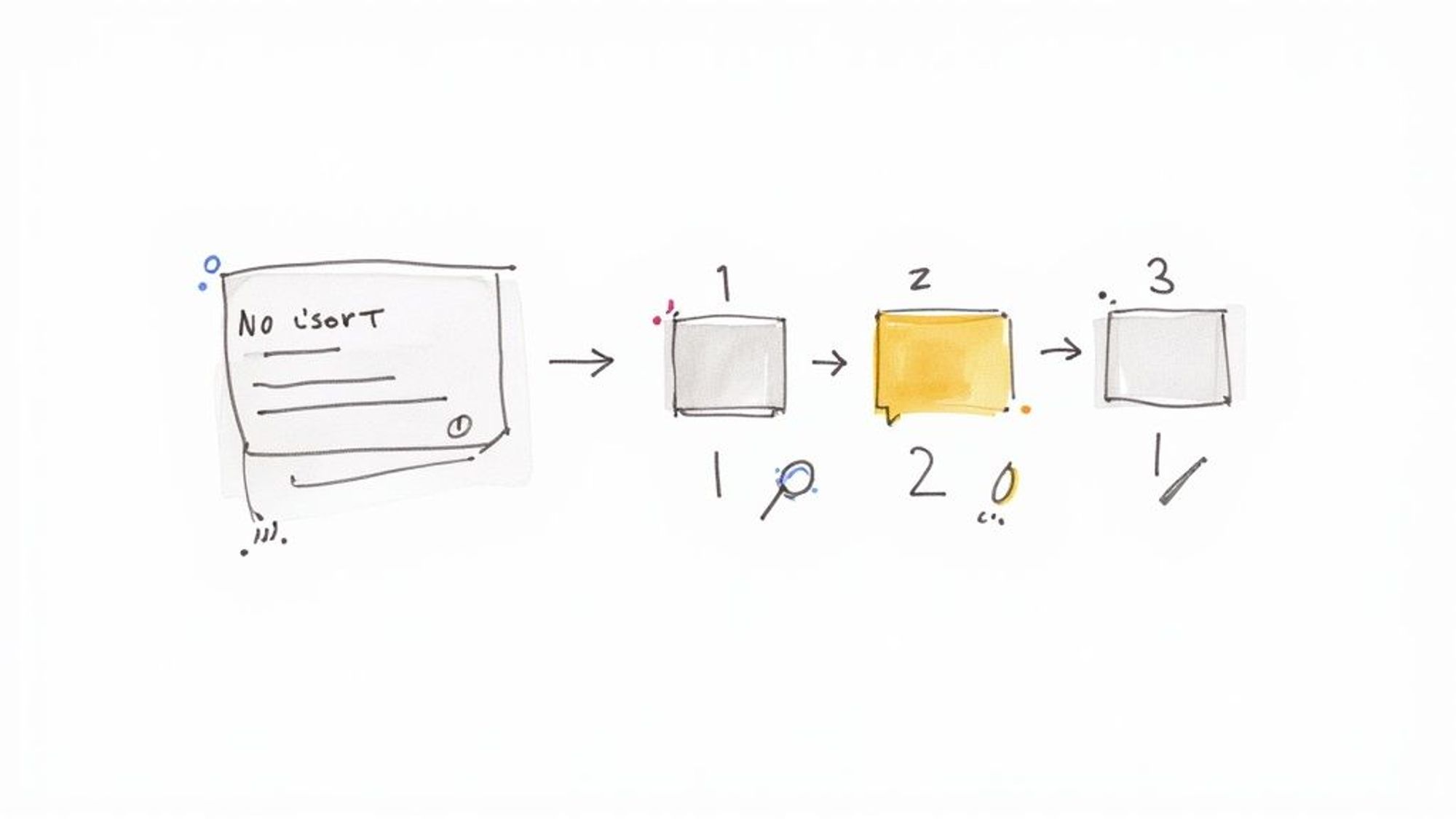
These prompts are then sent directly to chatbots like ChatGPT and Gemini. From there, the tool analyzes the responses to see if your business gets a mention. The results will show you whether you're ranked first, second, or not at all. This initial report is your starting point, a clear, honest look at your current AI visibility. For a more detailed walkthrough, check out our guide on how to track your rankings in ChatGPT.
This method is incredibly valuable, especially when you consider the sheer volume of engagement on these platforms. ChatGPT now gets over 5.24 billion visits per month, and users are spending a significant amount of time interacting with it.
Interpreting Your First AI Ranking Report
Once the analysis is done, you'll get a report that turns the AI's conversational replies into hard data. You’ll see exactly which prompts you're ranking for and, more importantly, which ones you're missing out on.
This isn't just about a simple "yes" or "no." A solid AI rank tracker will also show you who is being mentioned when you're not. This competitive insight is priceless, as it lets you see what your competitors are doing right.
By understanding your baseline, you can finally stop guessing and start knowing. You have a clear metric to measure your improvement and can start making targeted changes to your website with confidence, knowing you can track the results.
Simple Website Fixes to Improve Your AI Ranking
Once you have your baseline measurement, you've got a clear picture of where your site stands. Now, it's time to start making targeted improvements.
The good news? You don't need to be a technical wizard to see a big impact. I've found that many of the most effective changes are straightforward content updates you can handle yourself.
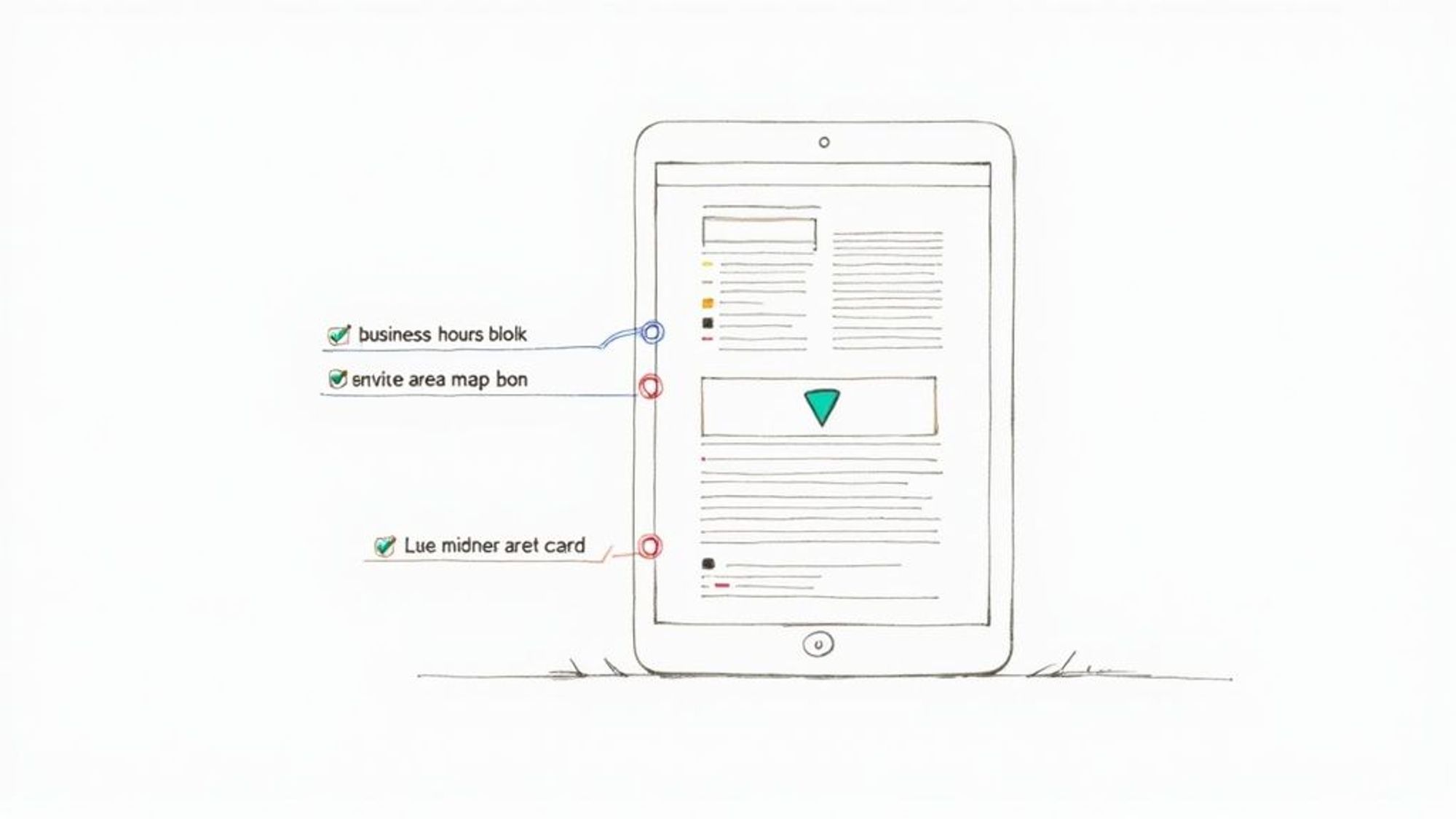
AI models are very literal. They need clear, direct information to feel confident about recommending your business. If a potential customer asks for an "emergency plumber in downtown," the AI scans its data for pages that explicitly mention those exact services and locations. Your job is to make that information impossible for it to miss.
Create Hyper-Specific Content
One of the quickest ways to boost your visibility is by creating dedicated pages for each service you offer in each specific area you serve. A general "services" page just doesn't cut it anymore.
If your AI rank tracker shows you're invisible for "roof repair in Springfield," the fix is often as simple as building a new page titled "Expert Roof Repair Services in Springfield."
This works because you're directly answering a potential AI prompt. You're essentially spoon-feeding the chatbot the precise answer it's looking for. We go into a lot more detail on this tactic in our guide on how to rank your website on ChatGPT.
Think about the real questions your customers ask, and build content that answers them head-on.
- Missing Service Details: Does your site clearly state your business hours? What about 24/7 emergency services? If not, add that info to your homepage and contact page immediately.
- Vague Location Information: Do you just say you serve the "metro area"? That's too broad. Instead, list the specific neighborhoods, towns, and even zip codes you cover.
- Unanswered Questions: Add a Frequently Asked Questions (FAQ) section to your service pages. This structured Q&A format is gold for AI models looking to pull quick, reliable information.
Make Your Information Easy to Find
Your website's structure matters just as much as the words on the page. Key details need to be easy for both humans and AI crawlers to spot.
Break up long paragraphs. Use clear, descriptive headings. Use bullet points to list services or features. A well-organized page helps an AI quickly identify and extract the most important information without getting confused.
I've seen many businesses struggle with AI visibility simply because their information, while present, was buried in dense text. The table below outlines some of the most common issues AI rank trackers flag and the simple content fixes that solve them.
Simple Fixes for Better AI Visibility
Identified Problem | Simple Solution | Why It Works |
|---|---|---|
Not ranking for a specific service + city combo. | Create a dedicated page for that exact service in that city. | Provides a direct, unambiguous match for AI queries. |
Missing from "near me" or emergency queries. | Add "24/7 Emergency Service" and explicit business hours to the homepage/footer. | AI needs explicit confirmation of availability to recommend you for urgent needs. |
Website only mentions the main city you serve. | List all specific towns, neighborhoods, and zip codes you cover on your service pages. | Gives the AI granular location data to match with hyper-local user requests. |
Content is in long, dense paragraphs. | Add an FAQ section with clear questions and answers to key service pages. | Structured Q&A format is easily parsed and understood by AI models. |
By focusing on these straightforward fixes, you're making your website a much more reliable and authoritative source in the eyes of AI. It's often these small, strategic adjustments that lead to the biggest gains in your rankings, connecting you with more customers actively looking for exactly what you offer.
How to Monitor Progress and Stay Ahead of Competitors
Getting your business mentioned by ChatGPT is a great first step, but it's definitely not a "set it and forget it" kind of deal. The world of AI-powered search is always in flux, so you have to keep a close eye on your progress and be ready to adapt. Staying visible is an ongoing process, monitoring your rankings, seeing what’s actually working, and making small, consistent tweaks along the way.
Think of it like tending a garden. You don't just plant the seeds and walk away, right? You have to water them, pull the weeds, and see which plants are thriving. The same idea applies here. Consistent monitoring helps you figure out which of your website changes are actually making a difference.
Using Weekly Reports to Guide Your Strategy
The best way I've found to track this is with weekly reports from a dedicated tool. These reports take the conversational, sometimes messy answers from AI chatbots and turn them into clear data you can actually use. Instead of just guessing, you can see exactly which of your efforts are paying off.
For example, maybe last month you created a new page for "24/7 emergency services in Springfield." A weekly report will show you if you've started popping up in AI-generated answers for that specific query. If you have, awesome, you know that strategy worked. If not, it’s a clear signal that you need to go back and refine that page.
These reports help you answer some crucial questions:
- Are my recent content updates actually working? See if new pages or updated info are leading to more mentions.
- Where are new opportunities popping up? You might discover you’re suddenly ranking for a keyword you weren't even targeting.
- Are my rankings stable? Keep track of your position to make sure you don’t lose ground to a competitor who just updated their site.
This continuous feedback loop is what separates the businesses that really succeed in AI search from those that get left behind. For a deeper look at the options out there, you can explore some of the best ChatGPT rank tracker tools to see which one fits your needs.
Analyze Your Competitors to Stay Ahead
One of the most powerful things about tracking your AI visibility is seeing who gets mentioned when you don't. This isn't just about knowing who your competitors are; it's about figuring out why they're being recommended over you.
When a report shows a competitor ranking for a prompt you're targeting, go check out their website. What information are they providing that you're missing? Maybe their page has clearer pricing, more detailed service descriptions, or a bunch of customer testimonials you don't have.
This kind of insight is pure gold. It gives you a direct, actionable roadmap for what to improve next. By analyzing what’s working for others, you can refine your own content to be more comprehensive and helpful, and ultimately, win that top spot.
With its massive global reach, ChatGPT processes over 1 billion queries daily and holds about 60.6% of the AI industry market share. It's a critical channel to monitor. You can read the full research on these powerful ChatGPT statistics to really grasp its scale. By consistently tracking your performance and learning from your competitors, you can make sure your business stays relevant and visible as this landscape continues to grow.
Common Questions About Getting Found on ChatGPT
Diving into the world of AI search can feel like you're learning a whole new language, and it’s totally normal to have questions. You want to be sure that the time you put into a new strategy will actually move the needle for your business.
This section tackles the most common questions business owners have about getting their brand noticed on ChatGPT and other AI chatbots. I'll give you clear, straightforward answers to help you move forward with confidence.
Will Following This Guide Really Help Me Show Up in ChatGPT?
Yes, absolutely. The strategies in this guide are all about making your website a clearer, more authoritative source of information.
Think of it this way: AI models are like researchers on a tight deadline, they need to find accurate information, and they need it fast.
When you strengthen your basic SEO and create specific content that directly answers your customers' questions, you're essentially handing the AI the exact data it needs to recommend you. It's less about "tricking" an algorithm and more about being the most helpful and direct resource out there.
How Soon Can I Expect to See My Business Rank Higher in AI?
While every situation is a little different, many businesses start seeing improvements within just a few weeks. Simple, direct updates can be picked up by AI models relatively quickly.
For example, adding a missing service page for a specific neighborhood or clearly stating your business hours on your homepage are small changes that can have a surprisingly quick impact. The key is to be consistent. Use the actionable steps you get from a tracking tool to build momentum and see steady growth over time.
You don't need to overhaul your entire website overnight. Small, consistent updates often have a bigger impact than one massive project. Just focus on making one or two improvements each week, and you'll see progress.
Do I Need to Be an SEO Expert to Do This?
Not at all. I wrote this entire guide for business owners, not technical SEO wizards. All of the recommendations are designed to be simple and easy to implement yourself.
Most of the suggestions will be as straightforward as, "Add a paragraph about your 24/7 emergency services" or "Create a new page for your services in Springfield." If you can edit text on your website, you have all the skills you need to improve your AI rankings.
Can I See Which Competitors Are Ranking When I'm Not?
Yes, and this is honestly one of the most valuable insights an AI rank tracker provides. Seeing which competitors get recommended for specific customer questions is incredibly powerful.
It allows you to:
- Review their websites: See what kind of information they're providing that you aren't.
- Identify content gaps: Notice if they have detailed pages for services you might have overlooked.
- Update your own content: Use this intelligence to make your website more comprehensive and competitive.
Ultimately, tracking your AI visibility takes all the guesswork out of the equation. A tool like our AI Rank Tracker makes this easy by showing you exactly where you stand, what to fix, and which competitors are ahead, giving you a clear path to getting noticed.

I’m an experienced SEO professional with over a decade of helping over 100 businesses rank higher online, especially local businesses, e-commerce stores and SaaS. As the co-founder of LPagery, I specialize in practical, proven strategies for regular SEO and Local SEO success.
This post may contain affiliate links which we earn a commission on when purchasing a given product.
I’m an experienced SEO professional with over a decade of helping over 100 businesses rank higher online, especially local businesses, e-commerce stores and SaaS. As the co-founder of LPagery, I specialize in practical, proven strategies for regular SEO and Local SEO success.