Keeping an eye on your website’s search rankings is key for getting more visitors and growing your business. As search engines get smarter with AI like Claude, just knowing your position isn’t enough. You need a tool that not only tracks your keywords but also gives you clear, simple steps to help you improve. A good rank tracker is like a compass for your website, showing you what’s working, what isn’t, and what to do next.
This guide will help you find the best Claude rank tracker tools for what you need, whether you own a local business, run a marketing agency, or are an SEO expert. We’ll skip the confusing technical terms and get straight to what matters. For each tool, you’ll find a simple review of its main features, who it’s best for, and the good and bad parts. We’ve also included pictures and links to help you decide.
When looking at these tools, it’s good to know how they get their information. Traditional rank trackers focus on Google search positions, but AI rank trackers go further, they analyze responses from models like Claude, ChatGPT, Gemini, Perplexity, and Google AI Overviews to see when and how your brand is mentioned or cited.
That means you’re not just watching “blue link” rankings anymore, but your actual presence inside AI-driven answers. Our full list covers both dedicated AI visibility platforms like LLMrefs, Promptwatch, and AthenaHQ, as well as SEO suites that now include AI search features, giving you a clear picture of the best options available.
1. LPagery Claude AI Rank Tracker
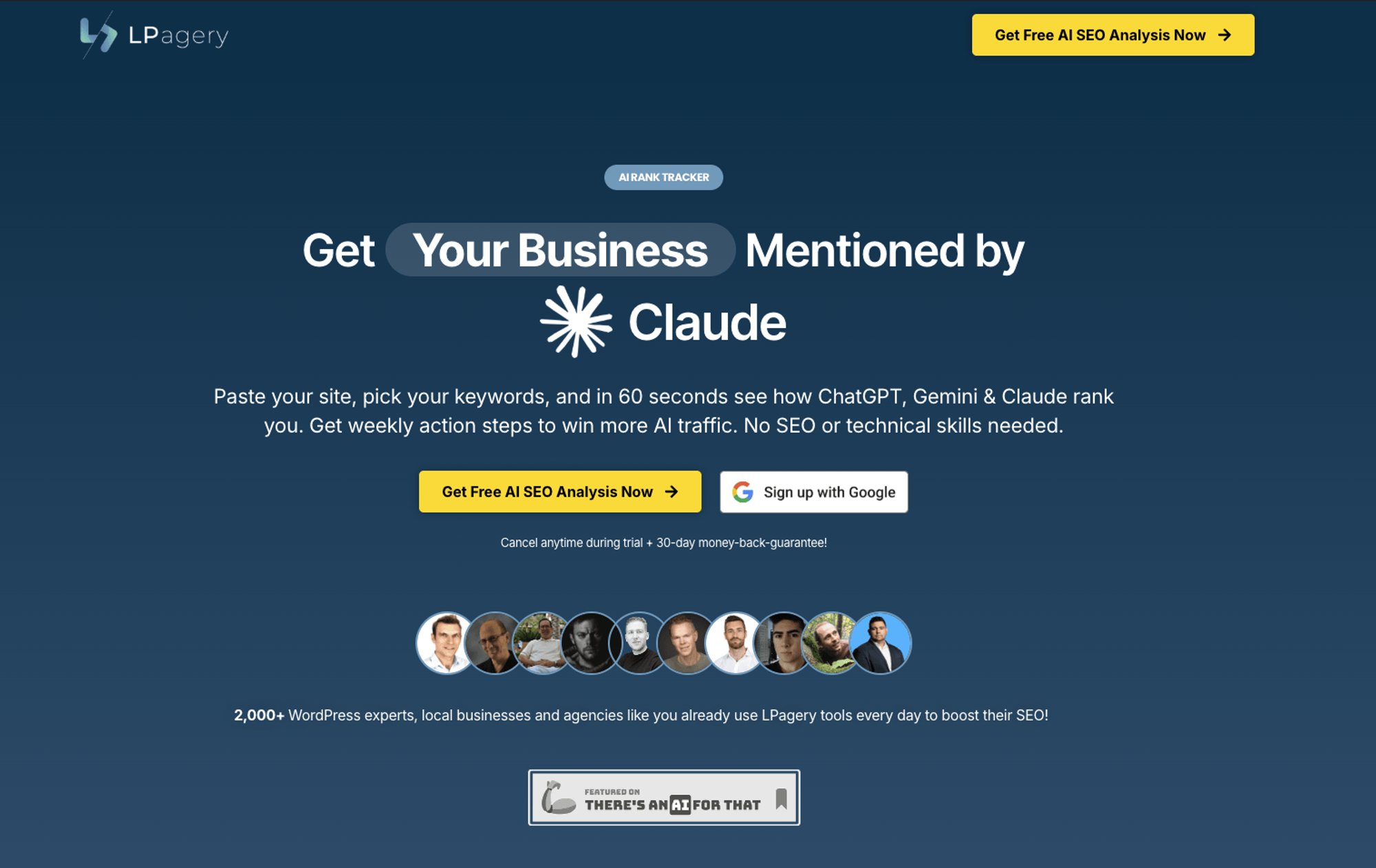
LPagery’s Claude Rank Tracker is a new kind of tool made for people who want more than just numbers. It doesn’t just show you where your website ranks; it tells you exactly what to do to rank higher. This makes it perfect for business owners and marketers who need clear, simple steps to follow.
LPagery is already well known for its WordPress plugin focused on local SEO, which has thousands of users worldwide. Building on that success, the team created this AI rank tracker to help users go beyond traditional SEO and measure their visibility in the new world of AI-driven search.
What makes LPagery’s tool special is how it gives you suggestions. Because it knows what’s happening on your website, it can look at each page very closely. Then, it creates a list of action plans that anyone can use. Instead of just seeing that a keyword dropped, LPagery will tell you why and give you a simple to-do list to fix it. This could be things like adding a certain keyword, improving a title, or fixing a technical issue. It turns confusing data into easy-to-follow advice, which is its biggest strength.
Key Features and Considerations
Feature | Details |
|---|---|
Tracking Scope | Tracks keywords and provides ongoing analysis of your pages across multiple chatbots like ChatGPT and Claude. |
Unique Strength | Gives precise, page-by-page action plans that are easy for anyone to follow, based on a deep understanding of your site. |
Ideal User | Business owners and marketers who want clear, actionable suggestions to improve their rankings, not just data. |
Pricing | Starting from $59/month with a free 7-day trial. |
Pros:
- Focuses on easy-to-understand action plans instead of just data.
- Suggestions are tailored to each specific page on your site.
- Great for people who aren’t SEO experts but want to improve their website.
Cons:
- It’s a newer tool, so it may not have as many extra features as older, larger platforms.
- Best for users who want guidance, not just raw data for deep analysis.
Website: https://lpagery.io/tools/claude-rank-tracker/
2. LLMrefs
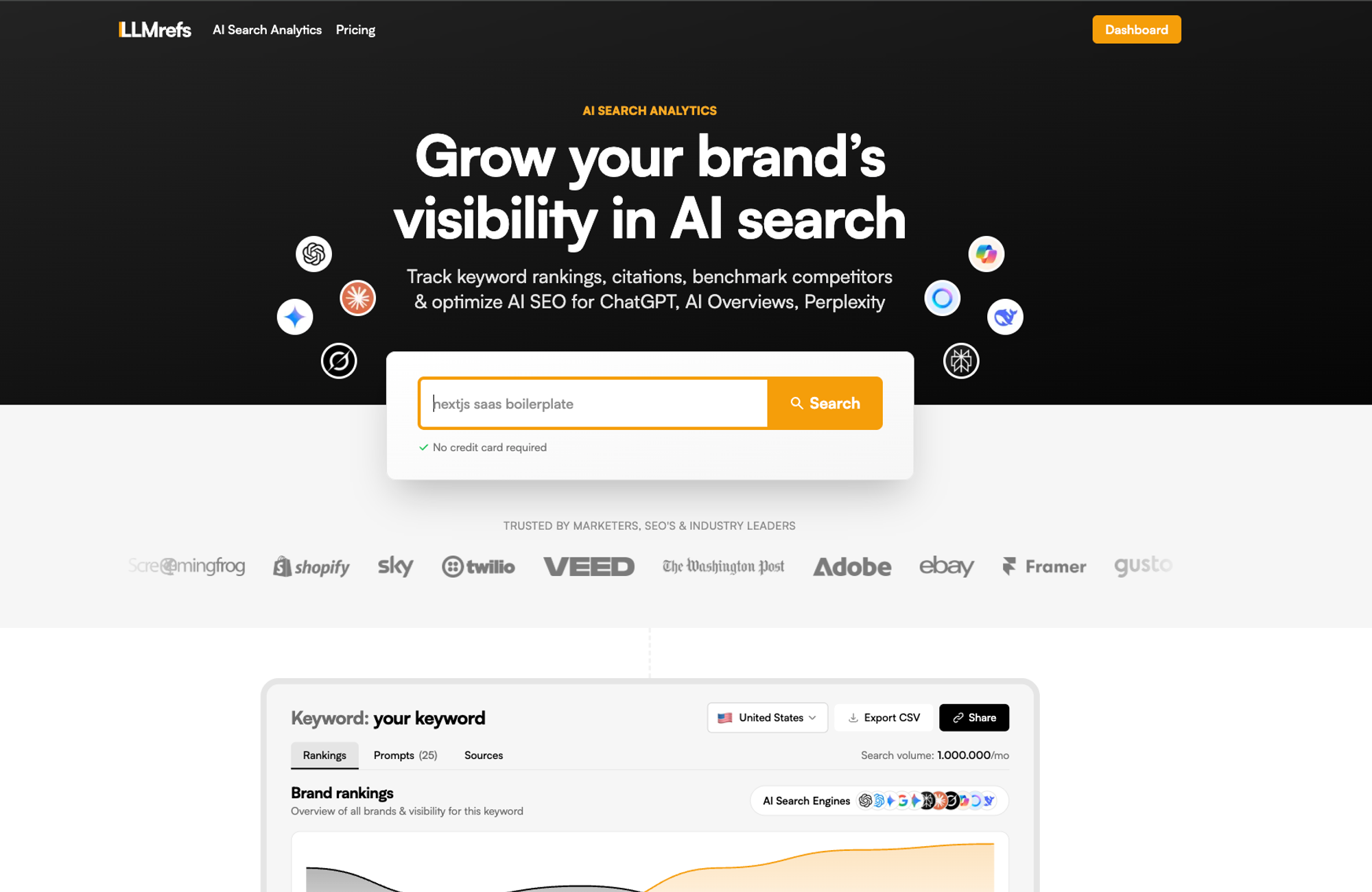
What makes LLMrefs special is that it’s built from the ground up to understand how AI engines talk about your brand. Rather than just tracking your rank in “blue links,” it tracks your visibility, mentions, and citations in AI responses across models like ChatGPT, Claude, Gemini, and Perplexity.
Key Features and Considerations
Feature | Details |
|---|---|
Tracking Scope | Monitors your keywords and brand’s presence in AI answers, shows how often your pages are cited |
Unique Strength | Reveals citation sources & content gaps, offers an “LS” (LLMrefs Score) metric for AI visibility |
Ideal User | Anyone who wants to be seen & trusted inside AI chat / generative search results |
Pricing | $79/month Pro plan |
Pros:
- Shows which pages AI models actually cite, giving you concrete signals for content & outreach.
- Lets you benchmark your brand versus competitors in AI visibility.
- Supports geo and language targeting to help localize AI presence.
- Has built-in A/B testing to optimize content for AI preference (e.g. meta descriptions).
- Straightforward setup and focus (you don’t have to deal with a massive all-in-one tool).
Cons:
- Newer / less mature than legacy SEO platforms; fewer integrations and possibly less stability.
- Data depends on how well it simulates or queries the AI models — shifts in model behavior might affect results.
- The free tier is very limited, so full utility requires paying.
Website: https://llmrefs.com
3. Ahrefs Brand Radar
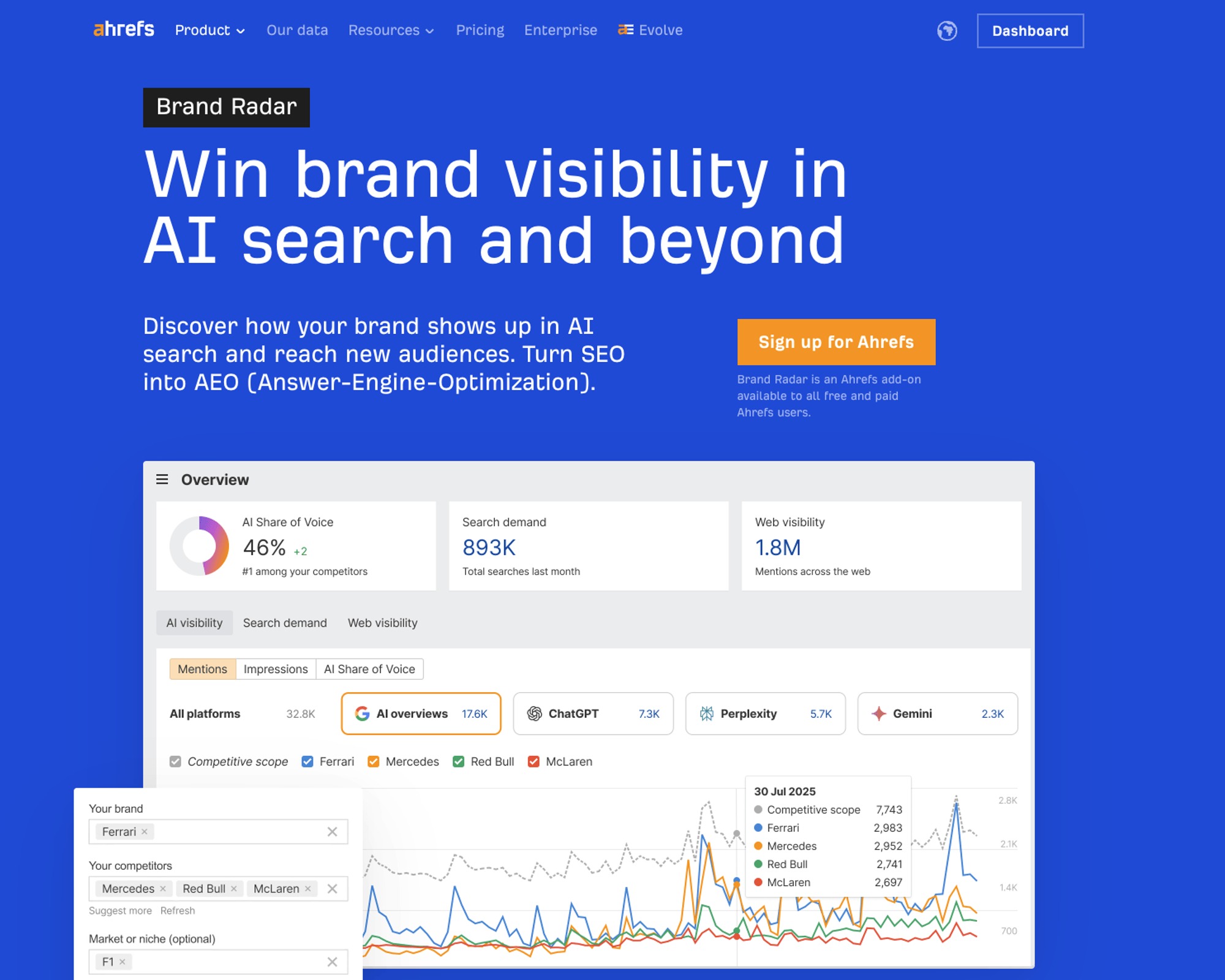
Ahrefs’ Brand Radar is their AI visibility tracker that shows how your brand appears inside AI search experiences like ChatGPT, Claude, Perplexity, Gemini, Copilot, and Google’s AI Overviews. It uses a very large prompts-and-answers index, so you can benchmark against competitors, see citations, spot gaps, and turn insights into content opportunities.
Key Features and Considerations
Feature Details Tracking Scope Visibility and mentions across multiple AI assistants plus Google AI Overviews. Includes real AI answers and prompt clustering to uncover gaps. Unique Strength One of the largest AI visibility datasets with multiple AI indexes and 100M+ prompts. Zero setup to start exploring brand presence. Ideal User Brands and agencies that need competitive benchmarking, sentiment and share of voice in AI answers, plus a workflow for filling citation gaps. Pricing Starts at $179/month.
Pros:
- Tracks brand visibility across leading AI assistants and surfaces the exact answers, citations, and sources that shape them.
- AI share of voice and sentiment views help you gauge perception and movement over time.
- Topic and prompt clustering reveals content gaps you can close to earn or improve citations.
- Tight integration with Ahrefs’ broader SEO toolset and research content about AI Overviews.
Cons:
- Packaging and pricing have shifted during 2025, so costs can be unclear without checking the latest plan details.
- As AI systems change quickly, visibility trends may fluctuate and require ongoing monitoring.
Website: https://ahrefs.com/brand-radar
4. Rankscale.ai
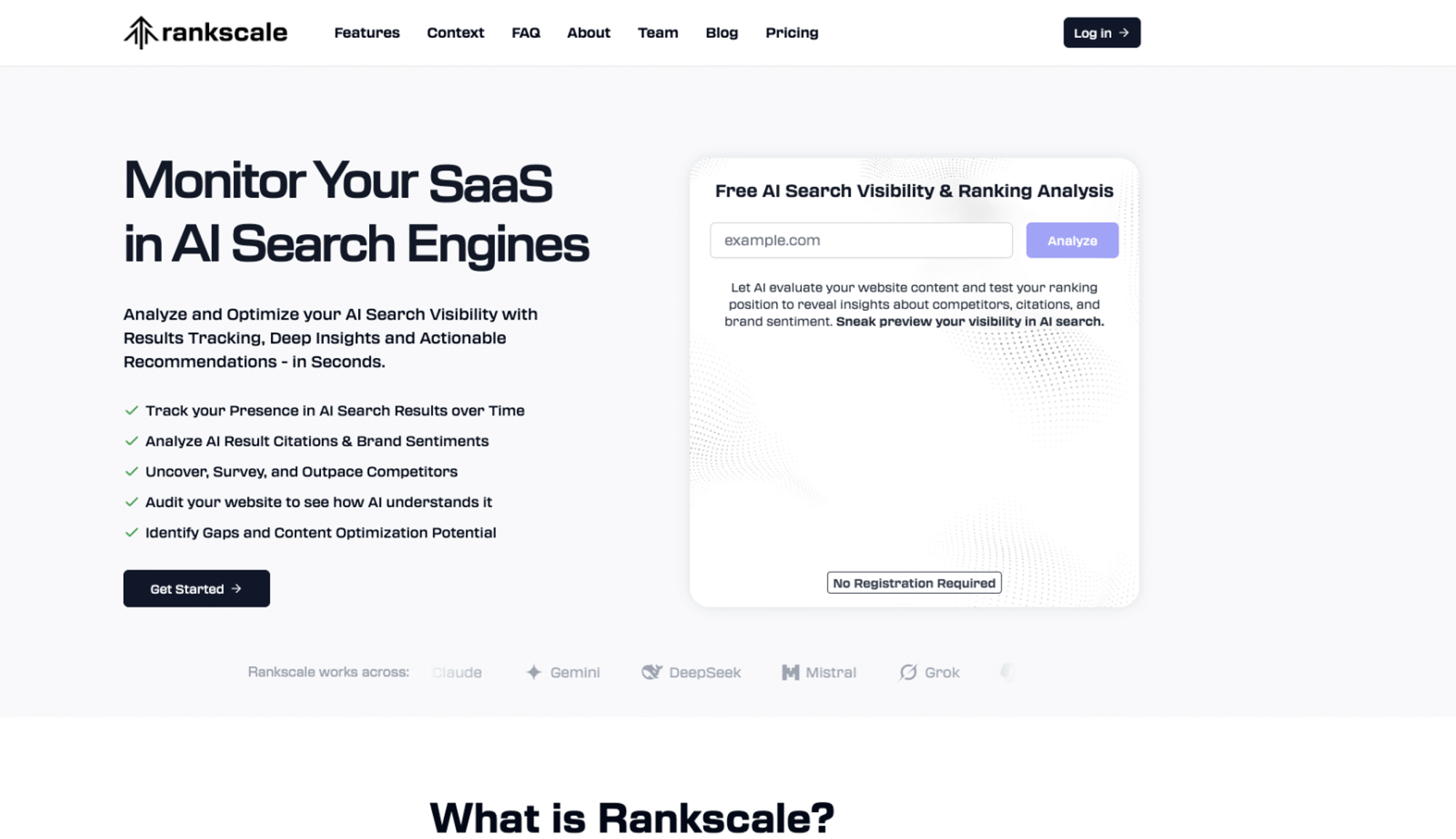
Rankscale.ai is tailored for tracking how your brand shows up in AI-powered search experiences — ChatGPT, Claude, Perplexity, Google AI Overviews, and more. It’s built for marketers who want actionable insights into where and how AI models reference their content, not just raw positions in traditional SERPs.
Key Features and Considerations
Feature Details Tracking Scope Monitors brand mentions, answer visibility, citation frequency, and “Top 3” placement in LLM responses across multiple AI engines Unique Strength Provides a unified AI visibility dashboard, competitor comparisons, prompt-level insights, and an AI Readiness / audit workflow Ideal User Brands, agencies, and content teams seeking to benchmark AI presence, identify content gaps, and tighten alignment with AI answer logic Pricing Starts at ~ €20/month (Essential) with limited credits; scales up to higher tiers for brand dashboards, audits, and bulk responses
Pros:
- Focuses directly on AI visibility and how your content is cited in AI answers, so you see real use cases rather than inferred rank.
- Strong benchmark and competitor views let you see where you’re gaining or losing share in AI visibility.
- Provides prompt-level and answer-level insights, which help you understand which queries trigger citations.
- Has a full audit / readiness workflow to surface site-level fixes that improve your odds of being cited.
Cons:
- It doesn’t (yet) track AI crawling / page-level visits — its visibility data is built from analyzing LLM outputs, not the crawling behavior of models.
- The free / low-tier plans offer limited credit / volume, so scaling visibility requires moving to higher tiers.
- Because AI engines and models evolve fast, historical patterns may shift, making consistent tracking a challenge.
Website: https://rankscale.ai
5. SE Ranking
SE Ranking is a powerful, all-in-one SEO platform that offers great value and flexibility. While it offers a wide range of tools, its rank tracking is particularly strong, giving you daily updates across over 100 different search engines. This makes it a great choice for businesses that need to watch their visibility beyond just Google, offering a full view of their online presence.
What makes SE Ranking different is its optional “AI Search” add-on. This lets users specifically track their visibility in AI-generated results like Google’s AI Overviews. This forward-thinking feature is key for those looking to stay ahead in the changing world of search. Paired with detailed local and map tracking, it gives you a complete solution to understand your performance in both traditional and AI-powered search. Its features for competitor analysis and on-page SEO help you create a full strategy, so you can improve your site’s overall health based on rank data. Learn more about how effective on-page SEO connects to your ranking strategy.
Key Features and Considerations
Feature | Details |
|---|---|
Tracking Scope | Daily updates across 100+ search engines, including local and map results. |
Unique Strength | Optional “AI Search” add-on for tracking visibility in AI-powered results. |
Ideal User | Small and medium-sized businesses, agencies, and marketers looking for a low-cost, full-featured SEO platform. |
Pricing | Plans start at $55/month. A 14-day free trial is available. |
Pros:
- Very good pricing makes it affordable for many users.
- Flexible add-ons let you adjust the platform to your specific needs.
- Strong features for agencies, like white-label reports and a client portal.
Cons:
- Advanced features, including AI tracking, cost extra or require higher-priced plans.
- The number of keywords you can track changes a lot between pricing plans.
Website: https://seranking.com
6. Keyword.com (AI Rank Tracker)
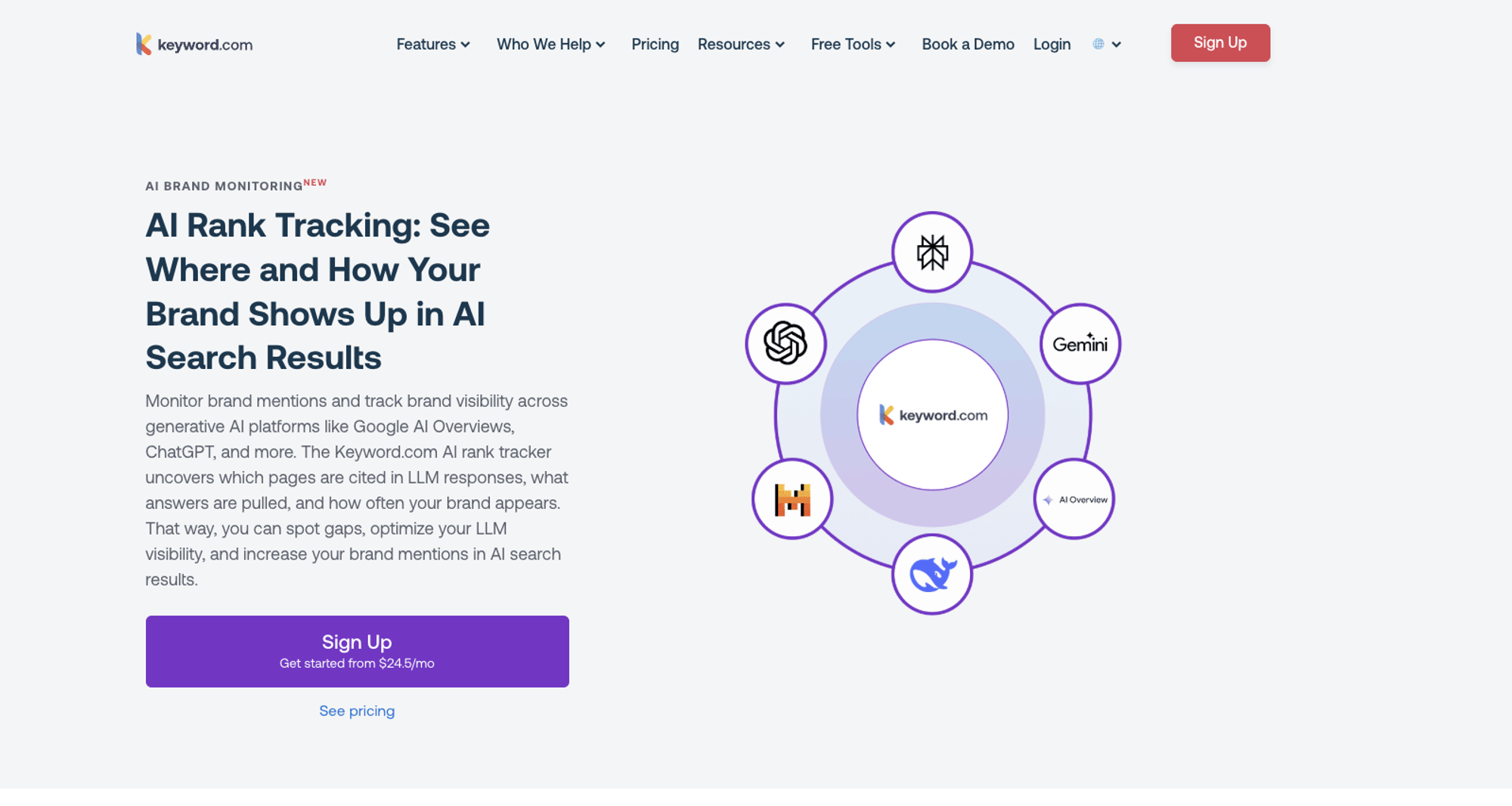
Keyword.com has expanded beyond traditional SERP rank tracking to include AI search visibility. Their platform now shows how your brand and pages are mentioned in AI-generated results from ChatGPT, Claude, Gemini, Perplexity, and Google’s AI Overviews. Instead of just keyword ranks, you see real citations and how often your content is referenced in AI responses.
Key Features and Considerations
Feature Details Tracking Scope Daily or weekly monitoring of keyword performance in AI engines, with visibility into citations, mentions, and answer share of voice Unique Strength Combines classic keyword tracking with advanced AI Overviews and AI answer visibility, letting you see the full picture Ideal User Agencies, SEO pros, and content marketers who want precise visibility reports for both SERPs and AI-driven answers Pricing Scales based on keyword volume and update frequency; AI visibility included in newer plans, with a 14-day free trial for 200 keywords
Pros:
- Accurate, reliable data with long-standing credibility in rank tracking.
- Unlimited domains supported — great for agencies managing many clients.
- Shareable, client-friendly reports that highlight AI presence alongside traditional rankings.
- API and Looker Studio integration for advanced workflows and reporting.
- Tracks not just links but also mentions, so you know when AI “talks about you” even if it doesn’t link.
Cons:
- Not an all-in-one SEO suite — focused mainly on rank tracking and visibility.
- Pricing can scale up quickly as you track more queries across both SERPs and AI.
- AI monitoring is newer, so historical depth is still limited compared to classic rank tracking.
Website: https://keyword.com
7. Similarweb
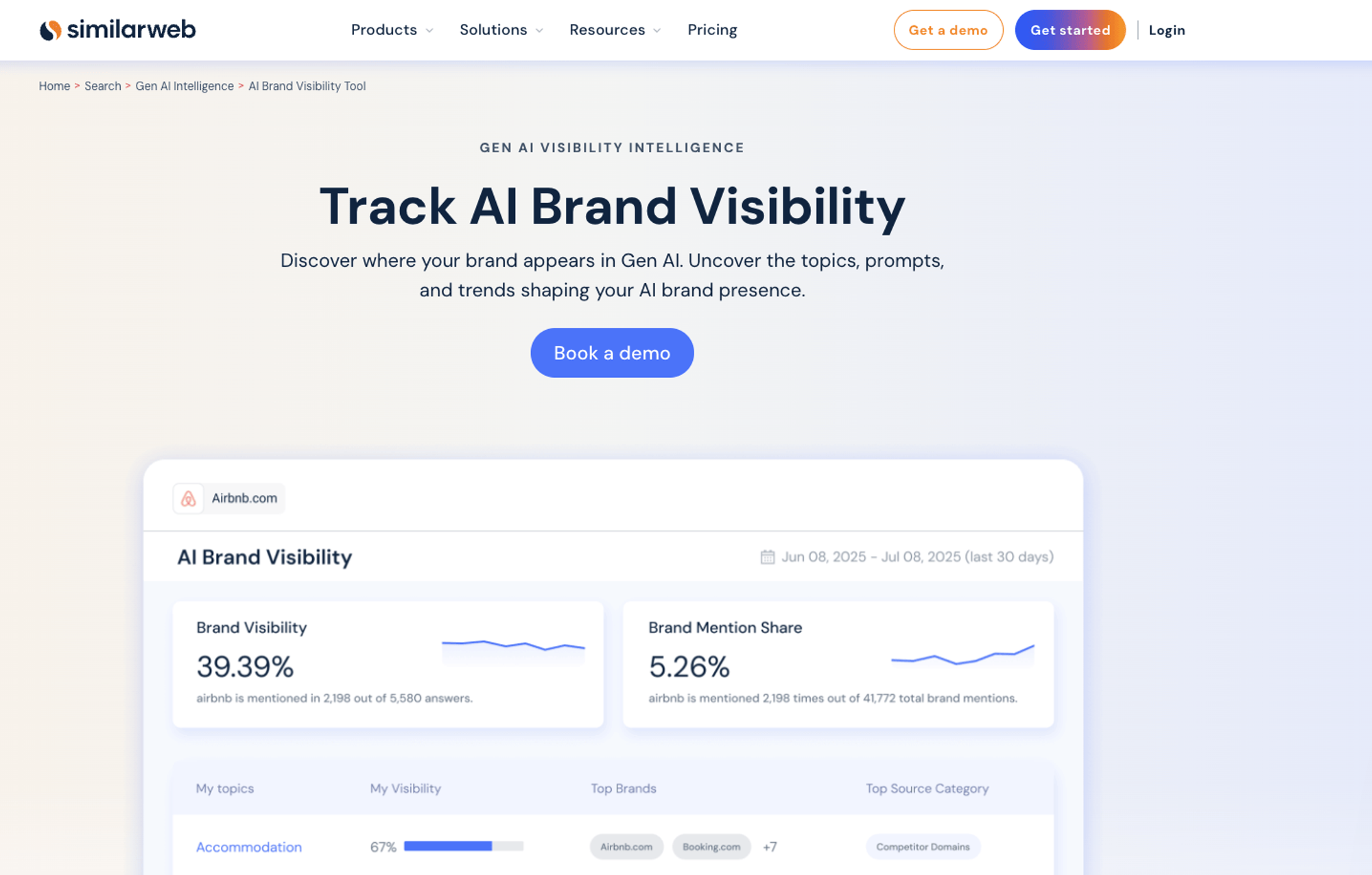
Similarweb has launched a Gen AI Intelligence toolkit that combines AI brand visibility tracking with referral traffic from AI platforms. Their AI Brand Visibility product helps you see where and how your brand is mentioned or cited in generative answers (ChatGPT, AI Overviews, etc.). Meanwhile, their traffic tool shows how many users actually click through from AI sources to your site.
Key Features and Considerations
Feature Details Tracking Scope Measures when your brand appears in AI answers across selected topics, and tracks which prompts and sources drive those mentions Unique Strength Dual view: visibility (mentions, citations) + actual traffic from generative AI sources — you get both presence and impact Ideal User Brands, agencies, content teams wanting to quantify AI discovery: not just “am I mentioned?” but “did it bring traffic?” Pricing Typically part of Similarweb’s enterprise / Gen AI Intelligence suite — contact sales for specifics
Pros:
- Visibility + traffic metrics give you a fuller picture of how AI exposure turns into visits.
- Benchmarking lets you compare your AI presence vs competitors on the same topics.
- You can dig into prompts and source domains that AI uses to mention or cite brands.
- Helps prioritize content or partnerships based on which sources are influential in AI answers.
Cons:
- The AI tools are newer, so coverage may still be growing (more topics, deeper prompt networks, etc.).
- Access and full features are likely limited to higher tiers / enterprise customers.
- Because AI models and prompt behavior evolve rapidly, your visibility and traffic patterns may shift over time.
Website: https://www.similarweb.com/gen-ai-intelligence
8. Promptwatch
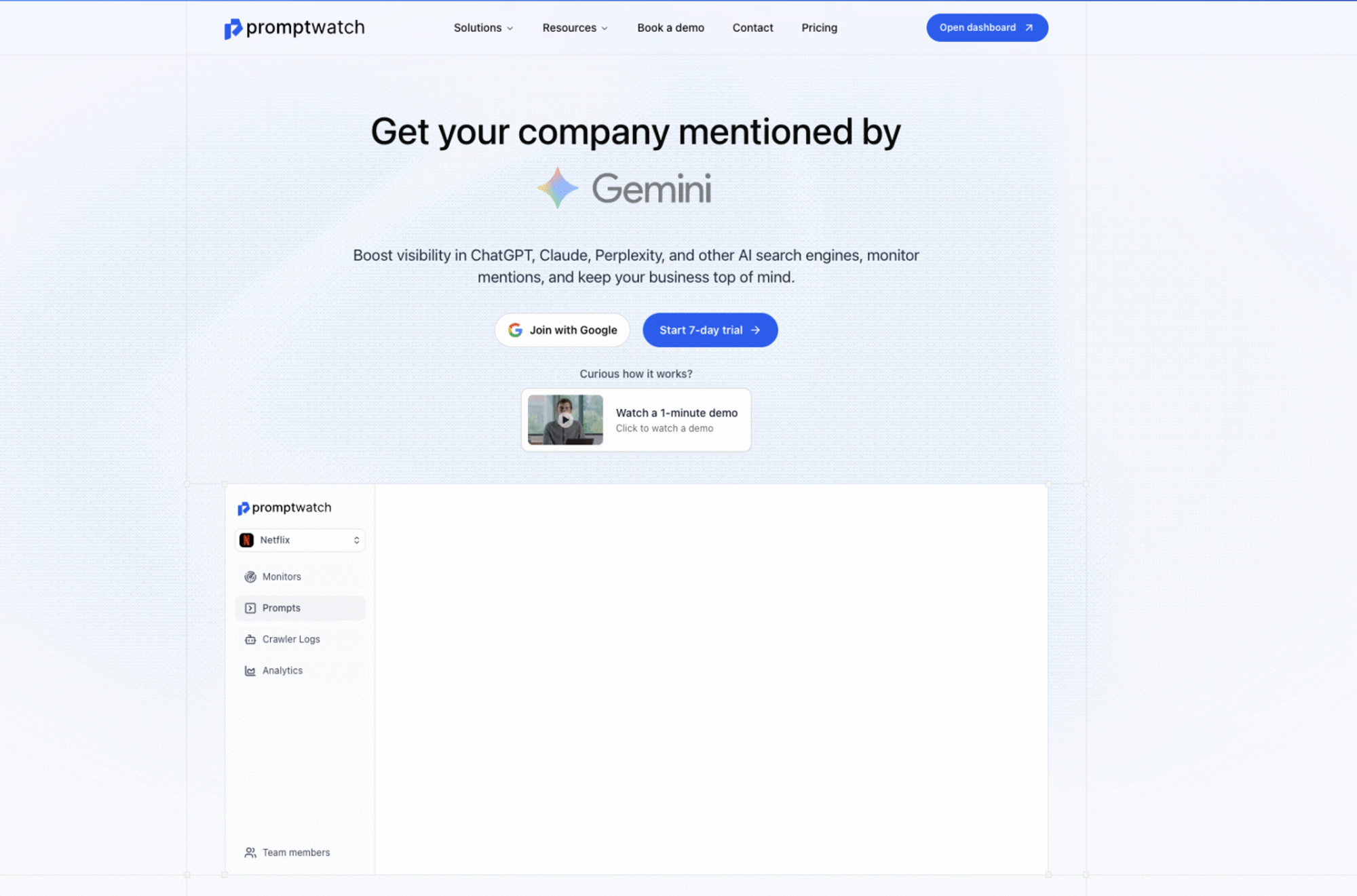
Promptwatch is an AI visibility monitoring platform focused on tracking how often your brand is mentioned (or cited) in responses across AI models like ChatGPT, Claude, and Perplexity. It’s designed for marketers and brands wanting to see their presence in the new “answer-first” discovery environment.
Key Features and Considerations
Feature Details Tracking Scope Monitors brand mentions in AI-generated responses across multiple LLMs (ChatGPT, Claude, Perplexity) Unique Strength Real-time mention tracking, competitive comparison, content gap detection and prompt testing Ideal User Companies and marketers who want to see whether AI systems are referring to them — beyond just ranking Pricing Tiered pricing: Solo tier (~$89/month) up to more advanced / business tiers with higher volumes and more models
Pros:
- Helps you uncover where your brand appears (or doesn’t) in AI answers.
- Competitive benchmarking = see how your AI mention share stacks up to rivals.
- Gap detection: find queries or prompt types where your brand is missing but should be present.
- Prompt testing: you can try variant prompts / phrasing to see what gets your brand mentioned more often.
Cons:
- It doesn’t offer traditional “rank tracking” in the old SERP-sense — its strength is in mentions / visibility in generative responses.
- Lower tiers may limit number of prompts / models / volume you can monitor.
- As AI models evolve, mention patterns may shift, so consistency and long-term tracking are needed.
Website: https://promptwatch.com
9. AthenaHQ
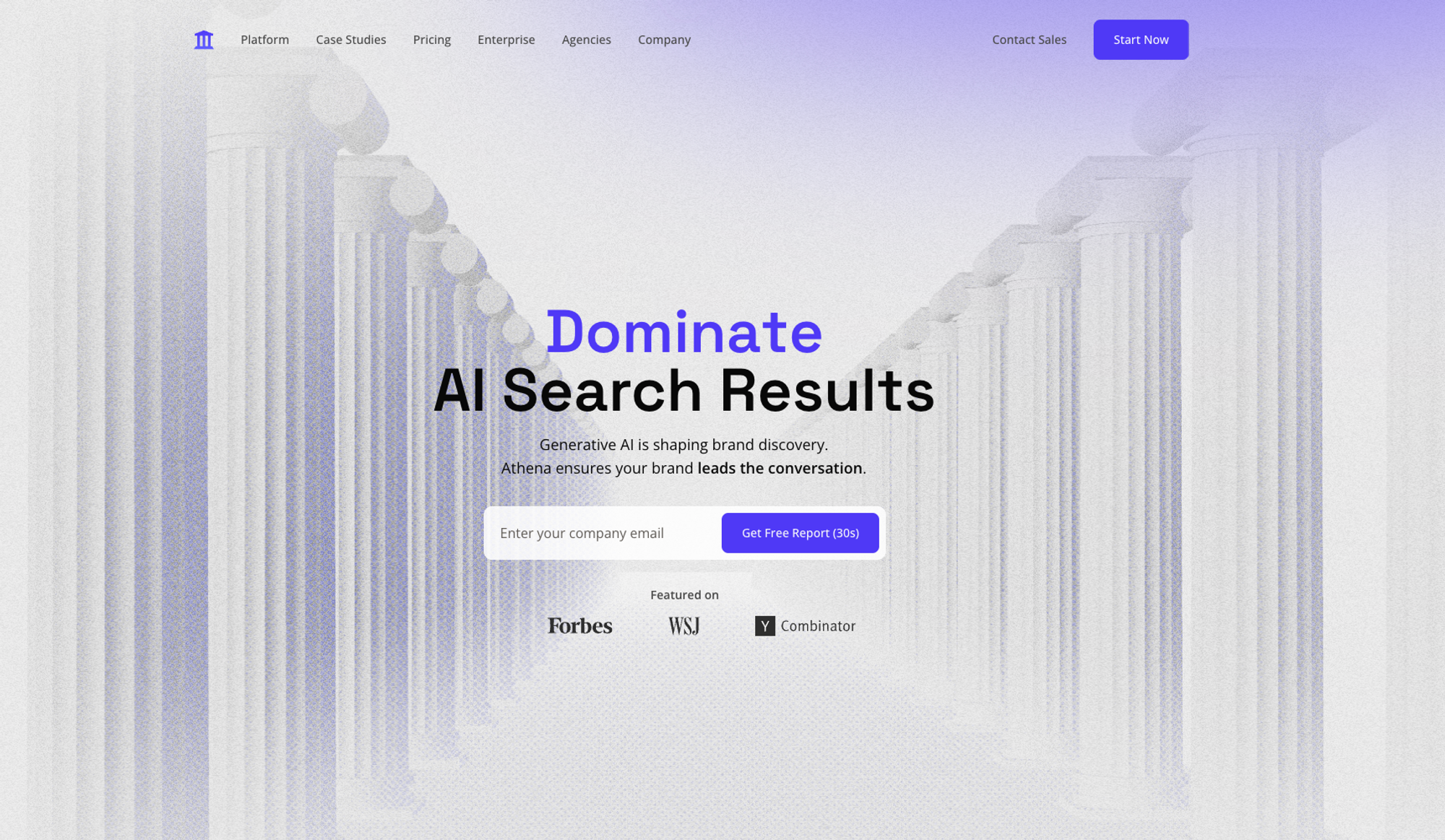
AthenaHQ focuses on how your brand shows up in AI-generated answers across ChatGPT, Claude, Perplexity, Gemini, Copilot, Google AI Overviews and more. It tracks mentions, citations, and share of voice, then pairs those insights with GEO recommendations so your team knows what to fix and where to double down.
Key Features and Considerations
Feature Details Tracking Scope Monitors brand mentions, citations, and positioning across major LLMs and Google’s AI surfaces, with prompt and conversation context Unique Strength Combines wide LLM coverage with source-domain insights, share of voice, and on-off page GEO recommendations Ideal User Brands and agencies that need deep competitive benchmarking, multi-market reporting, and workflows that turn AI visibility into action Pricing Premium-tier platform – starts at $295 per month, with higher plans for more credits, regions, and users
Pros:
- Broad coverage of leading AI engines in one place, plus multi-language and multi-region tracking.
- Strong competitive views and share of voice to quantify gains and losses over time.
- Source-domain insights reveal which pages and sites influence AI answers for your topics.
- Actionable GEO recommendations help you close citation gaps and improve how AI describes your brand.
- Unlimited seats with role-based access is handy for cross-functional teams.
Cons:
- Higher entry price than most SMB-focused tools.
- Credit-based usage means costs can rise as you track more prompts or engines.
- As models evolve, historical trends can shift, so continuous monitoring is important.
Website: https://athenahq.ai
10. Peec AI
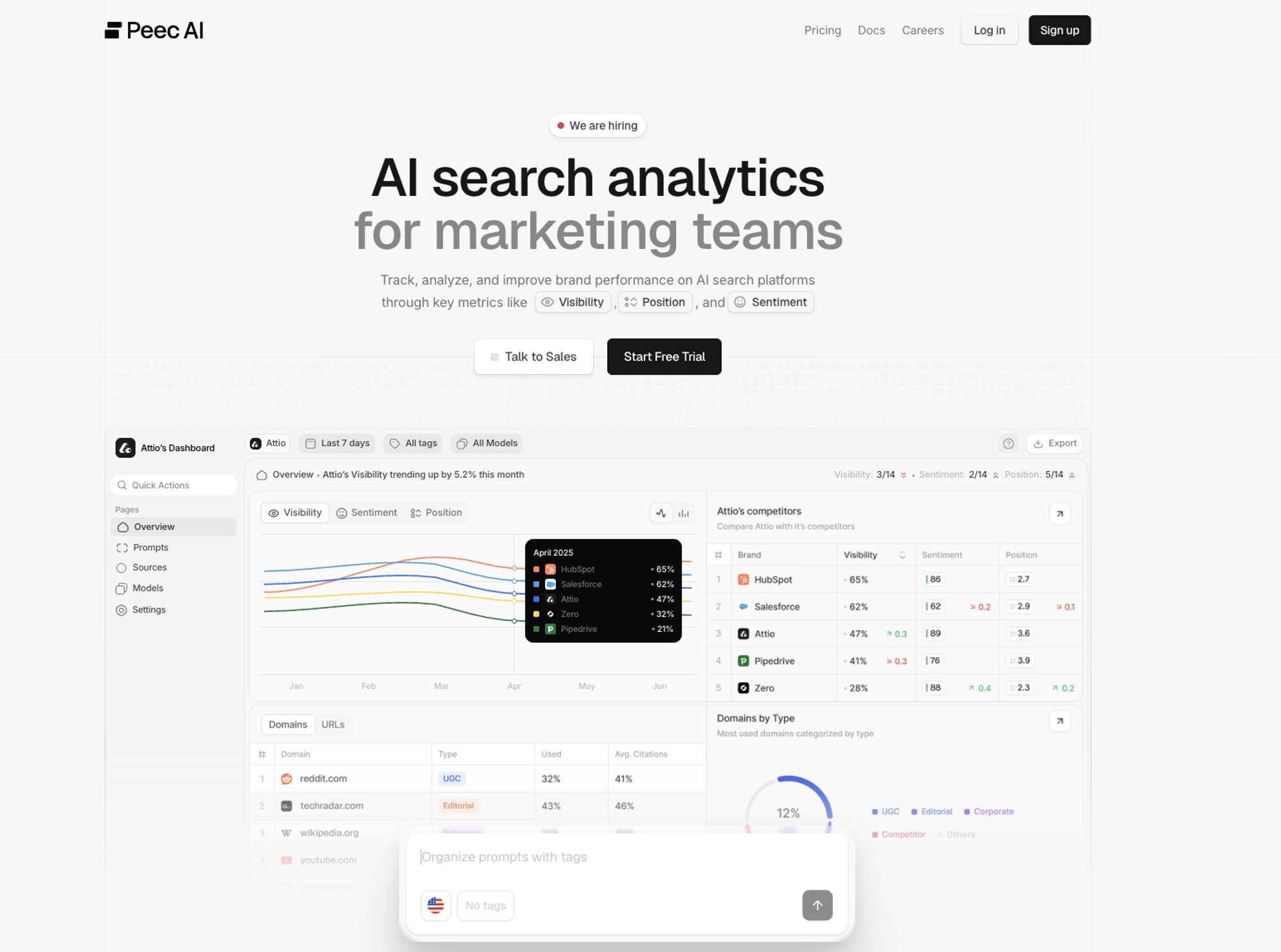
Peec AI is built specifically to track how brands, products, and content are represented across AI-driven search platforms. It monitors generative engines like ChatGPT, Claude, Perplexity, Gemini, and Google AI Overviews to show you when your brand appears, how often it’s cited, and what context AI uses.
Key Features and Considerations
Feature Details Tracking Scope Tracks brand mentions and citations in AI responses across leading LLMs and AI Overviews Unique Strength Provides clear visibility dashboards that combine frequency, sentiment, and citation context for your keywords Ideal User Marketing teams, agencies, and businesses that need to monitor AI presence without the complexity of enterprise data platforms Pricing Starts with affordable entry plans for smaller brands; scales up with usage for agencies and enterprises
Pros:
- Dedicated to AI visibility — no extra “SEO baggage” if you only want to monitor AI search.
- Tracks multiple AI models in one interface, including ChatGPT, Claude, and Perplexity.
- Sentiment and context analysis help you see not just if you’re mentioned, but how AI describes you.
- Accessible pricing tiers make it easier for startups and SMBs to adopt.
Cons:
- More focused on visibility than detailed technical SEO integrations.
- AI monitoring is still a newer category, so reporting depth may be lighter than older SEO platforms.
- Competitive features are available, but may not be as robust as enterprise-only solutions.
Website: https://peec.ai
11. Scrunch AI
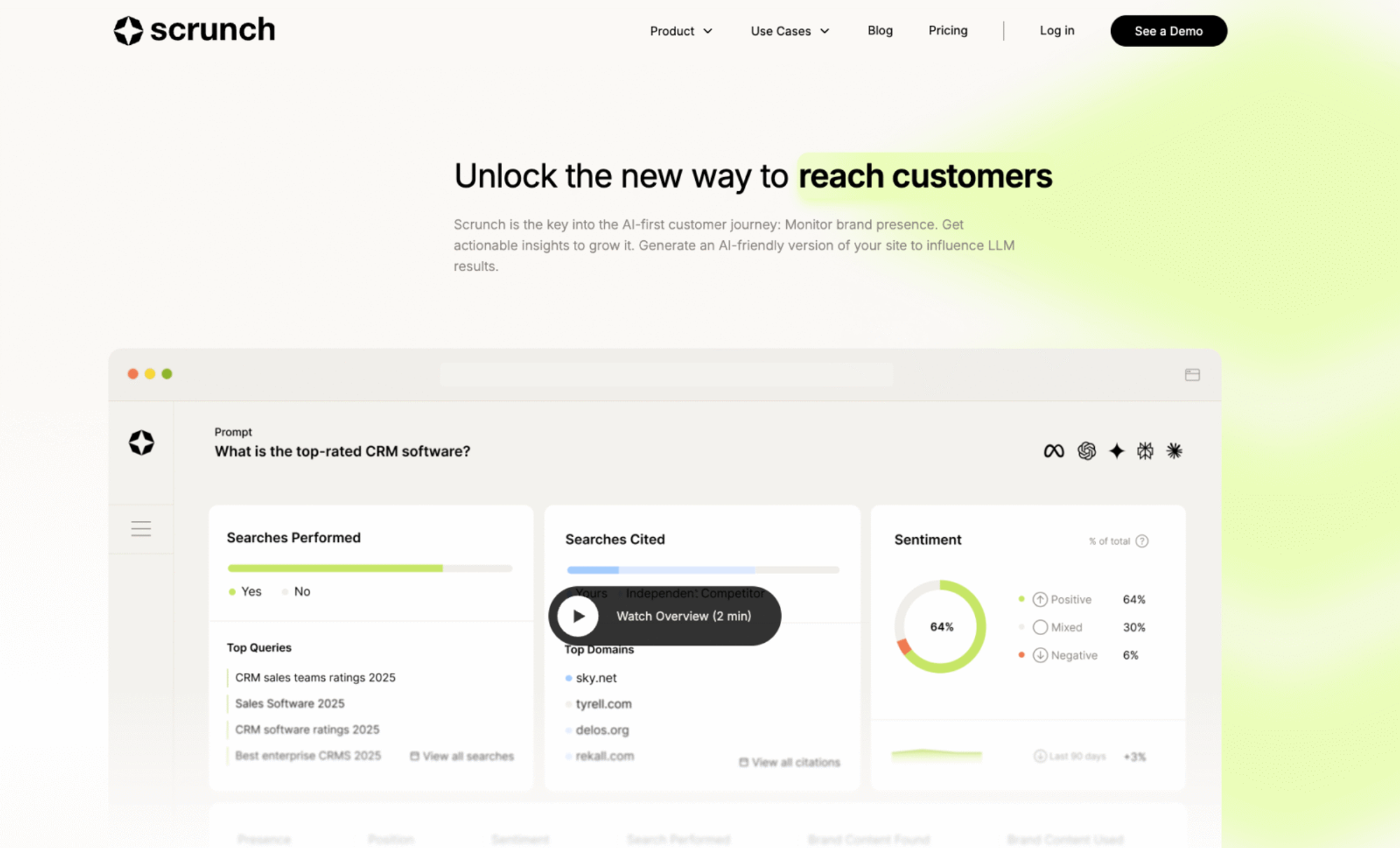
Scrunch AI helps brands and agencies understand how often they’re mentioned or cited across leading AI assistants like ChatGPT, Claude, Perplexity, and Google’s AI Overviews. Instead of guessing whether AI models are surfacing your content, Scrunch AI gives you direct visibility into presence, frequency, and context.
Key Features and Considerations
Feature Details Tracking Scope Monitors AI-generated responses for brand mentions, links, and competitor citations Unique Strength Pairs visibility monitoring with competitor benchmarks and topic-level reporting Ideal User Agencies and businesses who need structured insights into how AI engines are presenting brands in answers Pricing Starting from $250/month
Pros:
- Focused on AI models and generative search visibility, not just traditional SEO.
- Provides competitor comparisons to highlight where rivals are gaining citations.
- Topic-level reports help spot opportunities for content creation or optimization.
- Straightforward dashboards make AI presence data easy to digest.
Cons:
- Still early-stage compared to legacy SEO tools, so integrations are limited.
- Data coverage depends on AI engines supported — newer models may take time to add.
- Advanced features (multi-market reports, larger query sets) require higher-tier plans.
Website: https://scrunch.com
12. Profound
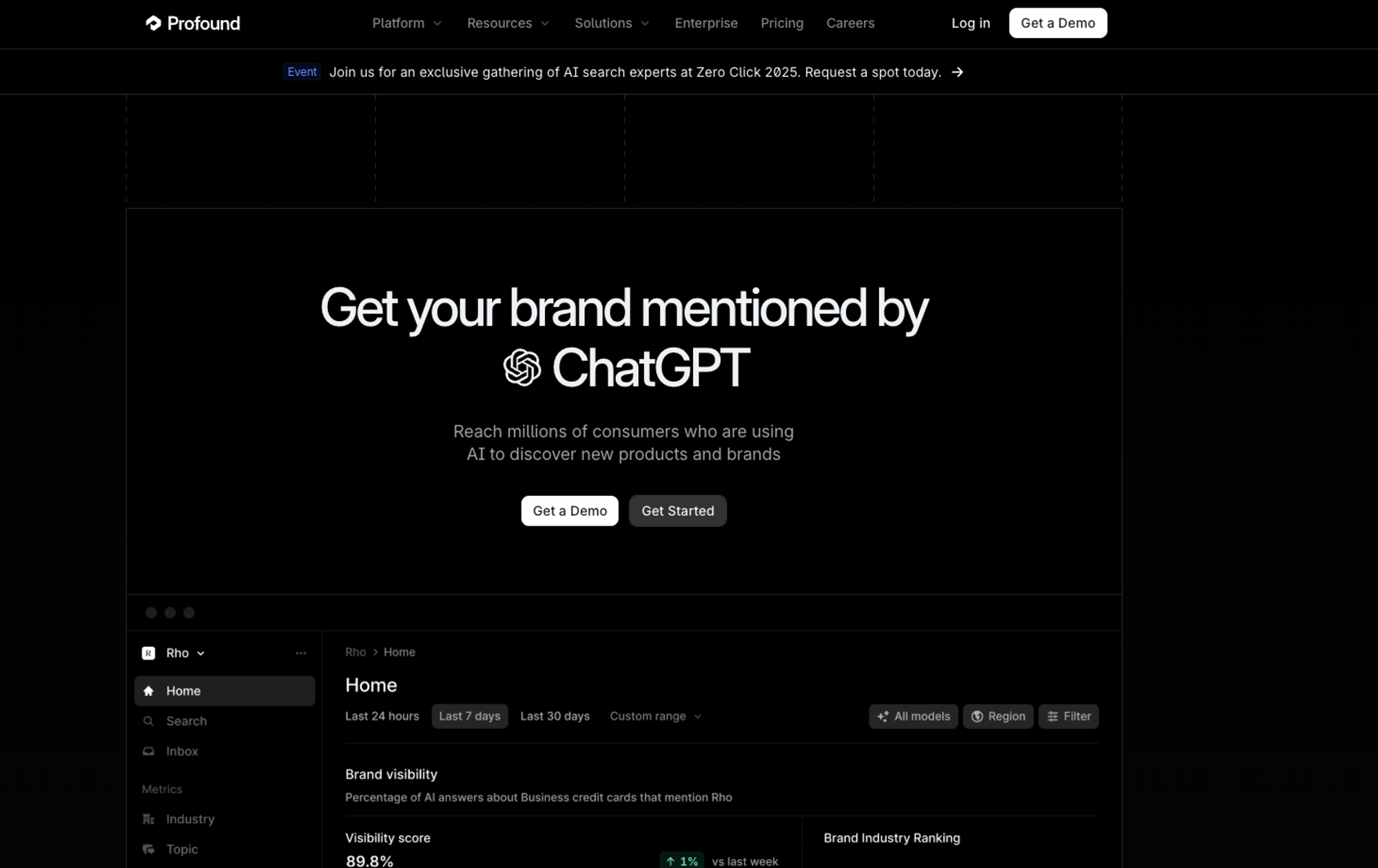
Profound is an AI monitoring tool designed to track how brands, products, and competitors are represented in generative answers. It captures mentions and citations across AI systems like ChatGPT, Claude, Gemini, and Google AI Overviews, giving you clear visibility into when and how your brand is appearing.
Key Features and Considerations
Feature Details Tracking Scope Monitors mentions, citations, and brand presence in responses from multiple AI assistants and search overviews Unique Strength Combines AI visibility tracking with alerting and reporting, so you’re notified whenever your brand shows up (or disappears) Ideal User Marketing teams and agencies who want proactive AI presence monitoring and competitor benchmarking Pricing Subscription-based; starter plans for small teams, with enterprise tiers available for larger monitoring volumes
Pros:
- Real-time or scheduled alerts for when your brand is mentioned in AI responses.
- Competitor visibility tracking helps benchmark your share of voice.
- Clean dashboards and scheduled reporting streamline monitoring for teams.
- Easy setup compared to heavier enterprise platforms.
Cons:
- Limited integrations compared to long-standing SEO suites.
- Coverage depends on which AI models are supported at any given time.
- Advanced analytics and multi-user features locked to higher pricing tiers.
Website: https://www.tryprofound.com/
Top Claude Rank Tracker Tools Comparison
Product | Core Features | User Experience & Quality | Value Proposition | Target Audience | Price & Licensing |
|---|---|---|---|---|---|
LPagery AI Rank Tracker | Page-by-page action plans, AI-driven suggestions | Simple, guidance-focused | Turns data into easy-to-follow steps | Business Owners, Marketers | From $59/month |
LLMrefs | Tracks AI mentions, citations, LS score, competitor benchmarking | Streamlined, citation-first | Helps you see what AI actually cites | Marketers, SEOs, Agencies | Free plan, Pro $79/month |
Ahrefs Brand Radar | AI visibility across ChatGPT, Claude, Gemini, etc. + clustering | Integrated into Ahrefs ecosystem | Benchmark AI visibility & fill citation gaps | Brands, Agencies | From $179/month |
Rankscale.ai | AI answer monitoring, competitor benchmarking, AI readiness audits | Dashboard-driven | Unified AI visibility insights | Brands, Agencies, Content Teams | From ~€20/month |
SE Ranking (AI Add-on) | SERP + AI Overview tracking | Flexible, beginner-friendly | Affordable SEO suite with AI visibility | SMBs, Agencies | From $55/month (+ AI add-on) |
Keyword.com (AI Search Visibility) | AI Overview & generative response mentions | Clean, accurate | Combines SERP + AI visibility | Agencies, SMBs | Pricing by keyword volume |
Similarweb (Gen AI Intelligence) | AI brand mentions + referral traffic from AI | Enterprise-grade dashboards | Visibility + traffic attribution | Large Teams, Enterprises | Enterprise pricing |
Promptwatch | AI brand mentions, competitor comparison, gap detection | Focused, lightweight | Real-time brand presence in AI answers | Marketers, Brands | From $89/month |
AthenaHQ | Multi-LLM visibility, share of voice, GEO optimization | Professional, enterprise-ready | Combines AI monitoring with actionable GEO insights | Brands, Agencies | From $295/month |
Peec AI | AI citations + sentiment dashboards | Simple but powerful | Affordable visibility monitoring | SMBs, Agencies | Entry-level pricing, scalable |
Scrunch AI | Mentions, competitor benchmarking, topic reporting | Clean dashboards | AI-focused competitor tracking | Agencies, Enterprises | From $250/month |
Profound | AI mention monitoring + alerts | Easy to use | Notifications when brand appears/disappears in AI | SMBs, Agencies | Tiered subscriptions |
Making Your Final Choice: Which Tool Is Right for You?
With the rise of generative AI, your choice isn’t just about “ranking higher”—it’s about being referenced by AI, being visible in answers, and getting clicks from generative platforms. Below are guidelines to help you pick the right tool from this new generation of trackers.
Important Criteria to Weigh
- Depth vs simplicity: Some tools give raw, exportable data (Promptwatch, AthenaHQ) while others wrap everything in recommendation workflows (LPagery AI Rank Tracker, LLMrefs).
- Model / engine coverage: Check which AI systems a tool monitors—ChatGPT, Claude, Perplexity, Gemini, Google AI Overviews—and whether that aligns with where your audience searches.
- GEO and language support: If you operate in multiple regions or languages, you’ll want a tool that supports localized AI visibility.
- How actionable it is: Tools that show which AI answers cite you, content gaps, or prompt insights (LLMrefs, Ahrefs Brand Radar) will let you take clearer next steps.
- Scalability / credits: AI monitoring often uses credits or query limits. Be sure you can scale without explosive cost increases.
- Integrations & workflows: If you need to funnel data into Looker Studio, dashboards, alerts, or CMS tools, check that the tracker supports your workflow.
Key Factors to Guide Your Decision
Before you commit to a subscription, take a moment to reflect on what truly matters for your workflow. Here are the critical questions to ask yourself:
- What is my main goal? Are you just watching keyword positions, or do you need a tool to help guide your content strategy? If you need guidance, a tool like LPagery that gives you clear suggestions is a huge help.
- Who will be using the tool? Is it for a solo business owner, an in-house marketing team, or a large agency managing multiple clients? The complexity and team features you need will be very different.
- How important is local and mobile tracking? For local businesses, the ability to track rankings by city or zip code is a must-have. Tools like AccuRanker and Nightwatch are great at this.
- What’s my budget? Be realistic about your monthly or annual budget. Many great, affordable options can give you the core features you need without costing too much. Always start with a free trial to make sure the tool is a good fit before you pay.
Your Goal | Strong Matches |
|---|---|
Actionable guidance + content suggestions | LPagery AI Rank Tracker LLMrefs |
Deep benchmarking across lots of AI engines | Ahrefs Brand Radar AthenaHQ |
Lightweight or cost-efficient monitoring | Promptwatch Peec AI |
Attribution & traffic insight from AI sources | Similarweb |
Alerts + brand presence tracking | Profound |
Combining SERP + AI visibility | Keyword.com SE Ranking (with AI add-on) |
Agency-level / client scale | AthenaHQ Ahrefs Brand Radar |
Your Next Step: From Information to Action
You now have the knowledge to choose one of the best Claude rank tracker tools for your needs. The next step is to move from reading to doing. Pick one or two tools from this list that seem like the best fit and sign up for a free trial.
Spend a week actively using them. Add your most important keywords, connect your website, and explore the tool. See which one shows data in a way that makes sense to you. Most importantly, see which tool inspires you to take action.
Ultimately, the best rank tracker is the one you use all the time to make smarter SEO decisions. It’s the partner that helps you understand your performance, find opportunities, and confidently climb the search engine rankings. Choose wisely, use it thoughtfully, and watch your organic traffic grow.

I’m an experienced SEO professional with over a decade of helping over 100 businesses rank higher online, especially local businesses, e-commerce stores and SaaS. As the co-founder of LPagery, I specialize in practical, proven strategies for regular SEO and Local SEO success.
This post may contain affiliate links which we earn a commission on when purchasing a given product.
I’m an experienced SEO professional with over a decade of helping over 100 businesses rank higher online, especially local businesses, e-commerce stores and SaaS. As the co-founder of LPagery, I specialize in practical, proven strategies for regular SEO and Local SEO success.