Feeling the pressure to find a steady stream of good web development clients? You're not alone. This guide skips the fancy talk to give you simple, real-world ways that actually work, whether you're working by yourself or have a growing team.
Your Game Plan for Finding High-Quality Clients
Finding high-quality web development leads is the key to a successful business. Without a sure way to attract clients who value your work, you get stuck in a frustrating loop of chasing low-paying projects and dealing with stressful deadlines. This guide is your game plan to break that cycle for good.
We're going to focus on simple methods that get real results. The goal is to build a system that always brings in the right kind of clients—the ones who see you as a partner, not just a coder. This way of thinking is a key part of good marketing for small business owners.
Why a Solid Strategy Matters
A lot of developers rely on luck or random referrals. But having a clear plan puts you back in control. It helps you find where your best clients are and figure out the best way to reach them. For a deeper look at this, check out this great guide on generating B2B leads.
Here’s why having a real plan is so important:
- It creates a steady flow: Instead of always wondering where your next project will come from, you'll have a healthy line of potential clients.
- It attracts better clients: A clear plan helps you target businesses that respect your skills and are willing to pay what you're worth.
- It saves you time: You can stop wasting hours on methods that don’t work and focus your energy on what actually makes a difference.
For example, just look at the market. By 2026, WordPress will power a huge 43.5% of all websites, which is over 522 million sites. This means there's a giant, ready-made group of potential leads looking for WordPress experts. A smart plan helps you tap into huge markets like this one.
Win Your Local Market and Attract Nearby Clients
Some of the best web development leads are waiting right in your own town. Focusing on local businesses is a very smart move—you're reaching a market that often likes to hire someone they can meet in person.
Most developers just try to get their homepage to show up for "web developer in [My City]," but that's just the beginning.
What if you had a separate, special page for every single service you offer in every town, city, or even neighborhood you want to serve? This plan makes your online presence huge. Instead of one page fighting for attention, you could have hundreds, each one a magnet for a very specific client need.
It's a simple but powerful process: get their attention with very relevant content, show them a clear solution, and turn that interest into a new client.
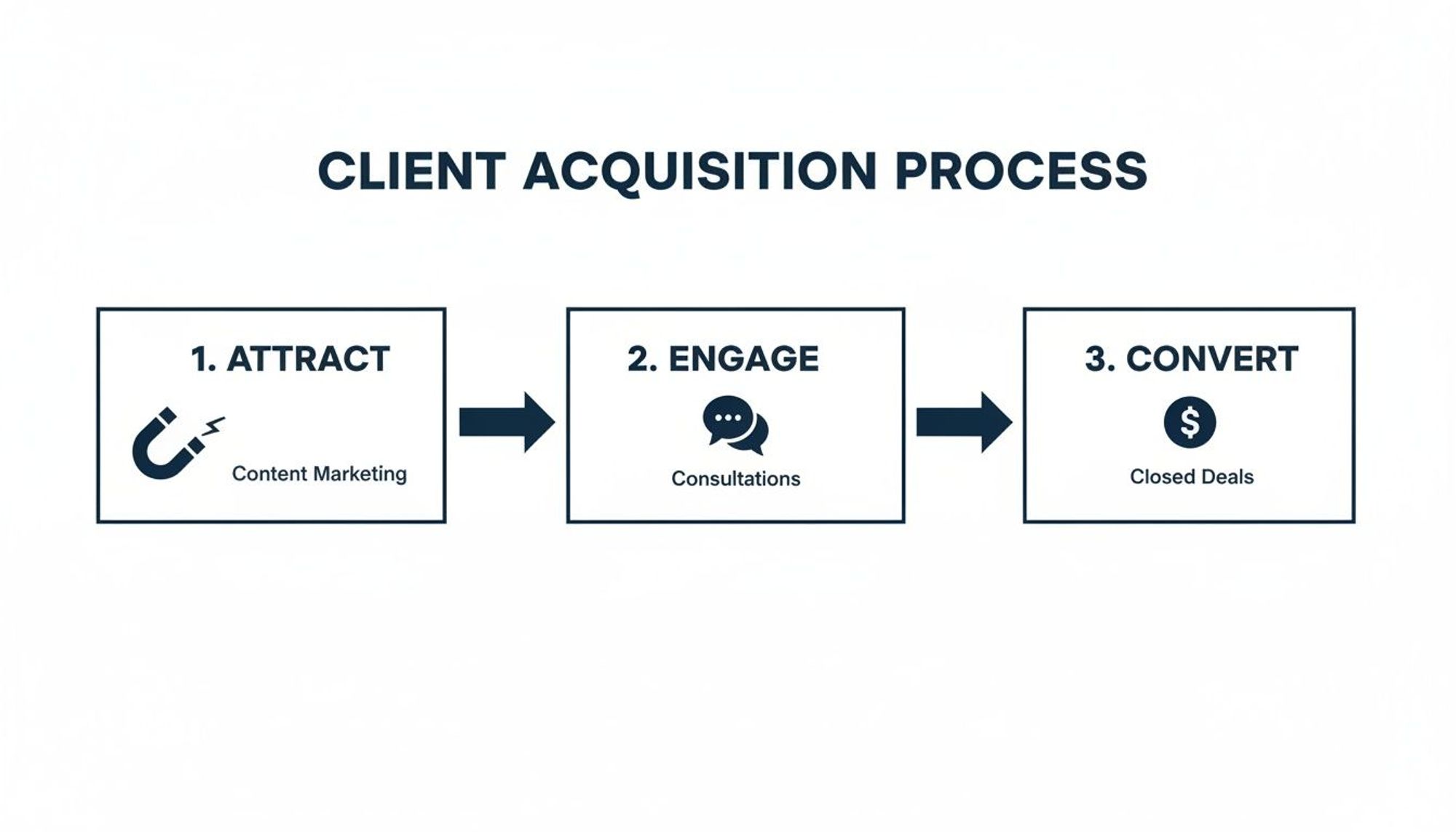
This just goes to show that attracting local leads is only the first step. The real magic happens when you connect with them and turn them into clients with a focused plan.
Go Beyond a Single Local Page
Let's be honest: a single homepage can't possibly show up in searches for dozens of different local terms. Think about it. It’s very hard for one page to appear for both "e-commerce developer in Springfield" and "WordPress support in Fairview." This is where having special local pages really changes the game.
A local business owner isn't just searching for a generic "web developer." They're looking for someone who solves their exact problem in their specific town. By creating pages that perfectly match these searches, you're telling search engines, "Hey, I'm the best result right here."
These pages aren't just for Google, either. They speak directly to the person visiting. When someone from Springfield lands on a page called "Custom WordPress Sites for Springfield Businesses," they instantly feel like you understand them. That builds trust right away and makes them much more likely to call you.
How to Create Local Pages at Scale
Making hundreds of pages by hand sounds like a nightmare. The good news? It doesn't have to be. You can automate the whole thing with a simple spreadsheet and the right tools.
Here’s the basic idea:
- List Your Services: Write down everything you do. "Website Design," "SEO Services," "E-commerce Development"—get it all out there.
- List Your Locations: Make a list of every town, city, and neighborhood you want to target.
- Combine and Conquer: Use a tool to automatically create a unique page for every service-location mix, like "Website Design in Springfield" and "Website Design in Fairview."
This method, often called programmatic SEO, lets a small agency or even a single freelancer compete with much larger companies by showing up everywhere in very local search results. You’re not just visible; you’re everywhere your potential clients are looking.
This is a key part of any serious local marketing plan. If you want to learn more, our guide on how to improve local SEO rankings explains more advanced steps. By growing your local presence this way, you create a powerful and steady flow of great web development leads who are already searching for exactly what you sell.
Create Helpful Content That Brings Leads to You
What if your best web development leads came directly to you, ready to talk business? This isn't a dream; it's what happens when you get smart with your content. Forget the old advice to just "start a blog." The real key is creating truly helpful content that solves your ideal client's problems. This makes you the obvious expert they need to hire.
This plan completely flips things around from chasing clients to attracting them. When a potential customer finds your detailed case study or a useful guide through a Google search, they arrive already trusting you. You've already given them something of value, which makes the sales talk a lot smoother.
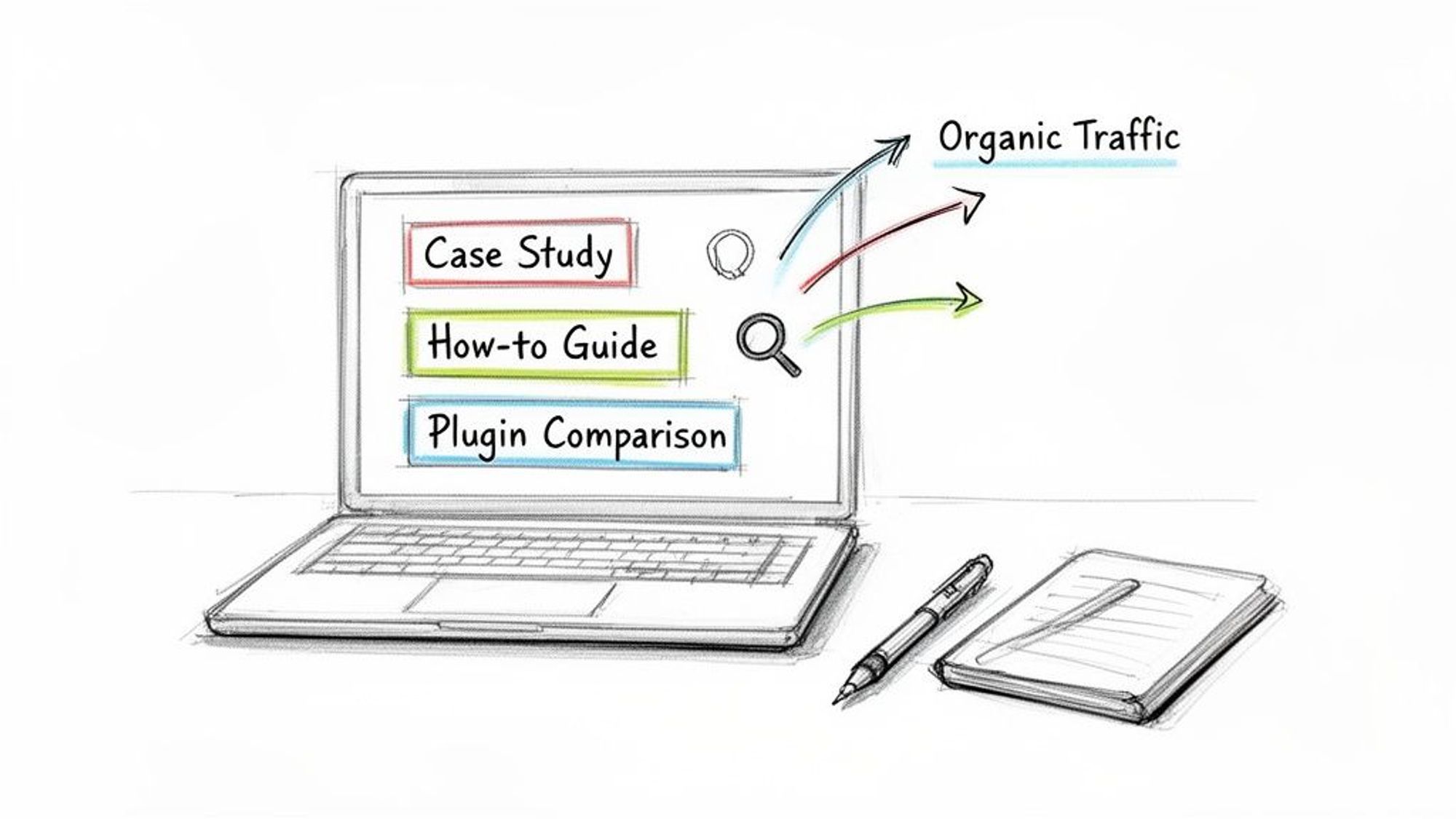
In the end, this approach connects you with people who are actively looking for the solutions you offer. This brings in a steady stream of high-quality leads without you having to make cold calls.
Think Like Your Client, Not a Coder
The best content answers the questions your clients are actually asking. They aren't Googling "asynchronous JavaScript solutions"—they're searching for things like "how to sell more products online" or "best website platform for my restaurant." Your job is to fill that gap with content that speaks their language.
A great place to start is to think of the top ten questions you hear from new clients. Every single one of those is a potential blog post or guide that could attract hundreds of similar people.
Here are a few content ideas that always bring in web development leads:
- Detailed Case Studies: Don't just show a picture of a finished website. Tell the whole story. Explain the client's original problem, walk through how you solved it, and—most importantly—share the real results, like a 25% increase in online sales.
- Technology Comparisons: A small business owner might be stuck between Shopify, WooCommerce, or BigCommerce. A fair comparison guide from you doesn't just help them; it makes you look like a trusted advisor.
- "How-To" Guides for Beginners: Think about creating a simple guide on "How to Choose a Domain Name" or "What to Include on Your Homepage." This type of content attracts business owners at the very start of their journey.
I know, creating content like this can feel like a lot of work. But modern tools can help you find ideas and build outlines much faster. For a deep dive, check out our guide to making your content more visible with ChatGPT.
Find Your Content Niche
You don't need to write about every topic in web development. In fact, you shouldn't. It's better to focus on a specific area where you can become the main expert. For example, if you specialize in e-commerce sites, you could create a series of articles comparing different payment or shipping tools.
Think about the huge number of WordPress plugins. By 2026, there are expected to be up to 60,000 free plugins available, used on over 50 million websites. A business owner trying to figure that out is completely lost. You can be their guide by creating content that reviews and compares the best plugins for their industry, helping them make a smart choice. You can explore more amazing statistics about the WordPress economy and its huge growth.
The goal of content isn't just to get clicks; it's to build your reputation. When a lead reads your article and thinks, "Wow, this person really knows their stuff," you've already won half the battle before you even send a proposal.
While SEO and content are great for the long run, sometimes you just need web development leads now. That's where you have to be a bit more direct. Paid ads and partnerships are perfect for this—they put you right in front of clients who are actively looking to hire, which means faster results.
You don't need a huge budget to make an impact with paid ads on sites like Google or LinkedIn. The secret is to be very specific with who you target. Instead of trying to reach everyone, you want to focus on the exact group of people most likely to need your skills right away.
For example, you could run a simple ad campaign targeting small business owners in your state who have shown an interest in digital marketing. This kind of focus makes sure your ad money is spent talking to the right people, not just shouting into a crowd.
Get Started with a Small Ad Budget
A good ad campaign isn't just about selling; it's about solving a problem for the person who sees it. It's about sending the right message to the right person at the right time.
Here’s a simple, effective method I've seen work over and over:
- Platform: LinkedIn Ads
- Target Audience: Job Title ("Owner," "Founder," "Marketing Manager") + Industry ("Retail," "Professional Services") + Location ("Ohio, USA")
- Ad Copy: "Is your outdated website losing customers? We build fast, modern websites for Ohio businesses that turn visitors into leads. Get a free performance review today."
This ad is perfect. It points out a specific problem (an outdated, money-losing website), offers a clear solution (a modern, lead-generating site), and has a low-risk call-to-action (a free review).
Just remember, the ad is only half the work. Your landing page has to close the deal. For some good ideas, take a look at these high-converting WordPress landing page templates to see what works.
Build a Referral Network Through Partnerships
Another great way to get high-quality web development leads is by teaming up with other pros who serve the same clients you do. I'm talking about marketing agencies, copywriters, SEO specialists, and business consultants. These people often have clients who badly need a new website but don't have a developer they can trust.
By building real relationships with them, you can create a steady stream of warm referrals. And honestly, these are the best kinds of leads. They come to you with a layer of trust from the person who sent them.
A single strong partnership with a marketing agency can be more valuable than dozens of cold leads. When they trust you to take care of their clients, they will send a steady flow of high-quality projects your way.
Start by making a list of potential partners in your local area or field. Send them a friendly, personal email. The key is to show them it's a win-win—explain how you can make their lives easier and get amazing results for their clients.
Turn Website Visitors into Paying Clients
Getting people to your website is a huge win, but let's be honest, it's only half the job. The real magic happens when you turn those casual visitors into paying clients. This is all about making small, smart changes to your site that encourage people to take that next step.
You don't need to rebuild your website from scratch to see results. Simple changes can make a huge difference in how many web development leads you get from the traffic you already have. It really comes down to building trust and making it super easy for potential clients to contact you.
Make Your Call to Action Unmistakable
Every single page on your website needs to guide visitors toward one clear action. This is your call-to-action (CTA). A weak or unclear CTA like "Learn More" isn't going to work. You need to be direct and tell them what's in it for them.
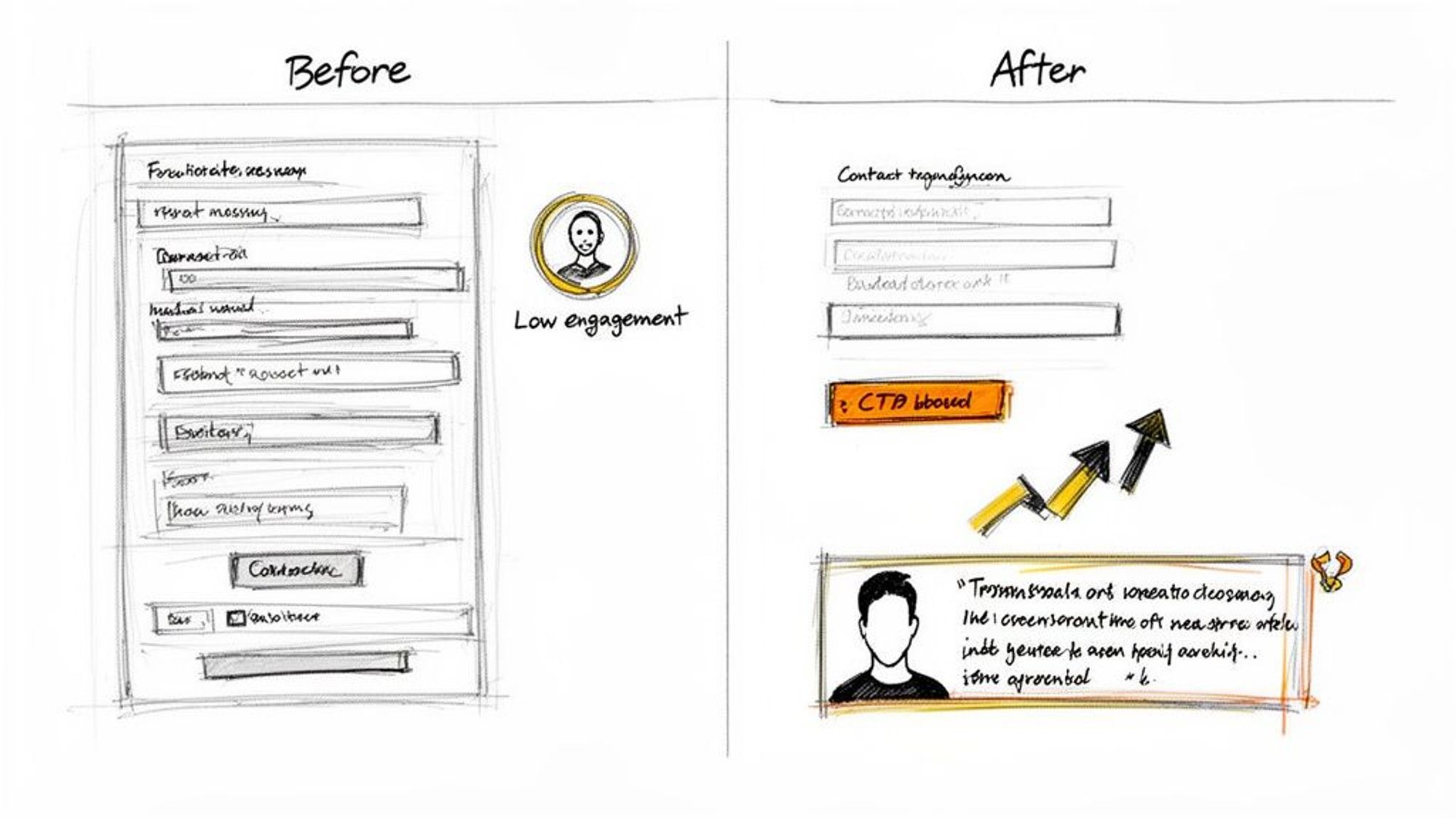
Think about it: a button that says "Get Your Free Website Quote" is much more powerful than a plain "Submit." It tells the visitor exactly what they're getting. Make your CTA button stand out with a different color and place it where people’s eyes naturally look, like at the top of the page and again after an important section.
Simplify Your Contact Form
One of the biggest things that stops leads is a long, complicated contact form. Each extra box is another chance for someone to get annoyed and leave. Step back and ask yourself: what information do I absolutely need to start a conversation?
Honestly, this is probably all you need:
- Name: So you know who you’re talking to.
- Email: So you can get back to them.
- Message: So you can understand their needs.
That’s it. You can always ask for their phone number, budget, or company size on the follow-up call. We've seen studies show that cutting form fields from just four to three can increase sign-ups by as much as 50%. Keep it simple and watch more people hit that "send" button.
Don't make potential clients work just to hire you. The easier you make it for them to reach out, the more inquiries you'll get. Your goal is to remove every little thing that stands between a visitor and a lead.
Build Instant Trust with Social Proof
Here’s a hard truth: people trust what other people say about you far more than what you say about yourself. This is where "social proof" comes in. It’s your chance to show visitors you have a proven history of getting great results for real businesses.
Sprinkle these trust-builders around your site, especially near your contact form and CTA buttons:
- Testimonials with Photos: A quote from a happy client is good. A quote with their name, company, and a professional photo? That’s gold. It feels real and genuine.
- Case Studies: Show, don't just tell. Briefly explain a client's problem and the specific results you delivered. Use real numbers, like "increased online bookings by 40%."
- Logos of Past Clients: Showing the logos of companies you've worked with is a quick, visual way to build instant trust.
Beyond these basics, using chatbots for lead generation is another powerful way to engage visitors 24/7, answer their questions right away, and guide them to your contact form. And don't forget interactive tools. Our guide on how to use calculators as leadmagnets shows you how to offer something useful in exchange for an email. Each of these small improvements works together to turn your website into a reliable machine for getting high-quality web development leads.
Common Questions About Finding Web Development Leads
Even with a solid plan, a few questions always pop up when it comes to finding web development leads. Let's clear up some of the most common ones so you can move forward with confidence.
Think of this as a quick reference guide. We'll answer the practical questions that come up once you start using these strategies.
How Many Leads Should I Aim for Each Month?
This is the big question, isn't it? But honestly, there’s no magic number. The right target depends completely on your business goals and, more importantly, how good you are at turning a conversation into a signed contract.
Instead of picking a number out of thin air, work backward from your income goal. It's much smarter.
Let's say you want to bring in $10,000 this month. If your average project size is $5,000, you just need to close two projects. Simple enough.
Now, be honest about how many leads you turn into clients. If you typically win one project for every five good leads you talk to, you'll need 10 good leads to land those two projects. That simple math gives you a clear, reachable target to aim for every month.
Focus on the quality of your leads, not just the quantity. Ten serious inquiries from businesses that are a good fit for you are far more valuable than 100 random inquiries that go nowhere.
As your business grows and you get better at selling, you can (and should) adjust this target.
What Is the Best Free Way to Get Leads?
For a steady, long-term flow of leads, you can't beat the combination of creating content and local SEO. This approach is powerful because you’re attracting people who are already looking for the exact services you provide. They find you, not the other way around.
By always creating truly helpful content—like blog posts answering common client questions or building out service pages for different towns you serve—you build trust with people and search engines. It definitely takes time to get going, but the reward is huge.
A few other free methods that work well:
- Networking: Get active in online business groups or go to local events. You'd be amazed at where your next referral comes from.
- Referrals from Past Clients: A happy client is your best salesperson. Don't be afraid to ask for a referral after you’ve finished a great project.
- Strategic Partnerships: Team up with marketers, copywriters, or designers. A good partner can become a steady source of work.
Should I Buy a List of Web Development Leads?
Let me save you some time and money: it’s almost always a terrible idea to buy a list of web development leads. I know it seems like a shortcut, but it often creates more problems than it solves.
First, the leads on these lists are ice-cold. They have no idea who you are and never asked to be contacted. Your messages will feel like spam (because they are), which can damage your brand's reputation before you even get a chance to build it.
On top of that, the quality of these lists is known to be very low. The contact info is often old, or the businesses might not even need a website. You'll waste a lot of energy chasing dead ends that were never going to work out.
Your time and money are much better spent on plans that attract warm, interested people. Building your own list of leads through content, SEO, and networking will always deliver better results and higher-quality clients in the long run.

I’m an experienced SEO professional with over a decade of helping over 100 businesses rank higher online, especially local businesses, e-commerce stores and SaaS. As the co-founder of LPagery, I specialize in practical, proven strategies for regular SEO and Local SEO success.
This post may contain affiliate links which we earn a commission on when purchasing a given product.
I’m an experienced SEO professional with over a decade of helping over 100 businesses rank higher online, especially local businesses, e-commerce stores and SaaS. As the co-founder of LPagery, I specialize in practical, proven strategies for regular SEO and Local SEO success.