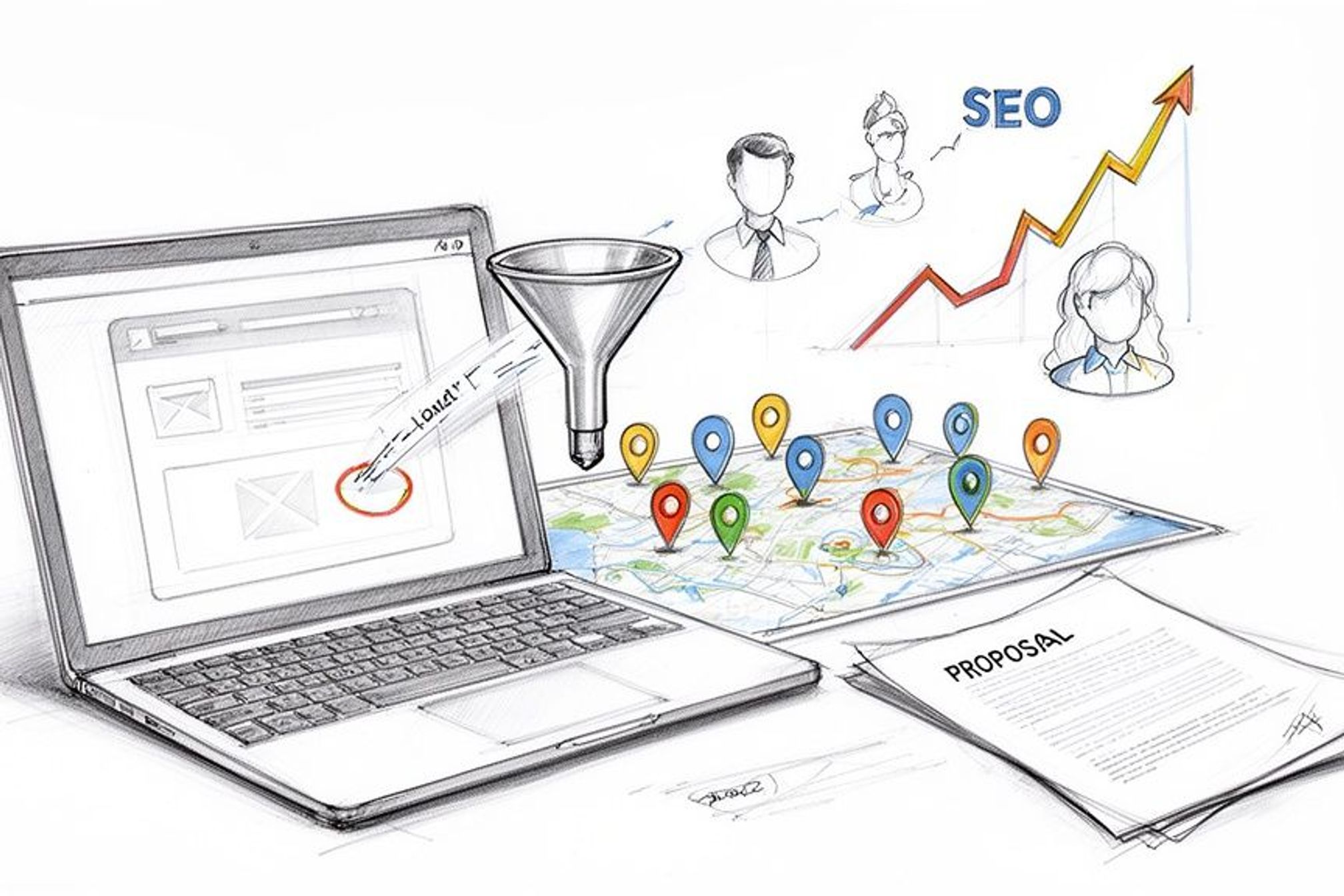
So, what is a "web design sales lead"? It's just a possible client who has shown interest in your design services. Finding them means using smart marketing, having a good online presence, and—most of all—knowing exactly who you want to work with before you start looking.
It’s all about attracting the right people, not just anyone with a project.
Building Your Foundation to Attract Ideal Clients
Before you start looking for leads, you need to build a solid base. If you skip this, you'll waste time and money on clients who aren't a good fit, don't see your value, or can't afford your prices.
The goal is to make your business a magnet for the kind of clients you truly enjoy working with.
This all starts with being very clear on who that ideal client is. Just saying "small businesses" is too broad. You need to dig in and create a detailed picture that will guide all of your marketing choices.
Defining Your Ideal Client Profile
Think of your ideal client not as a wide group, but as one specific person. This detailed profile is your guide—it helps you shape your message, pick the right places to market yourself, and build a portfolio that speaks directly to their needs.
Here’s what to think about when you're building that profile:
- Industry: Are you great at building sites for restaurants, law firms, or online stores? Focusing on one area makes you the go-to expert.
- Business Size: Are you aiming for a solo business owner who just needs a nice starter site? Or are you going after bigger companies that need a major website update?
- Their Biggest Problems: What keeps them up at night? Maybe their current site looks old, is messy on phones, or isn't bringing in any customers.
- Their Goals: What do they hope a new website will do for them? This could be anything from increasing online sales by 30% to getting more phone calls for their local business.
When you truly understand their problems and goals, you can present your services as the clear solution. You stop selling "web design" and start selling "more customers," "a more professional look," or "an easy way to manage online orders."
Crafting Your Unique Selling Proposition
Okay, so you know who you’re talking to. Now you need to give them a good reason to pick you over all the other designers out there. This is your Unique Selling Proposition (USP). It’s what makes you different—and better—for your specific target client.
A strong USP isn't just a catchy phrase. It’s a clear statement about the specific value you provide. It answers the client's silent question: "Why should I hire you?"
To figure out your USP, ask yourself a few honest questions:
- What am I really good at? (e.g., building super-fast websites, creating beautiful online stores, designing for complex businesses)
- What unique experience do I have? (e.g., ten years working in retail, a past job in digital marketing)
- What specific, real results can I deliver? (e.g., sites that load in under 2 seconds, designs that are proven to get more people to engage)
For example, a generic USP like "I build beautiful websites" is easy to forget. A powerful one sounds more like this: "I design WordPress sites for local service businesses that double their new leads in six months."
See the difference? It's specific, promises a real result, and speaks to a clear audience.
Delivering on that kind of promise often means using the right tools. You might want to look at the best WordPress plugins for agencies to make sure your tools are up to the job.
Having a clear foundation—built on a detailed client profile and a sharp USP—is the most important step you can take toward getting a steady flow of high-quality web design leads.
Turning Your Website Into a 24/7 Lead Machine with SEO
Your website should be your best salesperson, working day and night to bring in new business. But for that to happen, possible clients have to find you. When someone needs a new website, where do they look first? Google. If your site isn’t showing up in those search results, you’re basically invisible to a huge number of clients looking to hire someone.
This is where Search Engine Optimization (SEO) comes in. It's not just a technical checklist; it’s the plan you use to get your website to rank higher. This way, the right people find you at the exact moment they need you. Done right, SEO is the engine for steady, high-quality web design sales leads.
Getting Inside Your Client’s Head
The first step is figuring out what your ideal clients are typing into Google. Forget the technical terms for a second. Think about their problems, their business, and the words they use. These search terms, or keywords, are the base of your whole SEO plan.
You don't need to make this too complex or buy expensive tools right away. Just put yourself in their shoes.
- A local cafe owner isn't searching for "UI/UX design services." They are more likely to type in "restaurant website designer near me" or "best web design for cafes in Austin."
- A plumber trying to grow their business might search for "get more leads for my plumbing business," not "lead generation funnel optimization."
Your job is to meet them where they are. Start making a list of these simple, problem-focused phrases. This change in thinking can be a total game-changer for attracting leads who are ready to buy.
Dominating Your Local Market with Targeted Landing Pages
Once you know the phrases people are using, you can build pages that speak directly to their needs. One of the best ways to do this, especially if you serve local clients, is by creating special pages for each service in each location you cover.
Let's say you're based in Denver but also serve clients in Boulder and Aurora. Instead of one general "Services" page, you could create very specific pages like:
- "Web Design for Plumbers in Denver"
- "E-commerce Website Design in Boulder"
- "Website Redesign for Law Firms in Aurora"
Each page becomes a small sales pitch, made just for that audience with the right text, portfolio examples, and good reviews. When someone in Aurora searches for a law firm web designer, your special page makes you look like the clear local expert. This greatly improves your chances of landing on page one of Google.
This simple process—research, define, and stand out—is how you consistently attract the right clients.
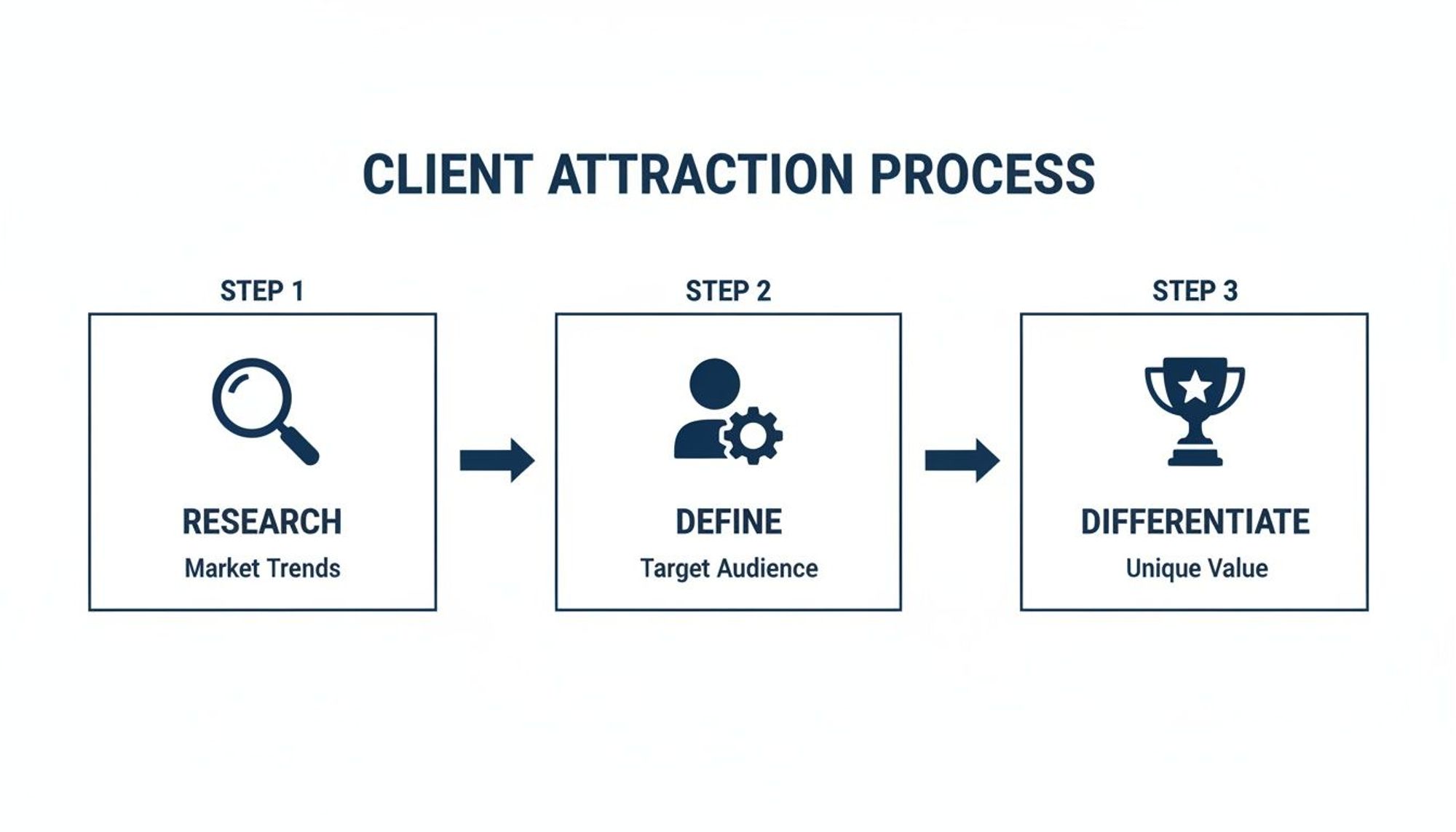
It’s not about luck; it’s a plan you can repeat to get in front of people who need your help.
Creating specific pages for different services and locations tells Google that you are the go-to expert for that exact need in that specific area. This is how you get ahead of bigger, more general agencies.
How to Scale Your SEO Without Losing Your Mind
Okay, the idea of creating hundreds of these pages by hand sounds like a nightmare. It would be. This is where the right tools come in. A WordPress plugin like LPagery was built for exactly this kind of task.
You can design one page template, then connect it to a spreadsheet filled with all your different cities and services. With a few clicks, the plugin creates hundreds of unique, optimized pages. You can even use it to create different text versions so each page feels new.
This lets you reach a much wider audience and capture all those very specific local searches without spending weeks on boring copy-and-paste work. It’s a smarter way to work, not harder. You can pair this method with other tools by looking into some of the best free WordPress SEO plugins to complete your plan.
And this isn't just an idea. The numbers show that SEO is a powerful way to get leads in this industry. When asked about their top source for high-quality leads, 35% of marketers pointed to SEO, beating even referrals (30%). It’s clear that investing your time here isn’t just a "nice-to-have"—it's a direct line to better, more profitable clients.
Comparing Lead Generation Channels
Not all lead sources are the same. Some bring in high-quality prospects all the time, while others can be a mixed bag. Here’s a quick comparison of how different channels perform for a web design business.
Lead Generation Channel | Effectiveness Score (out of 10) | Typical Conversion Rate | Key Benefit |
|---|---|---|---|
Local SEO & Organic Search | 9 | 5-10% | Attracts high-intent clients actively looking for your services. |
Referrals & Word-of-Mouth | 8 | 15-25% | Highest trust factor, but not easily scalable. |
Content Marketing (Portfolio, Blog) | 7 | 2-5% | Builds authority and attracts clients who value expertise. |
Targeted Cold Outreach | 6 | 1-3% | Very proactive, but can be time-consuming. |
Paid Ads (Google, Social) | 7 | 3-7% | Fast results and highly scalable, but requires a budget. |
Networking & Events | 5 | Varies | Great for relationship-building, but inconsistent lead flow. |
As you can see, while referrals convert well, SEO offers a scalable and consistent way to fill your pipeline with clients who are already warmed up and ready to talk business. It’s the foundation of a modern, successful web design agency.
Turning Your Portfolio From a Gallery Into a Client-Closing Machine
Getting traffic to your website is a great start, but it's only half the job. The real challenge is turning those curious visitors into paying clients. This is where your portfolio and the overall experience of your site become your most powerful sales tools for landing web design sales leads.
Forget thinking of your portfolio as a simple gallery of pretty pictures. It needs to be a collection of great success stories. Each project is a chance to prove your value and show potential clients you don't just build websites—you solve real business problems.
From Pretty Pictures to Powerful Case Studies
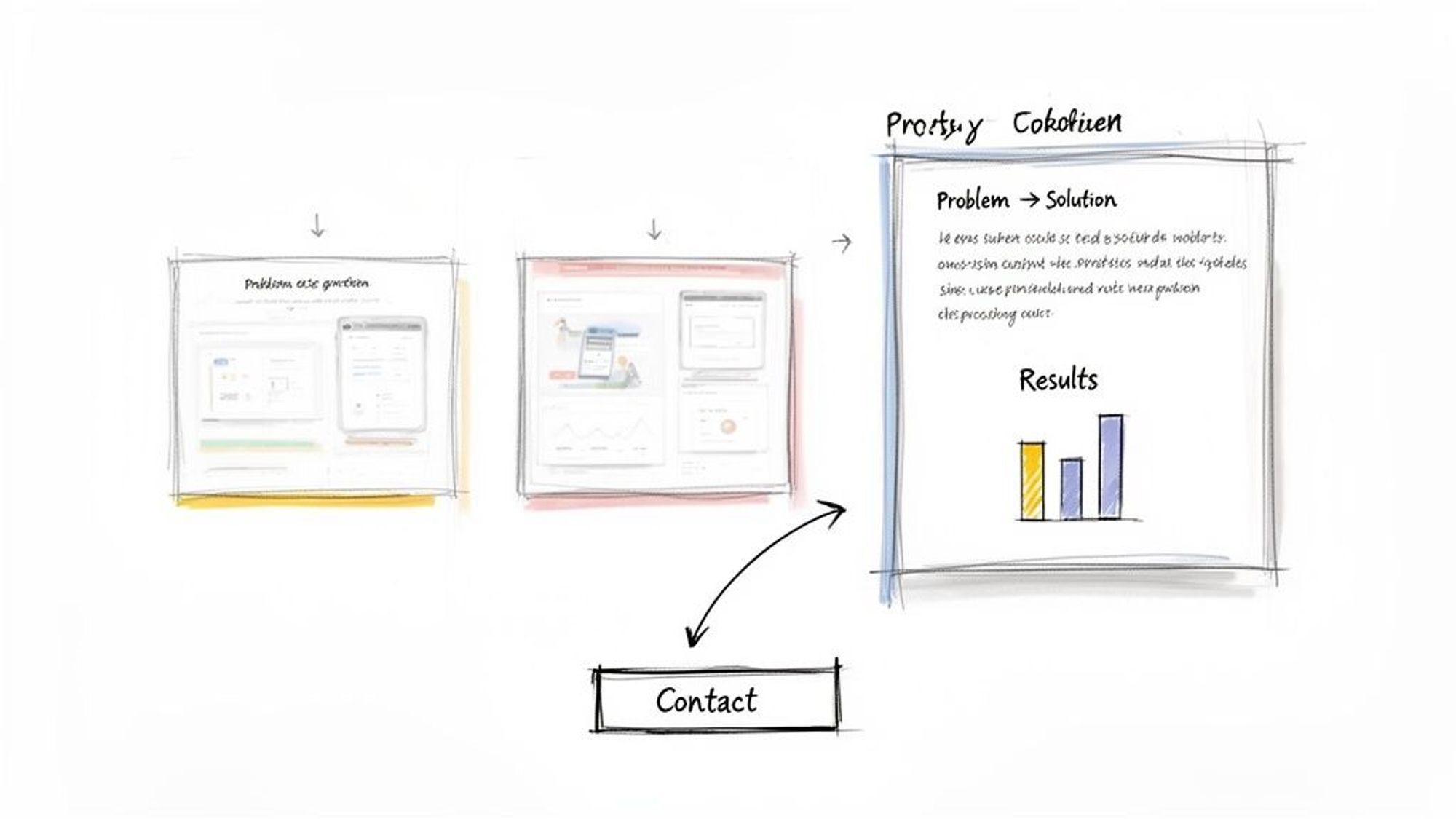
Most designers just put a screenshot of the final site in their portfolio and call it a day. If you want to stand out, you have to tell the story behind the design. A well-written case study walks a potential client through the entire process, making it very easy for them to picture you doing the same for them.
Frame every project you show with this simple but effective three-part story:
- The Problem: What specific challenge was the client facing when they came to you? Were their online sales very low? Was their old site a nightmare to update? Get specific.
- Your Solution: How did you solve that problem? Did you build a custom online store, completely redesign the navigation, or put in a smooth new content system?
- The Results: This is the most important part. What real, positive outcome did your work create? Put a number on it whenever you can.
Instead of a boring, "I built a new website for a local bakery," you create a story that sells:
The Problem: "Sweet Treats Bakery had long lines, but their clunky, old website wasn't getting any online orders. They were missing out on a lot of money." Your Solution: "We developed a mobile-friendly online store with a super simple, three-step checkout and connected it directly with their in-store inventory." The Results: "Within two months, their online orders shot up by 300%, and the average order value increased by $15."
This approach completely changes the conversation from how a site looks to what a site does. It shows your strategic thinking and proves you deliver a real return on their investment.
Make It Incredibly Easy for Them to Say "Yes"
Beyond your case studies, the entire experience of using your website is key for building trust and getting that first email. A slow or confusing website creates problems and makes people doubt you. A smooth, easy-to-use site makes hiring you feel like the obvious next step.
It all comes down to user experience (UX), and its impact is huge. A great UX design can increase conversion rates by an amazing 400%. That’s the difference between a casual browser and an eager client.
Quick Wins to Boost Your Website's Conversion Rate
You don't need to rebuild your site from scratch to see better results. A few small changes in key areas can make a huge difference in how many visitors contact you.
- Crystal-Clear Calls-to-Action (CTAs): Don't make people search for what to do next. Use big, bold buttons with action words like "Schedule Your Free Consultation" or "Get My Project Estimate" and put them where no one can miss them.
- Simple, Obvious Navigation: Can a first-time visitor find your portfolio, services, and contact page in seconds? If your menu is a mess, you'll lose them before they ever see your great work.
- Blazing-Fast Load Times: Every second counts online. If your site is slow, especially on a phone, people will leave. Optimize your images and get good hosting to keep things fast.
If you’re on WordPress, this is especially important. You can find some great advice on building pages that get results by checking out guides on WordPress landing page templates. The main ideas apply to your whole site.
Finally, add social proof wherever you can. Put client testimonials right into your case studies. Add a "Trusted By" section with logos of businesses you've worked with. These little trust signals go a long way in making potential clients feel confident about contacting you.
Proactive Outreach and Proposals That Actually Get Signed
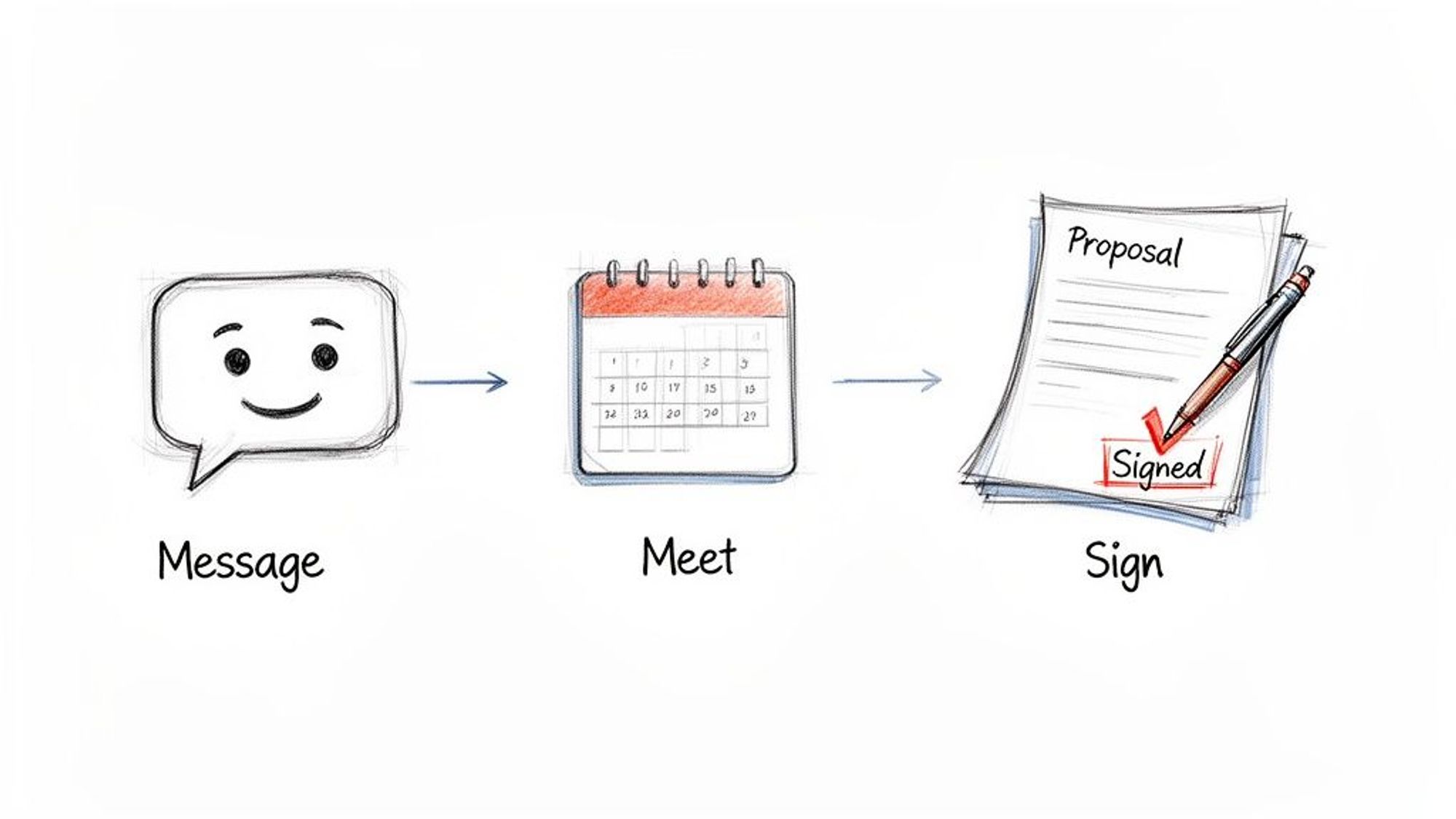
Relying only on inbound leads can feel like a rollercoaster. Some weeks are great, but others can be very slow. To build a steady flow of web design sales leads, you have to be proactive. This doesn't mean being a pushy salesperson; it means reaching out to potential clients in a way that feels genuinely helpful.
Sitting back and waiting for the phone to ring isn't a business plan. The good news is, you don't need to send thousands of spammy emails to see results. A smart, targeted outreach plan can open doors you never thought possible.
Finding the Right People to Talk To
Before you even think about writing a message, you need to know exactly who you're contacting. Generic email blasts are a complete waste of time. You need to focus your efforts where they'll make a real impact.
- LinkedIn is your best friend. Seriously. You can search for your ideal clients by industry, location, and even job title. A great tip is to look for companies that recently got funding or are hiring a lot—those are huge signs that they're ready to invest in growth.
- Tap into local communities. Get active in local business groups on Facebook or show up at Chamber of Commerce events. Building real, face-to-face relationships is a very powerful long-term way to get referrals.
- Look for outdated websites. This is a classic method for a reason: it works. Find businesses in your niche whose sites are slow, broken on mobile, or just look old. They have a clear, visible problem you can solve.
Once you have a short list of prospects, spend just five minutes doing your homework. Look at their website and LinkedIn profile. What are they proud of? What challenges do they seem to be facing? This little bit of research is what separates a thoughtful message from one that gets deleted right away.
Crafting Outreach That Gets a Reply
The goal of your first message is not to sell a website. It’s simply to start a conversation. Your whole approach should be about providing value first, without asking for anything in return. Forget the long intros about who you are. Make it all about them.
A good outreach message is:
- Personal: Mention something specific you noticed about their business.
- Helpful: Offer a small, valuable piece of advice or a quick observation.
- Low-Pressure: End with a simple, open-ended question, not a hard sell.
Example of a weak message: "Hi, I'm a web designer and I build great websites. Are you interested in a new site?" Example of a strong message: "Hi [Name], I saw the great feature on your bakery in [Local Magazine]—congrats! I noticed your website loads a bit slow on mobile, which might be costing you some online orders. A quick image optimization could make a big difference. Have you been thinking about a mobile refresh at all?"
See the difference? This approach shows you’ve done your homework and are genuinely trying to help. It positions you as an expert advisor, not just another person trying to make a sale.
Writing a Proposal That Seals the Deal
Okay, you've started a conversation and had a great first call. The proposal is your final chance to win the project. This document should be much more than a list of tasks and a price. It's your last, best chance to prove you understand the client's goals and are the perfect person for the job.
A huge part of closing deals is mastering the art of writing business proposals that win contracts. You have to clearly connect their problems to your solutions.
Your proposal should always lay out:
- The Client's Goal: Start by restating their main goal, using their own words. This immediately shows you were listening.
- Your Recommended Solution: Explain how your work will help them achieve that goal. Tie every single feature back to a real business benefit.
- Project Scope and Timeline: Clearly define what's included (and just as important, what’s not) and provide a realistic timeline for getting it all done.
- The Investment: Present your pricing with confidence. If you offer different packages, explain the value and expected outcome of each option.
By structuring your proposals this way, you shift the conversation from cost to value. You make it easy for the client to picture the return on their investment and give them all the confidence they need to sign the contract.
Tracking Your Results and Automating Your Workflow
Getting a steady stream of web design leads is a great start, but if you don't know where they're coming from, you're flying blind. To grow your business in a smart, predictable way, you have to know what's working and what isn't. This is how you focus on your best channels and stop wasting time on the ones that go nowhere.
At the same time, you can save hours every week by automating the repetitive stuff that takes up your day. It’s all about building a smarter business, not just a busier one.
Knowing Your Numbers The Simple Way
You don't need a complex dashboard with a hundred different charts to understand your business. Just a few key numbers will tell you most of the story. Focusing on these numbers gives you the clarity to make much better decisions.
Start by tracking these three simple things:
- Lead Source: Where did each potential client find you? Was it a specific Google search, a referral from a past client, or a post on LinkedIn?
- Conversion Rate: What percentage of people who visit your website actually fill out your contact form? This tells you how well your site turns visitors into real leads.
- Close Rate: Of all the proposals you send out, how many turn into paying projects? This number is a check for how well your sales process is working.
Just getting answers to those questions is a huge first step. To really manage your marketing budget and focus your energy, using good lead source tracking strategies is key. It shows you exactly where to put your money for the biggest impact.
Key Metrics to Watch
Once you’ve got the basics down, you can start digging a little deeper to really improve your plan. You need to know which of your efforts are bringing in the best results.
Websites, for example, are the clear winners for lead generation. A huge 90% of marketers rely on them for inbound leads around the clock. The best part? They generate three times more leads than outbound marketing at half the cost.
To get a handle on this, you'll want some tools to watch your progress. For your SEO efforts, you can explore the best AI rank tracker tools to see how your targeted local landing pages are actually performing in search results for your important keywords.
By simply tracking where your best clients come from, you can often find surprising patterns. You might discover your best projects all come from a specific local search term, telling you exactly where to focus your SEO efforts next.
Working Smarter with Simple Automation
Tracking your results is all about making better decisions. Automation is about giving yourself more time to act on them. So many designers get trapped in a cycle of admin work—sending follow-up emails, scheduling calls, and trying to keep client info organized.
Simple, affordable tools can handle most of this for you.
- Automated Email Follow-ups: Set up a simple series of emails that automatically follows up with a new lead after a day or two. This is a game-changer for making sure no one gets forgotten.
- Online Schedulers: Stop the endless back-and-forth emails trying to find a meeting time. Use a tool like Calendly. You just send a link, and the client picks a time that works for them. Easy.
- Simple CRMs: A Customer Relationship Management (CRM) tool doesn't have to be a complex, expensive system. Even a simple one can keep all your lead information, notes, and proposals neatly organized in one place.
These systems aren't about replacing the human touch; they're about freeing you up to focus on it. When you’re not bogged down by admin tasks, you have more time for what really matters: designing great websites and building strong client relationships.
Common Questions About Finding Web Design Clients
Getting a steady stream of web design sales leads can feel like a tough puzzle to solve, and it's normal to have questions. You're not alone in figuring this out. Let's look at some of the most common challenges designers face when trying to fill their project schedule.
How Much Should I Charge for a Website
This is the big one, right? The honest, if slightly frustrating, answer is: it depends. Pricing isn't just about covering your hours; it's a direct reflection of the value you provide. A simple, beautiful site for a local coffee shop doesn't have the same price tag as a complex online store for a growing brand.
The best way to start is by figuring out your basic costs—what you need to make to keep the lights on. From there, you can consider the project's difficulty and, most importantly, the potential return on investment for your client.
A great way to make this easier for everyone is to offer packages with very clear results. Think "Starter Site" or "Growth Package." This gives clients clear options and immediately connects your value in their minds.
What Is the Best Way to Get My First Few Clients
When you're just starting out, getting going is everything. You can't afford to sit back and wait for leads to magically appear. You have to go out and make it happen.
- Tap Your Network: This is the easiest place to start. Let friends, family, and former coworkers know exactly what you're doing. A warm referral is almost always the easiest and fastest way to land that first paid project.
- Target Local Businesses: Go for a drive around your town. Look for local businesses with websites that look like they haven't been updated in years. A quick, genuinely helpful email pointing out a few specific issues and offering a free chat can be a powerful way to open doors.
- Freelance Platforms: While they can sometimes be a race to the bottom on price, sites like Upwork are a decent place to build your portfolio and get some initial good reviews. Think of it as a stepping stone.
The key is to be proactive and focus on providing real value first. Your immediate goal isn't just to get paid; it's to get a few successful projects done that you can turn into powerful case studies.
Do I Need to Be Active on Every Social Media Platform
Absolutely not. In fact, please don't. Trying to be everywhere at once is a sure way to burn out and get average results. It’s much smarter to pick one or two platforms where your ideal clients actually spend their time and do a great job there.
For most web designers targeting other businesses, LinkedIn is the most effective choice. It's the one place where you can connect directly with decision-makers, share your work in a professional way, and present yourself as an expert.
Now, if your focus is more visual—say, you design for photographers or artists—then a platform like Instagram might be a much better fit. The bottom line is to focus your energy where it will have the biggest impact.

I’m an experienced SEO professional with over a decade of helping over 100 businesses rank higher online, especially local businesses, e-commerce stores and SaaS. As the co-founder of LPagery, I specialize in practical, proven strategies for regular SEO and Local SEO success.
This post may contain affiliate links which we earn a commission on when purchasing a given product.
I’m an experienced SEO professional with over a decade of helping over 100 businesses rank higher online, especially local businesses, e-commerce stores and SaaS. As the co-founder of LPagery, I specialize in practical, proven strategies for regular SEO and Local SEO success.