Getting leads for web design companies comes down to a simple idea: stop chasing everyone and start attracting the right businesses. The best plan is to build a strong online presence that brings clients to you. This makes sure you are seen by people already looking for your skills.
Your Plan for Finding New Web Design Clients
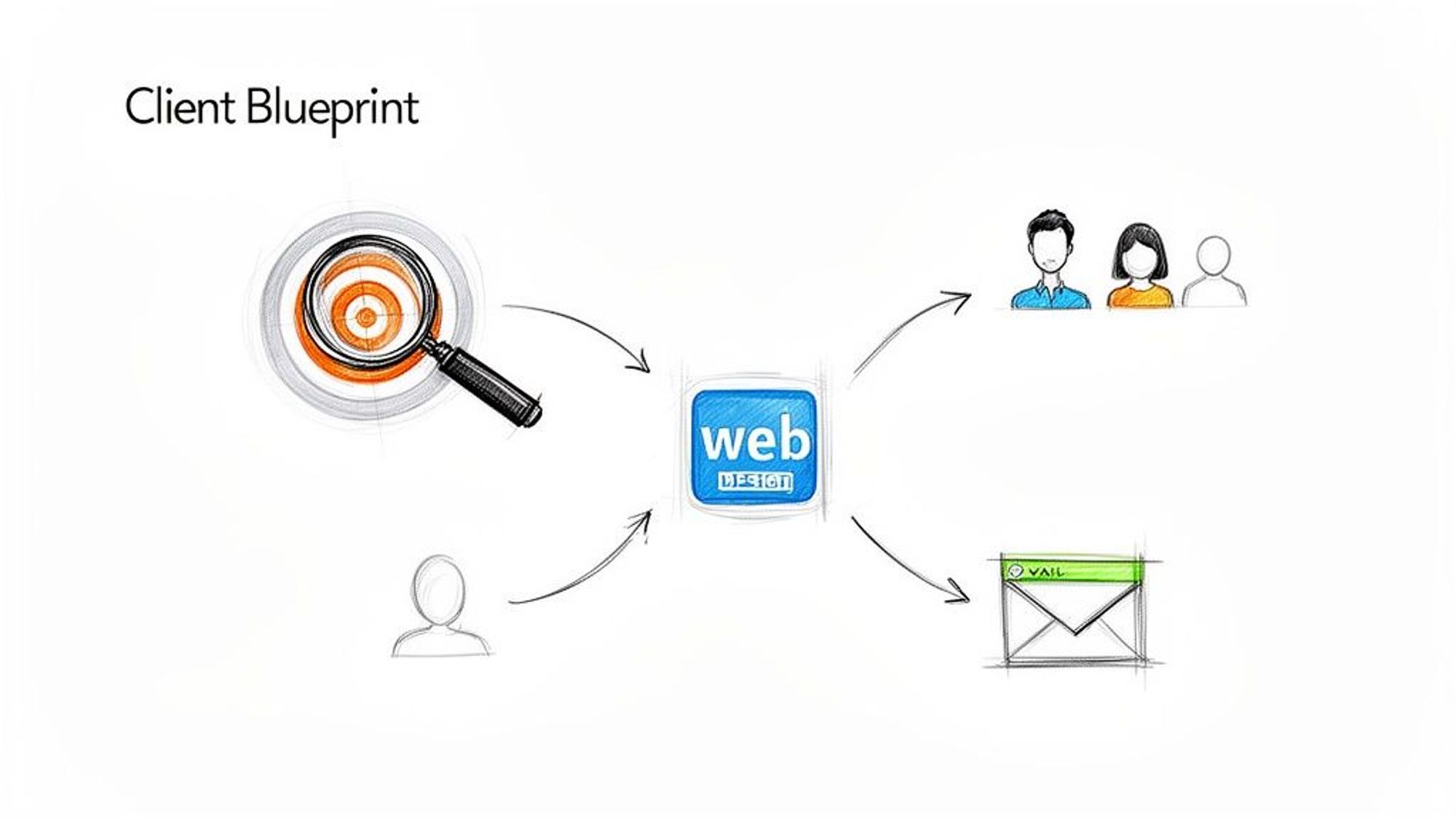
Finding a steady flow of clients can feel like a rollercoaster. One week your inbox is full of messages, and the next, it’s quiet. This up-and-down cycle is a common sign that you need a better system for getting leads.
A good plan starts with a simple but powerful change in how you think. Instead of trying to be the perfect web designer for every business, focus on becoming the go-to expert for a certain type of client. This clear focus is the foundation of any lead-finding plan that actually works.
Define Your Ideal Client
Seriously, who do you love working with? Maybe it’s local restaurants, new tech companies, or online stores. Being specific makes your marketing much easier and more effective.
Ask yourself these key questions:
- What industries do you know best? Your knowledge in a certain field is a big selling point.
- What size business is your sweet spot? A one-person business has very different needs than a 50-person company.
- What kind of projects get you excited? Focusing on the work you enjoy leads to better results and happier clients.
Knowing these answers helps you sharpen your message and your services. It means you stop wasting time on people who aren't a good fit and start attracting businesses that truly value what you do. The main ways to find new clients are often similar for many service businesses. You can even get great ideas from guides on how to start an SEO business and get your first clients.
Understand Your Client's Real Problems
Once you know who you’re aiming for, you need to learn about their struggles. A restaurant owner isn't just buying a website; they're buying a way to get more table bookings and online orders.
The key to great marketing is knowing that clients are buying results, not just services. They want more customers, higher sales, or to work more efficiently. Your website is just the tool that helps them get there.
This idea changes everything. Your website text, your emails, and your sales calls should all focus on solving their specific business problems. It's a key part of any good marketing strategy for a small business.
The Challenge of Getting Noticed
Let's be real—getting good leads is tough in the crowded web design field. Mid-sized web design companies often get fewer than 500 good leads per month. That’s a long way from the 1,877 leads that businesses in other industries average.
This difference shows how important it is to have a focused, effective plan. You can’t afford to just hope for the best.
Winning with Content Marketing and SEO
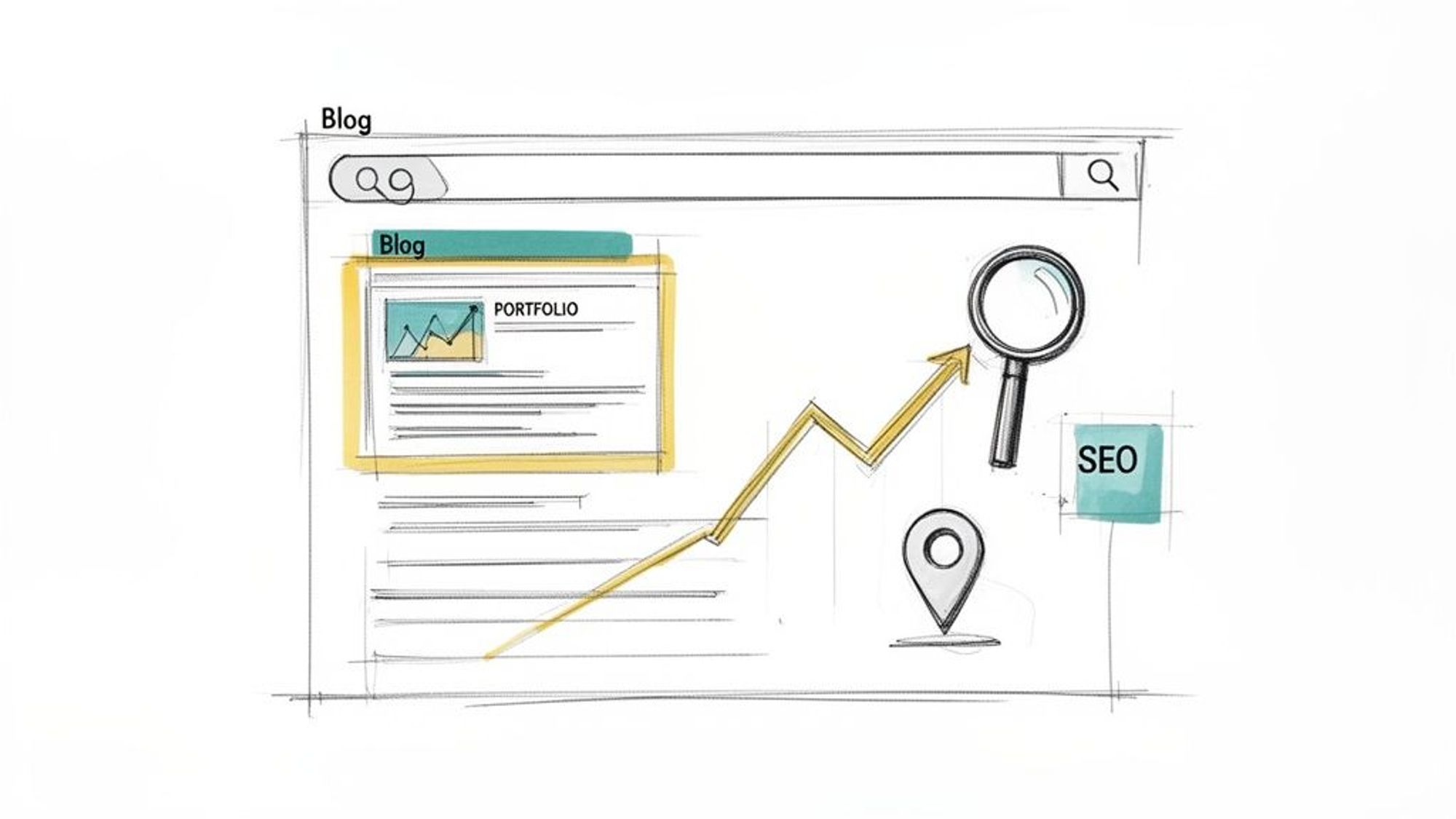
Imagine a world where clients find you right when they need a new website, instead of you always having to chase them. That's the real power of content marketing and Search Engine Optimization (SEO). It’s all about being the helpful answer that shows up when someone searches on Google.
This approach turns the old sales model upside down. You’re not interrupting people; you’re attracting them by creating truly useful content that solves their problems. This builds trust long before you even have a sales call, which makes it much easier to close the deal.
Creating Content That Actually Attracts Clients
Your website needs to be more than just a fancy business card—it should be a helpful resource. Get inside the minds of your ideal clients. What questions are they Googling at 10 PM? What are they struggling with? What do they need to know before they even think about hiring a web designer?
Your job is to create content that answers those exact questions. When a local business owner searches for "how much does a small business website cost," your detailed blog post on that topic should be waiting for them. That's how you get their attention.
Here are a few content ideas that work well:
- Helpful Blog Posts: Think like your customer. Write about topics like "5 Signs Your Business Needs a New Website" or "How to Choose the Right Web Designer for Your Restaurant."
- Detailed Case Studies: Don't just show off your past work; tell the story. Explain the client's problem, show how you solved it with a great website, and share the awesome results they saw.
- Simple Guides: Offer a free download like a "Website Planning Checklist for New Businesses" in exchange for an email address. This method is popular for a reason.
This kind of content immediately shows you're an expert. It proves you understand their business and can be trusted to do a good job, which is a huge benefit when getting leads for web design companies.
Why Local SEO Is Your Secret Weapon
Let's be honest: for most web design agencies, the best clients are right in your own area. Local SEO is simply the process of making your business easier to find in local Google searches. And it is very powerful.
When someone types in "web designer near me" or "web design in [Your City]," you definitely want to be at the top of that list. These are some of the best leads you can get—these people have a problem, and they're looking for a solution now.
Focusing on local search is one of the fastest ways to see real results. There is often much less competition than trying to rank across the country, and the leads you get are very motivated and ready to talk.
Getting started with local SEO doesn't have to be a complex, secret process. Your first step is to claim and fully set up your Google Business Profile. Fill out every single section: services, hours, photos of your work, your address. Then, start asking your happy clients to leave reviews. It makes a big difference.
The Power of Niche Service Pages
Don't just stop at targeting your main city. Think about all the specific services you offer and the different towns or neighborhoods you serve. Creating separate pages for each combination can greatly increase your chances of being found. This is where you can really make a name for yourself.
For example, instead of one general "Services" page, you could build out separate, highly-focused pages for:
- E-commerce Web Design
- Website Design for Plumbers
- WordPress Development Services
- Small Business Web Design in [Nearby Town]
Each of these pages can be written with the exact language and problems of that specific audience in mind. When you get this specific, you're no longer just another web designer; you're the expert in exactly what that person is searching for. To do this right, learning about keyword research for local SEO is a must.
This strategy really works. Content marketing gets over three times more leads than old-school sales methods, and at less than half the cost. It’s no surprise that 85% of B2B marketers use it to bring in clients. By regularly creating helpful, targeted content, you're building a reliable system that brings a steady stream of your ideal customers right to your door.
Smart Outreach That Actually Gets Replies
While building a strong online presence that draws clients in is the long-term goal, sometimes you need to go out and get them. This is where smart outreach comes in. It’s not about sending the same message to hundreds of businesses. It's about making a real connection with a few who are a perfect fit for what you do.
The whole game is about being personal. A generic email gets deleted in seconds. But a thoughtful message that shows you've actually looked at their business? That can start a real conversation. This approach respects their time and immediately sets you apart from the dozens of other designers asking for their attention.
Crafting Emails People Actually Want to Read
Forget the stuffy, formal emails you see online. Your outreach emails need to sound like they're from a real person. The goal is to be helpful, not pushy.
First, do a little homework. Seriously, just spend five minutes on their website. Does the design look a bit old? Does it load very slowly on a phone? Find one specific, real area where you could provide value. This small bit of effort makes your message feel personal and important.
Here’s a simple structure that I've seen work over and over again:
- A specific, friendly compliment: Start with something you truly like about their business. "I love the story behind your coffee shop on your 'About' page."
- A quick, helpful observation: Gently point out the issue you noticed. "While I was looking on my phone, I noticed the menu was a bit hard to use."
- A soft offer to help: Present your solution as a simple suggestion, not a hard sell. "A mobile-friendly update could make it much easier for customers to place orders. If you're ever thinking about a change, I'd be happy to share a few ideas."
See? It’s not a sales pitch. It’s a way to start a conversation that makes you look like a helpful expert.
Building Connections on LinkedIn
LinkedIn is so much more than a place to post your resume. It's a goldmine for finding leads for web design companies. You can search for specific job titles in specific industries and locations. This gives you a direct line to the exact people you want to reach.
But again, the key is to be human. Don't just send a connection request with a sales pitch. That’s a fast way to be ignored. Instead, engage with their posts first. Like or comment on something they shared. This simple act makes you a familiar face before you ever send a private message.
Your goal on LinkedIn shouldn't be to sell right away. It should be to build your network with the right professionals. The sales talks will naturally come from the relationships you build.
When you do send that connection request, always add a short, personal note. Something as simple as, "Hi [Name], I saw your post about [topic] and really enjoyed your thoughts. I work with other [their industry] businesses and would love to connect," works very well.
The Untapped Power of Partnerships
One of the best—and most forgotten—strategies is building a network of referral partners. Just think about other professionals who serve the same clients you do, but don't directly compete with you.
These could be:
- Marketing Agencies: They often handle the big-picture plan but need a reliable web designer to build things.
- Copywriters: They write the words for websites but need someone to design and build the site for those words.
- Business Consultants: They help businesses grow and are often the first to point out that an old website is holding them back.
- IT Support Companies: They're the first call for any tech problem, which often includes website issues.
Reach out to these pros with a simple offer to connect. Have a virtual coffee with them and just learn about their business. The goal is to build a real relationship. Once they trust you and understand the quality of your work, they'll be happy to send good leads your way. This creates a steady, reliable stream of clients who are already ready to work with you.
By the way, using interactive tools on your site can be a great way to get interest from potential partners. You can learn more about how to use calculators as lead magnets to get these professionals interested.
How To Dominate Local SEO With Landing Pages
If you want to be the top web designer in your city, you have to show up where local clients are looking. One of the best ways to do this is by creating specific landing pages for every town, neighborhood, and service area you cover.
Think about it from your client's view. When someone in Austin needs a website, they don't just type "web designer" into Google. They search for "web design Austin" or "website company near me." A dedicated landing page for Austin that speaks directly to that audience will always do better than a general services page.
Google sees that targeted page as more relevant. This means a better ranking for you and more good leads for web design companies in your inbox.
Why Hyper-Local Pages Work So Well
Creating a unique page for each location sends a clear signal to search engines that you're the expert in that area. It lets you add local details—mentioning landmarks, business districts, or even stories of clients you've helped right there in town.
This approach builds instant trust. A potential client from a small suburb feels much more connected to a designer with a page just for their town than to a big, general agency site. It shows you understand their local market and care about their community.
The whole process is simpler than it sounds. You find potential clients in specific areas, connect with them through content that feels like it was made just for them, and build a local presence that naturally leads to referrals.
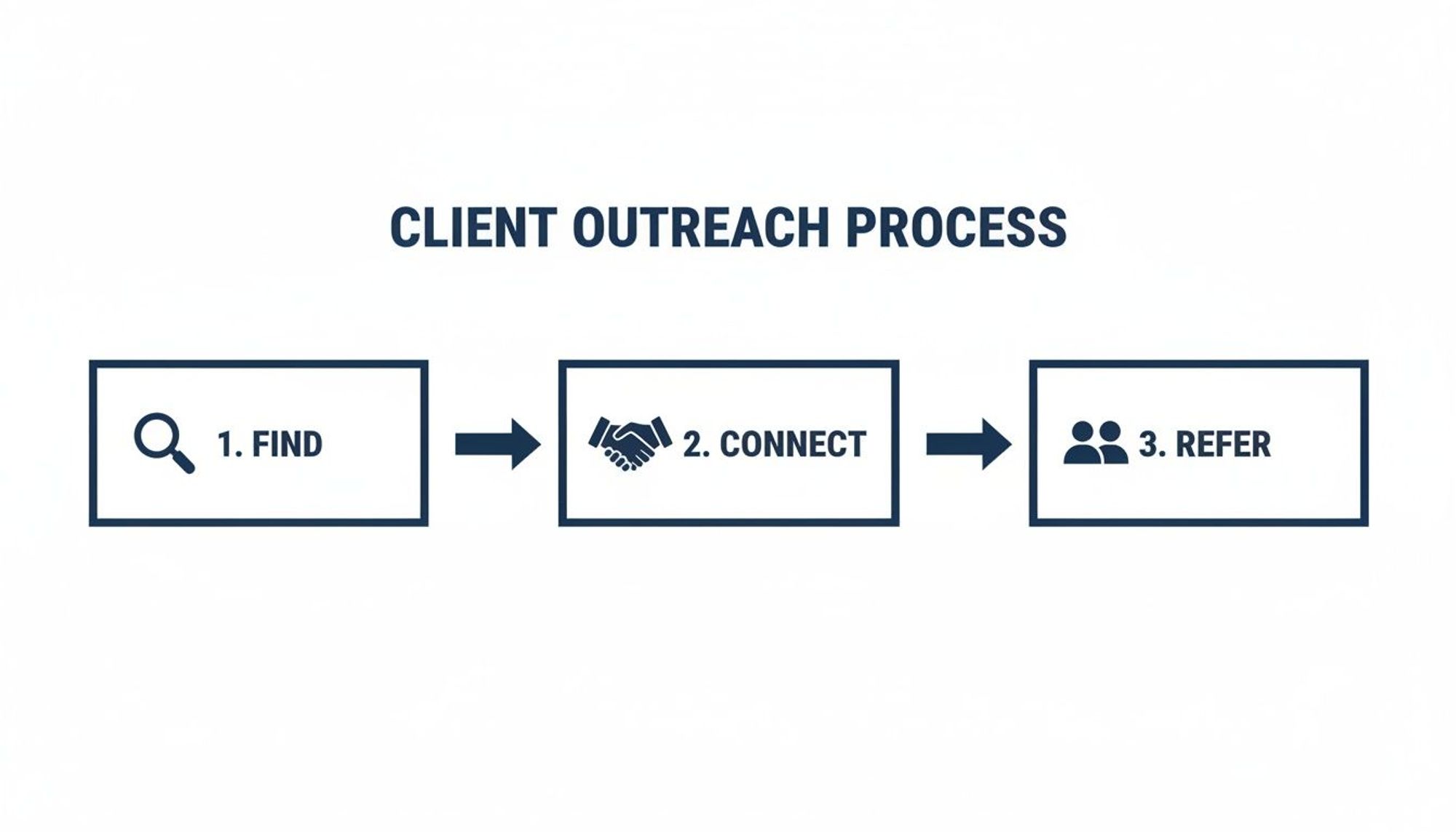
The Big Problem: Doing This at Scale Is Hard
Okay, so the idea of creating hyper-local pages sounds great. But the reality of building pages for 10, 50, or even 100 different locations is a nightmare. Doing it all by hand takes a huge amount of time.
Imagine the work: copy a template, change the city name, write a unique paragraph, find a local image, and change all the SEO settings. Now do that 99 more times. It's the kind of repetitive work that drains your energy and slows you down.
This is where automation becomes your secret weapon.
Automate Your Local Landing Pages With LPagery
Instead of spending weeks building these pages by hand, you can use a tool like LPagery to create them all in minutes. It's a WordPress plugin that lets you create tons of unique pages from a single spreadsheet. It turns a massive manual headache into a simple, automated task.
Here’s how it works:
- You design one main template for your local landing page.
- You create a spreadsheet with columns for all the unique details for each location (City Name, Zip Code, a unique opening paragraph, a local client review, etc.).
- LPagery takes the data from each row and automatically creates a perfectly optimized page for every single location in your sheet.
Suddenly, covering your entire state with targeted landing pages becomes a project you can finish in an afternoon.
Thinking about the return on your time makes the choice pretty clear.
Manual vs. Automated Local Page Creation
Factor | Manual Creation (One by One) | Automated with LPagery |
|---|---|---|
Time Investment | 50+ | 100s |
Cost | High cost in your work hours or employee pay. | Low, one-time plugin cost. |
Consistency | Can have human errors and differences. | Perfectly consistent pages every time. |
Scalability | Very difficult and slow to grow. | Easily grows to thousands of locations. |
SEO Impact | Slow to build authority; limited by time. | Quickly builds broad local authority. |
The main point is simple: manual creation just doesn't work if you're serious about owning your local market. Automation is the only practical way to use this strategy well.
Don't Create Clones—Make Each Page Unique
The key to making this work is to make sure each page feels valuable, not like a cheap copy-paste job. While your main template stays the same, the unique content you pull from your spreadsheet is what gives each page its own personality. This is very important for avoiding duplicate content issues from Google and for giving visitors a much better experience.
We cover this in much more detail in our complete guide to creating effective local SEO landing pages. It goes deep into how to set up your content for the best results.
Of course, getting traffic is only half the battle. You also need to turn those visitors into leads. For that, check out this great guide on how to create a landing page that truly converts for more useful tips.
By combining hyper-local targeting with the power of automation, you build a true lead generation machine—a system that works around the clock to bring in clients from all your target service areas.
That new lead email hitting your inbox? It’s a great feeling. It’s proof your marketing is connecting with people. But let's be honest, that email is just the start. The real magic happens when you turn that interest into a signed contract.
This isn't about becoming a slick, high-pressure salesperson. It’s about having a repeatable process to figure out if you can truly help someone, and then clearly showing them how. A solid plan keeps you in control, builds trust, and helps you close the deals you actually want.
Qualifying: Your First Line of Defense
Not every message you get is a good one. Seriously. Chasing down every single person who fills out your contact form is a sure way to burn out.
Your first move is to quickly qualify the lead. This is just a simple check to see if they’re a potential fit, and it saves everyone a ton of time.
You're looking for a few key things right from the start:
- Budget: Can they realistically afford you? This is the big one. A polite but direct question about their budget can save you from spending hours on a proposal for someone who can only pay a small part of your minimum fee.
- Timeline: Is their deadline realistic? If a potential client needs a huge online store with special features built in two weeks, it's a huge red flag. Unrealistic hopes at the start often lead to headaches later.
- Fit: Does this project even make sense for you? If you are best at building clean websites for local restaurants, taking on a complex project for a manufacturing company might not be the best use of your skills or your time.
A "no" early in the process is just as valuable as a "yes." Turning down a bad-fit client frees you up to find and serve the right ones. It’s a sign of a confident, established agency.
Mastering the Discovery Call
Once a lead passes your first check, it's time for a discovery call. And no, this is not a sales pitch. Think of it as a consultation. Your main goal here is to listen, ask smart questions, and truly understand their business.
You need to dig deeper than just, "So, what pages do you need?"
Come prepared with questions that get to the core of their problems:
- "What's the number one business goal you're hoping this new website will help you achieve?"
- "Tell me about the biggest frustrations you have with your current site."
- "Who are a few of your top competitors, and what do you think they're doing right or wrong with their websites?"
- "Imagine it's six months after we launch. How will you know this project was a success?"
Asking questions like these changes the whole conversation. You’re no longer just a web designer for hire; you’re a strategic partner who’s focused on delivering real business results.
Creating Proposals That Actually Get Signed
With a successful discovery call done, it's time to build your proposal. This document needs to do more than just list a price. It should be a direct summary of your conversation, proving that you listened, understood their problems, and have a clear plan to solve them.
A proposal that seals the deal usually has these four parts:
- Recap the Problem: Start by summarizing their challenges and goals, using their own words. This immediately shows you were paying attention.
- Outline Your Solution: Clearly explain the project details. Be specific about what’s included—and just as importantly, what’s not included—to prevent extra work later.
- Provide a Clear Timeline: Lay out a realistic timeline with key dates. This helps the client know exactly what to expect and when.
- Break Down the Investment: Present your pricing clearly. If it makes sense, offer two or three package options to give them a sense of control and choice.
Your proposal is a key sales tool. Make sure it looks professional and shows the value you’re bringing. You're not just selling a website; you're selling a solution.
The Gentle Art of the Follow-Up
You've sent the proposal. Now what? Don't just sit there refreshing your email. A simple, polite follow-up a few days later can make all the difference.
The key is to be helpful, not pushy.
Something as simple as, "Hi [Name], just wanted to check in and see if you had any questions about the proposal I sent over on Tuesday," works wonders. It keeps the conversation going without making you seem desperate.
Having the right tools in place makes this whole process—from qualifying to closing—so much smoother. For WordPress agencies, a solid set of tools is essential for managing projects and delivering amazing work. Check out some of the best WordPress plugins for agencies to see how you can improve your process and start impressing those new clients from day one.
Got Questions About Lead Gen? We've Got Answers
Even with the best plan, you're going to have questions once you start using these strategies. That's perfectly normal. Here are some of the most common questions I hear from web design agencies, with some direct answers to help you keep moving forward.
How Long Until SEO Actually Starts Bringing in Web Design Leads?
Let's be real: SEO takes time. You've got to have some patience. Generally, you can expect to see the first few leads coming in within 3 to 6 months.
The good news? Local SEO—especially when you're creating those city-specific landing pages—can often get you results a bit faster. You're usually up against much less competition.
The most important thing is to be consistent. Think of it like pushing a heavy wheel. At first, it's slow, but the more you publish useful content and improve your site, the more speed you build. Eventually, that wheel starts spinning on its own, delivering a steady stream of good leads who find you.
What’s the Cheapest Way to Get Leads?
If you’re looking for long-term, steady growth, it's tough to beat content marketing and SEO. They do require an upfront investment of your time (or money, if you hire it out), but once your pages start ranking on Google, the leads they bring in are basically free.
Referrals and partnerships are right up there, too. These leads are pure gold because they come with built-in trust and don't cost you a dime—just the time it takes to build and maintain good relationships with other pros in your network.
Over the long term, a single, well-ranked blog post can bring in more good leads than thousands of dollars in ad spend. When you invest in content, you're building an asset that pays you back for years.
Should I Bother with Paid Ads for My Web Design Company?
Paid ads on platforms like Google or LinkedIn can be a great way to turn on the lead faucet, fast. They're especially helpful if you're a new company and need to get some money coming in while your long-term SEO efforts are still warming up.
Of course, the big catch is that the leads disappear the second you stop paying.
A lot of successful agencies I've seen use a mixed approach that works really well:
- Run paid ads for immediate results and to quickly test out different messages and offers.
- Build your SEO and content in the background for steady, low-cost leads down the road.
This mix gives you the best of both worlds: quick wins now and a stable, predictable flow of leads later.
How Many Leads Should a Web Design Agency Aim for Each Month?
This one completely depends on your business. There's no magic number here. A solo freelancer might only need 3 to 5 good leads a month to stay busy and hit their income goals.
But a larger agency with a team and higher costs? They might need to be aiming for 30 to 50 leads—or even more.
The best way to figure out your number is to work backward from your goals. It’s a simple bit of math:
- Start with your revenue target. What do you need to make this month or quarter?
- Figure out how many projects that is. Based on your average project price, how many deals do you need to close?
- Factor in your close rate. For example, if you close 1 out of every 4 good leads you talk to, you'll need four times as many leads as your project goal.
Doing this quick calculation will give you a clear, achievable target to aim for with all your marketing efforts.

I’m an experienced SEO professional with over a decade of helping over 100 businesses rank higher online, especially local businesses, e-commerce stores and SaaS. As the co-founder of LPagery, I specialize in practical, proven strategies for regular SEO and Local SEO success.
This post may contain affiliate links which we earn a commission on when purchasing a given product.
I’m an experienced SEO professional with over a decade of helping over 100 businesses rank higher online, especially local businesses, e-commerce stores and SaaS. As the co-founder of LPagery, I specialize in practical, proven strategies for regular SEO and Local SEO success.