Keywords for carpet cleaners are the words people type into Google when they have a problem. Think "carpet cleaning near me" or "pet stain removal." When you use these words on your website, you show up first. This turns a homeowner's cleaning problem into your next job.
Why the Right Keywords Land You More Cleaning Jobs
You're a carpet cleaning expert, not a digital marketing pro. So why should you care about "keywords"?
Imagine this: A homeowner spills a glass of red wine on their new beige carpet. What do they do first? They grab their phone and search for help. The words they type into that search bar are keywords.
Showing up at the top of that search result means you get the call. If you don't show up, they'll never know you exist. This is where a smart keyword plan comes in. It’s not about tricky tech; it’s about being the answer to someone's immediate problem.
Get Inside Your Customer's Head
The key is to think like a customer, not a business owner. They aren't searching for "Bob's Carpet Cleaning." They're searching for their problem.
Good keywords for carpet cleaners usually come down to three things:
- The Service: What do they need? (like "upholstery cleaning," "rug shampooing")
- The Problem: What mess are they trying to fix? (like "remove cat pee smell from carpet," "wine stain on wool rug")
- The Location: Where are they? (like "carpet cleaner in Dallas," "Brooklyn carpet cleaning services")
This is super important for a local business like yours. You need to appear when people in your area are looking for help. If you need help with this, our guide on how to improve local SEO rankings is a great place to start.
And the timing is perfect. People care more about home cleaning now than ever before. The global carpet cleaning market is set to reach USD 120.8 billion by 2035. You can discover more insights about the carpet cleaning market on futuremarketinsights.com.
Finding the Keywords Your Local Customers Actually Use
Okay, let's find the exact words your customers are typing into Google. The first step is simple: start with the services you offer. Think of general terms like "carpet cleaning" or "upholstery cleaning." These are your main keywords.
But the real magic comes from adding your location. Someone searching for "carpet cleaner" could be anywhere. But someone searching for "carpet cleaner in Dallas" is in your area and needs help now. That’s a lead, not just a search.
Think like your customer for a moment. They have a problem—a stained carpet or a dirty rug—and they need a local expert to fix it, fast. We need to follow their path from having a problem to booking a job.
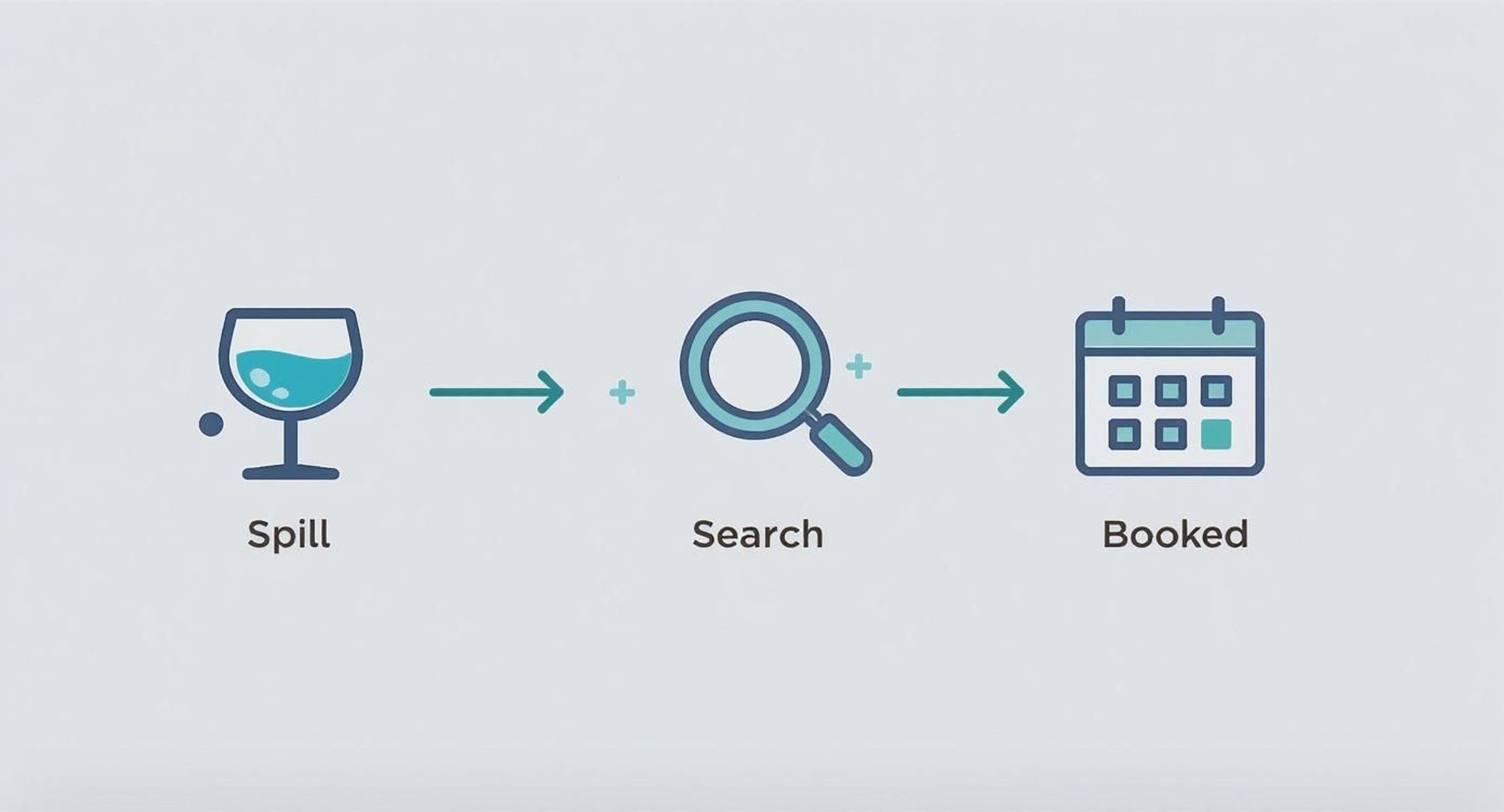
That search is the bridge that connects a customer’s messy floor to your phone ringing.
Building Your Local Keyword List
Your main goal is to mix your services with local details. It’s a simple formula that works for any local service business. Think about all the ways someone might describe their location—city, neighborhood, zip code, or even "near me."
Here are a few real-world examples to get you started:
- Service + City: "upholstery cleaning Brooklyn"
- Problem + Neighborhood: "pet stain removal near downtown"
- Service + Adjective + City: "best deep carpet cleaning Austin"
- Service Type + Location: "apartment carpet cleaning service Dallas"
To make this easier, here’s a quick table to help you come up with some strong local keyword ideas. Just mix and match your services with different location words.
Local Keyword Ideas to Get You Started
Core Service | Local Modifier | Example Keyword |
|---|---|---|
Carpet Cleaning | in [City Name] | carpet cleaning in Houston |
Rug Cleaning | [Neighborhood] | rug cleaning South Austin |
Stain Removal | near me | pet stain removal near me |
Upholstery Cleaning | [Zip Code] | upholstery cleaning 90210 |
Commercial Cleaning | [City] TX | commercial cleaning Dallas TX |
This simple task will give you a solid list to start reaching the right customers in the right places.
The more specific you get with the location, the more ready the person is to buy. Someone looking for a cleaner in their neighborhood is usually ready to book an appointment.
By focusing on these location-specific words, you stop competing with big national companies and start connecting directly with homeowners who need you.
If you want to learn more, our full guide on the keyword research process has more advanced tips. But for now, building this basic list is the most important step you can take to get more calls and book more jobs.
Discover What Your Customers Are Really Asking
It’s easy to only focus on keywords like "carpet cleaning services." But the real magic happens when you start thinking like your customers. What are their immediate, annoying problems? They're typing things into Google like "how to get coffee out of a wool carpet" or "how much does professional carpet cleaning cost?"
Answering these questions on your website is a huge advantage.
This simple change turns your website from a business card into a truly helpful resource. When you create blog posts or FAQ pages that solve these real-world problems, you become the local expert. That builds trust, and trust is what makes people call you first when they need a pro.
Tap into Customer Questions
One of the best (and free) ways to find these questions is to look at Google's "People Also Ask" section. It's right on the search results page. Just type in a basic term like "carpet cleaning" and see what Google shows you. These are real questions from people in your area.
For example, a quick search will almost always show questions about cost, different cleaning methods, and how to deal with specific stains.

This screenshot shows it perfectly. People are comparing the cost of professional services to doing it themselves. If you answer these questions directly, you can attract potential customers while they're still doing research—long before your competitors even know they exist.
Creating content around these questions helps you connect with customers before they even decide they need to hire someone. You're not just selling a service; you're solving their immediate problem.
This approach is very powerful for local businesses. By answering these common questions, you also become more visible for "near me" searches, which is key for getting local customers. If you want to own your local market, you can learn more about how to rank for "near me" searches in our detailed guide.
Today's professional carpet cleaners are made to solve these exact problems. They use special soaps, strong brushes, and powerful vacuums to pull out deep dirt, allergens, and stains that a rental machine could never touch. Plus, new low-moisture systems mean we can get carpets cleaner than ever without soaking them. You can explore more about advanced cleaning technologies on straitsresearch.com.
Show Off Your Special Services with Niche Keywords
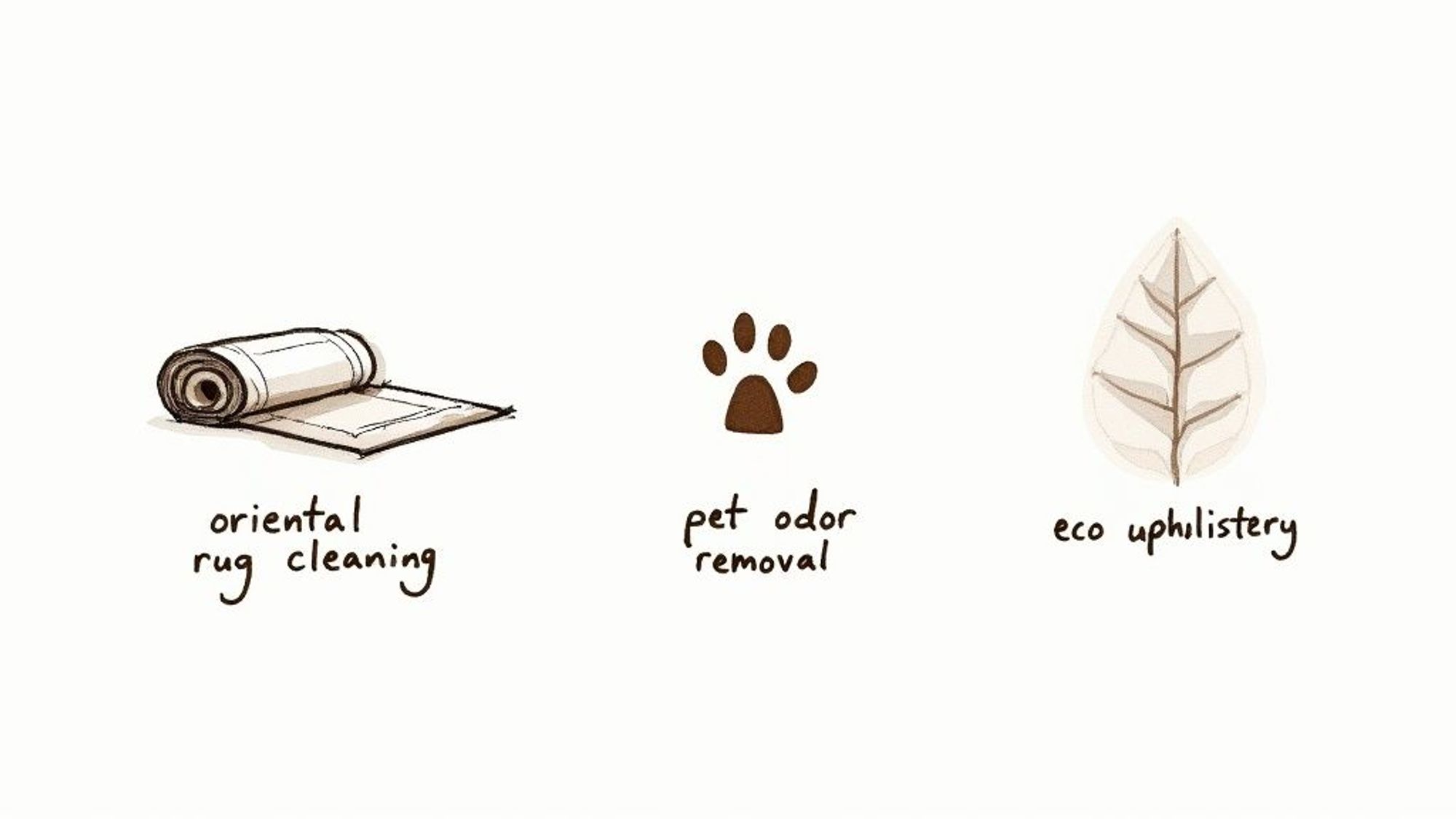
Let's be honest—your business probably does more than just standard steam cleaning. Those special services are your secret weapon for attracting great customers who are ready to book a job right now.
Think about it. Someone searching for "oriental rug cleaning" already knows they have a problem. They have a special, valuable item that needs expert care, and they are actively looking for a specialist. The same is true for someone typing in "pet odor removal from carpet." These aren't just people browsing; they're motivated buyers with an urgent need.
Target Eager Customers with Laser-Focused Keywords
The key is to create separate pages on your website for each of your special services. This simple step tells Google that you're an expert on that topic. A customer is much more likely to trust a page called "Expert Pet Stain Removal in Denver" than a general "Our Services" page that lists everything you do.
This method works in almost any service industry. We talk about a similar idea in our guide on the best keywords for plumbers, where focusing on specific problems like "leaky faucet repair" brings in much better leads than general words.
Here are a few examples of high-value specialty keywords to get you thinking:
- eco-friendly upholstery cleaning
- commercial carpet cleaning for offices
- wool rug cleaning service
- red wine stain removal
By focusing on these specific keywords, you attract customers who know exactly what they need and are often willing to pay more for special skills. It’s about getting quality leads, not just a lot of website traffic.
To bring in clients looking for specific skills, you can also talk about your specialized carpet cleaning methods, like bonnet cleaning, with targeted keywords. Making separate pages for these services doesn't just help your search rankings—it builds great trust with potential customers before they even call you.
You’ve done the hard work and found the keywords that matter. Now what? It’s time to put them to work on your website so Google—and more importantly, your customers—can find you.
This isn't about complicated technical tricks. It's about being clear. Think of it like this: if you have a page on your site just called "Services," it’s like a blank can in a pantry. No one knows what’s inside.
But if you rename that page to "Professional Carpet Cleaning in Austin," it's instantly clear what you offer and where. That small change tells both Google and a potential customer exactly what they need to know.
The Best Spots for Your Keywords
So, where do you actually put these keywords? You don't need to stuff them in everywhere. Instead, focus on a few key places on your site. Just be smart about it.
- Page Titles: This is the big, blue headline that shows up in Google search results. Make it count. Your main keyword for that page should be right there, like "Pet Stain and Odor Removal in Miami."
- Headings (H1, H2): Use your keywords in the main headlines on each page. This breaks up your text, making it easier to read, and it tells Google what each section is about.
- Service Descriptions: Weave your keywords naturally into the paragraphs where you describe what you do. Write for your customers, using the words they would use to find you.
The real test is whether it sounds natural to a person. Read it out loud. If a sentence feels awkward or forced, rewrite it. Good SEO should always feel helpful to the reader first.
Your website is just one piece of the puzzle. To really succeed in your local market, you need to optimize your Google Business Profile. This is where so many local customers will find you first.
The carpet cleaning industry is growing fast. Sales in the U.S. are expected to hit $6.9 billion in 2025, mainly because people are more focused on home cleanliness. You can learn more about these carpet cleaning industry findings on archivemarketresearch.com.
If you serve specific neighborhoods or towns, creating pages for each of those areas is a very powerful move. We have a whole guide on this—you can check out our guide on local SEO landing pages to see how to attract more customers right in your service area.
Common Questions We Get About Carpet Cleaning Keywords
When you first start looking for keywords, a few questions always come up. That's totally normal. Let's go over some of the most common ones I hear from carpet cleaners so you can build a website that actually brings in local jobs.
How Many Keywords Should I Really Focus On?
This is a big one, but the answer is simpler than you think. Stop thinking about a magic number of keywords and start thinking about topics.
Each page on your site should have one clear job. For example, you’ll want one page that is all about "pet stain removal in Dallas" and a completely separate one for "commercial carpet cleaning in Fort Worth."
Trying to put everything on one page just confuses Google and, more importantly, your potential customers. A great start is to pick one main keyword for your homepage and one for each main service you offer. That’s it.
Is It Okay to Use My Competitors' Names in My Keywords?
I understand why you'd ask this, but my advice is to avoid it. Using a competitor's business name as a keyword on your own site is a messy plan. It can confuse customers and, sometimes, even cause legal problems.
The smarter move is to focus on what makes you the better choice. Instead of naming your competitors, use keywords that show your unique value. Think "same-day carpet cleaning" or "eco-friendly cleaning solutions." You'll attract customers who are looking for exactly what you do best.
This approach builds your brand, not theirs, and connects you with clients who already want what you offer.
How Long Until This Keyword Stuff Actually Starts Working?
Let’s be real: SEO is a long-term game. While you might see some small wins in a few weeks, it usually takes a solid 3 to 6 months of steady work to see a real change.
The most important thing you can do is be consistent. Keep adding helpful information to your website and make sure your Google Business Profile is always up-to-date and active. Patience and steady effort are what will bring you a reliable stream of local customers later on. It really does pay off.

I’m an experienced SEO professional with over a decade of helping over 100 businesses rank higher online, especially local businesses, e-commerce stores and SaaS. As the co-founder of LPagery, I specialize in practical, proven strategies for regular SEO and Local SEO success.
This post may contain affiliate links which we earn a commission on when purchasing a given product.
I’m an experienced SEO professional with over a decade of helping over 100 businesses rank higher online, especially local businesses, e-commerce stores and SaaS. As the co-founder of LPagery, I specialize in practical, proven strategies for regular SEO and Local SEO success.