Your Guide to the Best Claude Mentions Tracker Tools

Updated
Part of the guide: Get your business recommended by ChatGPT, Gemini and Perplexity

Have you ever wondered what AI assistants like Claude are saying about your business? A Claude mentions tracker is your window into those conversations. It shows you every time your brand's name pops up in AI answers. This gives you a clear picture of how your company is seen in this new world of AI.
Why You Need to Track Your Brand in Claude
When Claude mentions your brand, it directly shapes what customers think. It can even lead to sales in ways that old tools can't see. Think about it: unlike a normal search result, these AI answers are always changing. Your current SEO software often can't see them. Watching these mentions is no longer a "nice-to-have", it's a key part of managing your brand today.
If you don't track your brand in AI, you're missing out on an important conversation. You could be recommended for the wrong things, linked with old information, or left out of talks completely. For example, if a customer asks Claude for the "best project management tool for small teams," you want to know if you're mentioned and, just as important, what is being said.
Getting noticed by Claude needs a different plan than regular SEO. It's similar to tracking mentions on ChatGPT, which has its own strategy. You can learn more by reading our guide on finding a good ChatGPT mentions tracker.
This visual gives you an idea of how a mentions tracker provides a clean view of these otherwise hidden conversations.
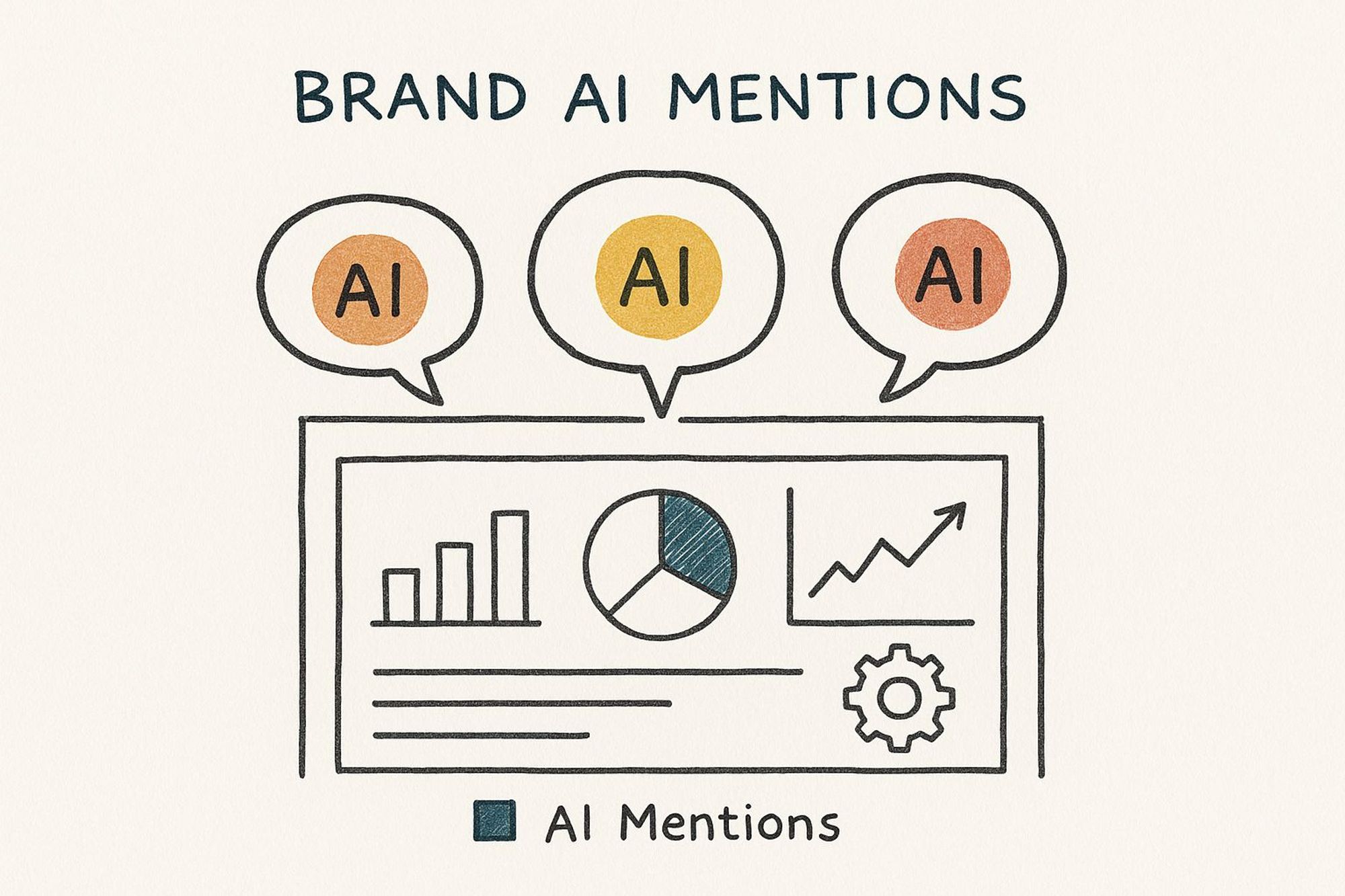
The key takeaway here is that each bubble is a real customer interaction, one that you can now finally measure and guide.
The Problem with Old Tools
AI tools like Claude have changed how people find information. This creates a new blind spot for brands. Unlike search engines, Claude creates unique, chat-like answers. These answers can mention your brand without leaving a trace in your usual tools. This means you won't see these valuable interactions in Google Search Console or your standard SEO software unless you track them directly. For more on this, keyword.com has some great insights on tracking brand mentions across AI platforms.
Tracking Claude mentions is about taking back control of your brand's story. It lets you see what the AI says, understand the context, and make sure the information is correct and positive.
The Top 9 Claude Mentions Tracker Tools
Trying to find the right tool to watch your brand in AI content can be tough. To help you, we've gathered the 9 best tools made to track mentions across AI platforms like Claude, ChatGPT, and others.
Let's look at the best options to help you stay on top of your brand’s story.
A Quick Look at the Top 9 Claude Mention Trackers
With so many tools showing up, it helps to see how they compare. We've made this table to compare the top platforms for watching your brand's presence in AI content. It shows their main purpose and unique strengths to help you find the right fit.
Tool Name | Primary Focus | Best For |
|---|---|---|
Ahrefs Brand Radar | Tracking mentions in AI answers | SEO experts already using Ahrefs. |
Profound | AI visibility and feeling of mentions | Big companies needing deep competitor insights. |
Otterly.AI | Automatic tracking across many AIs | Teams wanting broad AI coverage without manual work. |
Keyword.com | Tracking AI answers and cited pages | Marketers focusing on what content AI models like. |
SE Ranking | Mentions and links in AI answers | All-in-one SEO users who need AI tracking. |
Writesonic GEO | Visibility, feeling, and citations in AI | Content creators tracking brand image in AI. |
Peec.ai | Tracking which websites AIs cite | Analyzing competitors and AI source preferences. |
Scrunch AI | Real-time brand positioning and image | PR and brand managers needing quick AI insights. |
Morningscore | ChatGPT rank and citation tracking | Agencies tracking client mentions for specific questions. |
This table gives you a starting point. The best choice really depends on your goals, whether that’s deep analysis, broad monitoring, or getting a clear roadmap for improvement.
Understanding Your Options
While many of these platforms are great at tracking mentions, some go a step further. They help you understand the feeling behind them. This is called sentiment analysis. Besides special Claude trackers, a dedicated sentiment analysis tool can give you a fuller picture of your brand's reputation.
A good Claude mentions tracker shows you if you were mentioned and how. This context is key to knowing whether the AI is helping or hurting your brand.
Each platform has its strengths, from wide AI coverage to deep insights. To make your choice easier, you might find it helpful to read a more detailed comparison of the best AI rank tracker tools to see how different features stack up.
Next, we’ll take a closer look at what each of these powerful tools can do for you.
A Closer Look at Each AI Monitoring Tool
Alright, let's pull back the curtain and see what each of these 9 tools is really about. We'll go past the sales pitch to show you how they actually work for tracking mentions in Claude and other AIs. This deep dive should give you everything you need to pick the right tool.
1. Ahrefs Brand Radar
For anyone already using Ahrefs for SEO, adding the Brand Radar module is an easy choice. It's made to track your visibility and brand mentions in AI outputs like ChatGPT, Perplexity, and AI Overviews. It shows you which of your pages get cited by AI. The best part is that it fits right into the tools you already know, making it simple to add AI monitoring to your SEO work.
2. Profound
Profound is a platform for those who want to go deeper than just counting mentions. It focuses on AI visibility and monitoring. It has features for tracking brand mentions, which pages are used (citations), the feeling of the mentions (sentiment), and what questions users are asking (prompt insights). This makes it a great choice for brands that need to watch public opinion closely.
3. Otterly.AI
Otterly.AI stands out because it automatically tracks mentions across many different AIs. It’s set up to watch for brand mentions and website citations on Google AI Overviews, ChatGPT, Perplexity, Gemini, Copilot, and of course, Claude. This is perfect for teams who need a complete picture of their AI presence without having to check each platform by hand. It saves a lot of time.
4. Keyword.com
The “AI rank tracker” from Keyword.com helps you connect AI mentions to your content plan. It allows you to watch for brand mentions and citations in AI-generated answers. It shows you which of your pages are being cited and how often your brand shows up in AI results. This is very useful for understanding which content is working well with AI models.
5. SE Ranking
SE Ranking includes AI tracking tools like its “AI Visibility Tracker” and “Gemini visibility tracking” in its larger SEO platform. These features analyze brand mentions and website link citations in AI answers. As an all-in-one SEO tool, it’s a good choice for anyone who wants to manage their regular SEO and AI monitoring in one place.
6. Writesonic GEO
Writesonic provides features for tracking how your brand is seen across AI search systems like ChatGPT, Perplexity, and Gemini. It tracks mentions, sentiment (the feeling of the mention), and citations. This makes it a helpful tool for content teams who need to understand how their brand is perceived in AI conversations.
The rise of AI like Claude has created a real need for these special monitoring tools. The problem is, old brand monitoring software can't see what's happening inside these AI chats unless the answer is shared publicly. That's why this new type of software is so important.
7. Peec.ai
Peec.ai focuses on tracking visibility across major AI engines. It shows you which web sources the AIs (or LLMs) are citing. A key feature is its competitive benchmarking, which lets you see how you are doing compared to others in your field. This is great for understanding which websites AI models prefer to use as sources.
8. Scrunch AI
According to a review, Scrunch AI allows for real-time monitoring of how a brand is mentioned, positioned, and seen across generative AI (like ChatGPT, Gemini, and Perplexity). The focus on "perception" makes it especially useful for public relations (PR) and brand managers who need to know how their brand is viewed right now.
9. Morningscore
Last but not least, Morningscore offers a “ChatGPT rank & citation tracker.” It lets you watch whether your brand or website is mentioned in the answers to specific questions (prompts) you care about in ChatGPT. This helps you see if your content is being used to answer important questions in your industry.
How to Choose the Right AI Tracker for Your Business
With so many new AI monitoring tools available, how do you pick the right Claude mentions tracker? The best way to start is by figuring out what you really need. Are you just looking for a simple report, or do you want a tool that gives you a clear plan to get ahead?
Some platforms will just notify you when your brand gets mentioned, which is a good first step. But the real value comes from tools that offer deeper insights, like sentiment analysis, which tells you how people are talking about you. The global market for AI Search Engines is expected to be huge, which shows how important it is to watch your brand's presence in AI answers.
Key Questions to Ask Yourself
Before you choose a new tool, take a moment to think about these things:
- How much does it cover? Does the tool only watch Claude, or does it also track other big AIs like ChatGPT, Gemini, and Perplexity? You’ll want wider coverage for a full picture.
- Does it give you clear steps? Is it just giving you data, or is it giving you simple advice on how to improve your visibility in AI?
- Is it easy for your team to use? Is the dashboard simple enough for your marketing manager to use without a long training session?
Think of it this way: one tool might tell you a competitor is mentioned more for a certain keyword. A great tool will figure out why. It will look at the content being used and give you a solid plan for creating a better resource to take that top spot. LPagery’s AI Rank Tracker is built around this exact idea for ChatGPT, Gemini, Perplexity, Microsoft Copilot, and Google AI Mode. It doesn’t check Claude, so pair it with one of the tools above that does.
Putting Your AI Mention Insights into Action
Finding out Claude mentioned your brand is just the start. The real win comes from turning that information into real results. This is when you stop just watching what AI says and start actively guiding the conversation.
So, you've found an AI answer that has some wrong facts about your brand. What do you do next? First, you need to be a detective and find out where that bad information came from. Most monitoring tools will show you the web pages the AI model used as its source.
Once you find the source of the problem, the most powerful thing you can do is publish clear, correct information on your own website. By creating the best resource on your own site, you give AI models like Claude a better, more trustworthy source to use for future answers.
The goal is to make your website the most reliable source of information about your brand. When AI models look for answers, they should find yours first.
This lets you shape how AI mentions you before problems come up.
For a deeper look into this strategy, check out our guide on how to rank your website on ChatGPT. The same ideas apply to influencing Claude, and it's how you take control in the age of AI.
Common Questions About Tracking AI Mentions
Starting to track your brand with a tool like a Claude mentions tracker is new for many people. It's not quite like regular SEO or social media listening, so a few questions are likely to come up. Let's answer some of the most common ones.
Why Can’t I Just Use Google Alerts for This?
That's a great question, and the answer shows how these AI models work. Google Alerts is a great tool for what it does, scanning the public web for keywords.
The problem is that answers from AI like Claude are created instantly inside a closed system. They aren't web pages that a Google bot can crawl. Think of it like a private conversation; Google Alerts can't listen in. To see what these models are saying, you need a special tool made to ask them questions directly and check the answers.
How Often Should I Check My Brand’s AI Mentions?
For most brands, a weekly check-in is a good schedule. It's often enough to catch new trends or problems without giving you too much data. You can see patterns and watch how the AI's understanding of your brand changes over time.
However, if you're in the middle of a big product launch or a major marketing campaign, you might want to check every few days. This lets you see how the AI is understanding the new buzz and information appearing on the web.
The key is to find a pace that you can stick with. Being consistent is more valuable than checking constantly.
What Do I Do if Claude Says Something Wrong About My Brand?
Seeing wrong information about your brand can be annoying, but it's usually fixable. The first step isn't to try and "correct" the AI directly. Instead, you need to find the source it's likely using.
Many AI tracking tools will show you the web pages cited in the AI's answer. Once you know the source, you can take action. Focus your energy on updating the content on your own website first. Then, if the source is another website, you can contact them and ask for a correction.
In the end, creating a lot of clear, correct, and trusted content on your own website is the most powerful way to influence what AI models learn about you.
I've worked in SEO for more than ten years and helped over 100 businesses rank higher, mostly local businesses, e-commerce stores and SaaS companies. As co-founder of LPagery I work on local SEO, programmatic SEO and AI search visibility, and I test the strategies in these articles on our own sites and with our customers.
I've worked in SEO for more than ten years and helped over 100 businesses rank higher, mostly local businesses, e-commerce stores and SaaS companies. As co-founder of LPagery I work on local SEO, programmatic SEO and AI search visibility, and I test the strategies in these articles on our own sites and with our customers.